Translate




Small Claims forms and instructions are available online at the court website or by contacting a court clerk by telephone at 503-794-7315, email at jcsmallclaims@clackamas.us or mail at11750 SE 82nd Avenue, Suite D, Happy Valley, OR 97086.
These forms and instructions cover basic procedures but are not a complete statement of the law. They cover basic procedures. If you have complicated issues or questions about the law, talk to a lawyer. You can call the Oregon State Bar at 503-620-0222 or the Lawyer Referral Service at 503-684-3763 for more information and help finding a lawyer.
The court clerk cannot give you legal advice or tell you which form to choose.
Small claims are filed to resolve disputes without a lawyer. You may talk to a lawyer at any time for help with your claim but lawyers are not allowed to participate in small claims hearings without the judge’s permission. Small claims court can only award money and/or the recovery of personal property up to $10,000.
Spouses and Registered Domestic Partners
When spouses or registered domestic partners are parties to a case, one may appear on behalf of both in mediation or court hearings with the written consent of the other spouse or registered domestic partner.
Limits on Amount Claimed
The amount of the claim including the value of personal property must be $10,000 or less. Claims for $750 orless must be filed in Small Claims court. Claims for more than $750 up to $10,000 can be filed in either Small Claims or general civil court. Lawyers can represent you in general civil court.
Can I File In Clackamas County?
File your claim in Clackamas County Justice Court if one of the parties resides in Clackamas County. Keep in touchwith the court after your claim is filed. Provide written updates to the court if you change your telephone number or address.
Plaintiff Overview of Small Claim Process
- Start a case with two forms
- Small Claim and Notice of Small Claim
- Defendant’s Response
- File the small claim and pay a filing fee with the court clerk
- Serve the small claim on defendant(s)
- File a certificate of service with the court clerk
- Acceptance of Service
- Certificate of Service
- Certificate of Service Mailing
- Certificate of Service by Mail
- File a Judgment of Dismissal if defendant pays the claim
- Attend mandatory mediation if
- Defendant denies the claim and demands a court hearing
- Defendant denies the claim and files a counterclaim
- File a formal complaint and serve a copy on defendant if
- Defendant denies the claim and demands a jury trial
- File a request for default judgment if defendant does not respond
- Motion for Default Judgment & Defendant Status Declaration
- Small Claim Judgment and Money Award
- File a Satisfaction of Judgment if you were awarded a money judgment at the court hearing and have received full payment
- Review General Information for Plaintiffs: Attend Mandatory Mediation, Courtroom Rules, Prepare for Trial, Judgment After Trial, Certify the Judgment
Plaintiff Instructions for Small Claim and Notice of Small Claim
Fill in the plaintiff and defendant names and address information on the top of page one. Type or printcomplete names. If you are filing the claim, you are the plaintiff. The party you are suing is the defendant. This does not change throughout the case.
Properly Name the Defendant
When you file a claim, you will need the complete name and address of each person or business your claim isagainst. The names of all defendants must be complete and correct because the court cannot grant a judgmentagainst a defendant who is improperly named in the claim. It is up to you to get defendant’s name and information. The court cannot do it for you.
If defendant is a business, contact the Oregon Secretary of State’s office Corporation Division business information center at 503.986.2200 or run a business name search on the website to find out if the business is registered. Use these resources to find the correct title of the business and the name and address of its registered agent. The proper person to serve the claim upon is the registered agent, officer, director, general partner or managing agent of the corporation. If the business is a partnership, name all partners individually and the partnership by its correct legal name. If the business is a sole proprietorship, you need the name under which the business is operated and the name and address of the owner.
Fill in the date and dollar amount of your claim on page one if you are asking for money damages. Do not request a lump sum if you can itemize costs. For example, do not claim damage to my house
$4,000. Instead, list the individual costs such as drywall repair $800; plumbing replacement $1,000; roof repair$2,000; repainting $200. It may be necessary to itemize your claim in order to prove your actual loss at trial. Guesses or rough estimates are not good enough. Written professional estimates may be appropriate such as claims for repair costs to a home or vehicle.
Fill in your filing fees and service costs at the bottom of page one.
Fill in and sign the Declaration of Bona Fide Effort on page two to confirm you made a good faith effort to collect your claim from defendant.
Fill in the name and address information of the defendant’s registered agent, if any, on page two.
Fill in the amount of defendant’s filing fees on the Notice to Defendant on page three. Go to Justice Court Fees or contact the court for defendant’s filing fee.
Plaintiff Instructions for Defendant’s Response
Fill in the plaintiff and defendant names on the top of page one. Make sure the names match exactly with the names you listed in the claim.
Pay a Filing Fee
Pay the plaintiff’s Justice Court Fees at the time you file the Small Claim and Notice of Small
Claim and Defendant’s Response with the court. You may pay by cash, credit or debit card, bank check or money order made payable to Clackamas County.
How To File Forms With The Court Clerk
By secure email jcsmallclaims@clackamas.us. Email the Small Claim and Defendant’s Response forms. Call the clerk to pay the plaintiff’s filing fees by telephone to complete the filing process.
By fax 503-794-3808. Fax the Small Claim and Defendant’s Response forms. Call the clerk to pay the plaintiff’s filing fees to complete the filing process.
By mail 11750 SE 82nd Avenue, Suite D, Happy Valley, OR 97086. Mail the Small Claim and Defendant’sResponse forms. Enclose a check or money order for the plaintiff’s filing fees to complete the filing process.
When you file your claim by email, fax or mail, the court clerk will add a case number and return the forms to you for service on defendant(s).
Serve The Forms on Defendant
The plaintiff must officially notify all defendants that a case has been filed by serving the Small Claim and Notice of Small Claim and Defendant’s Response on the defendant. Once service of the claim is complete, a certificate ofservice must be filed with the court, as explained below, for your case to proceed.
Methods of Service on Defendant
- Acceptance of Service
- Personal Service
- Substituted Service
- Office Service
- By Mail
Acceptance of Service
You can ask defendant to voluntarily accept the claim from you and sign an Acceptance of Service as analternative to service by a sheriff or process server. Signing the Acceptance of Service does not mean defendant agrees with anything in your claim, only that the papers were received. If defendant does not want to sign the Acceptance of Service, you must use another method, listed below, to serve your claim.
Personal Service
By the Sheriff, a process server or private person:
- You may submit a copy of the claim to the sheriff’s office and a sheriff’s deputy will serve defendant for a fee. If you have safety concerns, have the sheriff serve defendant.
- You may hire a private process server of your choice to serve defendant.
- A competent person age 18 years or older who can understand, remember, and tell others about an event may serve the claim. The server must be a resident of Oregon or the state where the defendant is found. The server cannot be the plaintiff, defendant, or lawyer for a party. The server cannot be an employee, director or officer of any defendant.
A Certificate of Service must be filed with the court by the person who personally serves defendant, including the date of service and the name of the person served.
Substituted Service
The process server may leave the claim at defendant’s residence where defendant normally lives withsomeone 14 or older who lives there. The process server will file a Certificate of Service with the court. The process server or you must also mail a copy of the claim by first class mail with a statement of the date, time, and place that the papers were served to defendant. The person whomails the copy of the claim to defendant must file an additional certificate called Certificate of ServiceMailing. The date of service is the day the first class mailing is put in the mail.
If you use the sheriff to serve the claim by substituted service or office service below, the sheriff will file aCertificate of Service with the court. Since most sheriff’s offices do not do the follow-up mailing, you mayneed to mail the claim to defendant by first class mail and file a Certificate of Service Mailing. It is plaintiff’s responsibility to make certain that the copy of the claim is mailed to the defendant. The date of service is the day the first class mailing is put in the mail.
Office Service
The process server may leave the claim with someone in charge of defendant’s office or normal workplace. The process server will file a Certificate of Service with the court. The process server or you must alsomail a copy of the claim by first class mail with a statement of the date, time, and place that the papers wereserved to the defendant. The person who mails the copy to defendant must also file a Certificate ofService Mailing. The date of service is the day the first class mailing is put in the mail.
By Mail
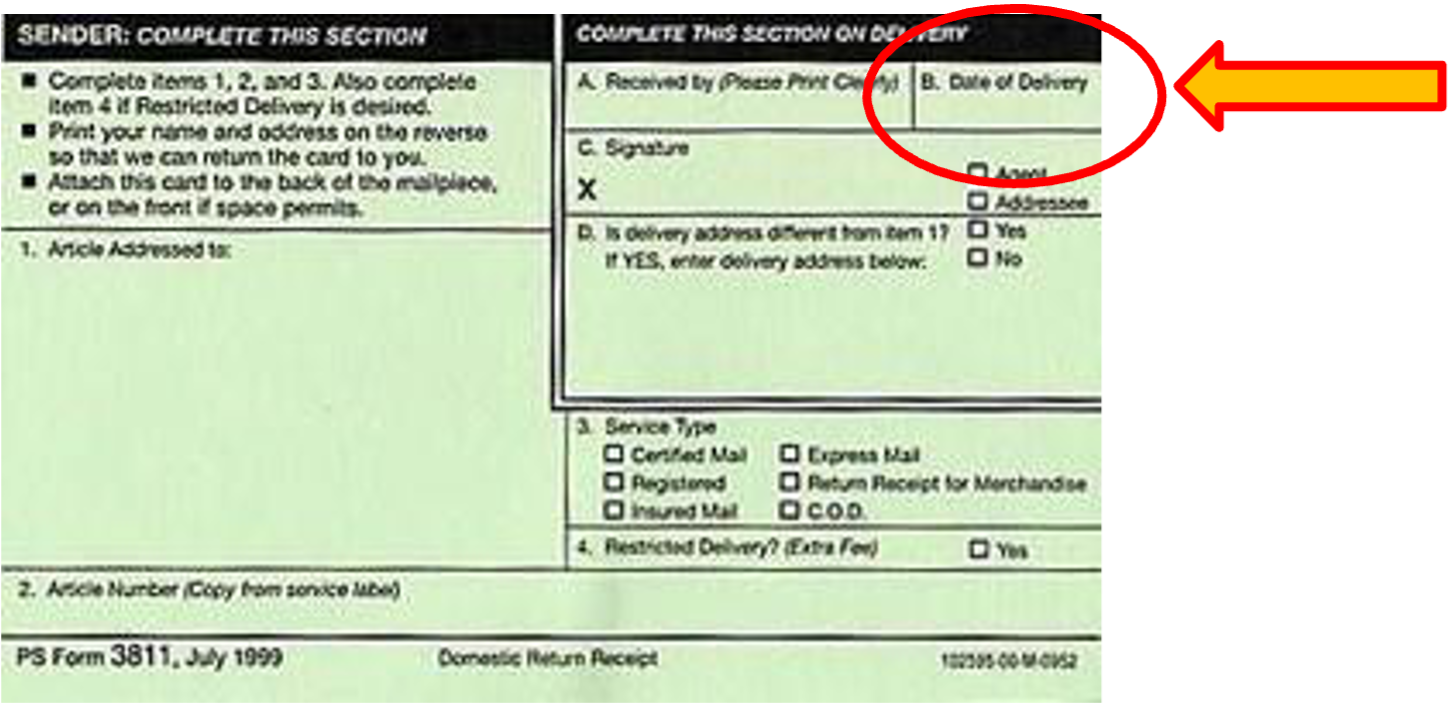
Mail a copy of the claim to defendant by certified mail, return receipt requested, Restricted Delivery only to the addressee. You must file a Certificate of Service by Mail and include the signed green card, date of receipt and item number. If you do not receive the green card back, or if someone other than defendant signs for the claim, service by mail was not effective and you must try another type of service. The date of serviceis the day defendant signs the green receipt card.
File a Certificate of Service Form With The Court Clerk
The Certificates are your proof of service of the claim on defendant. An original Certificate must be filed with the court for your case to proceed, regardless of the method of service.
Plaintiff Instructions After Defendant’s Response To The Claim
Within 14 days of receiving service, defendant can respond to the claim by
- Defendant payment of claim
- Defendant denial of claim demanding hearing
- Defendant denial of claim and filing a counterclaim
- Defendant denial of claim demanding a jury trial
- Defendant failure to respond
Defendant Payment of Claim
Plaintiff may file a Judgment of Dismissal with the court to confirm that defendant has paid the claim,including your court fees and costs, or has returned personal property. Mail a copy to defendant. You are free to settle your claim with defendant for any amount at this point. There is no court fee to file this form.
Defendant Denial of Claim Demanding Hearing
A defendant who does not agree with your claim may file a Defendant’s Response denying the claim anddemanding a hearing before the judge. If defendant denies the claim, you and defendant will be notified by mail of the date, time and location to appear for mandatory court mediation.
Defendant Denial of Claim And Filing a Counterclaim
A defendant may deny the claim and file a claim against you called a counterclaim. Defendant’s counterclaim mustbe related to the same transaction or event as your claim. You and defendant will be notified by mail of the date, time and location to appear for mandatory court mediation.
Defendant Denial of Claim Demanding Jury Trial
Plaintiff must file a formal complaint within 20 DAYS. A defendant who does not agree with your claim may file aDefendant’s Response denying the claim and demanding a jury trial if the amount of either the claim or the counterclaim is more than $750. If defendant demands a jury trial, you must file a formal complaint within 20days after the court sends you notice to do so. You should see a lawyer.
The court does not provide forms or samples of formal complaints. When you file the formal complaint, youmust pay the small claims’ plaintiff’s additional fee after defendant’s answer with demand for jury trial. See Justice Court fees.
If you do not file a formal complaint and pay the additional court fees within the time deadline set by the court,the claim will be dismissed. In addition, you may be required to pay defendant’s court fees and costs plus a prevailing party fee.
Defendant Failure to Respond
If defendant does not file a Defendant’s Response within 14 days after service of the claim, plaintiff must filetwo forms to ask the court to grant a default judgment: (1) Motion for Default Judgment and Defendant Status Declaration and (2) Small Claim Judgment and Money Award. There is nocourt fee to file the forms. If the Default Judgment is granted by the court, it means that you win because defendant did not respond. The court will mail you and defendant a copy of the court’s decision.
Plaintiff Instructions for Motion for Default Judgment & Defendant Status Declaration
This form may NOT be filed until AFTER the period for Defendant’s Response has expired.
Fill in the plaintiff and defendant names and the case number on the top of the page. Make sure the names match exactly with the names you listed in the claim.
Fill in the name of the person requesting a default judgment and name the person against whom you are requesting a default judgment.
Fill in the amount of the money award, prejudgment interest if any, costs and service expenses and prevailingparty fee. See Justice Court Fees for the prevailing party fee. Add the sums and fill in the total amount awarded.
Check the box to request post-judgment interest at the statutory rate of 9% annual interest. If you requestmore than 9% post-judgment annual interest, fill in the rate provided in your contract. You must attach a copy of the contract that set the interest rate higher than 9% per annum.
If you are requesting return of property, check the box and describe the property requested.
Service Members May Be Protected
Check a box to indicate if defendant is in active military or not.
- Defendant is in active military service.
If defendant is in active military service, you cannot get a default judgment unless the service member haswaived protection under the Servicemember’s Civil Relief Act (SCRA). This federal law is in the United States Code and starts at 50 U.S.C. section 3901.
If you have defendant’s Social Security Number or date of birth, you can go to the Department of Defense’s website at to find out if defendant is in active service. You can print a free certificate of military service status from the website. Attach this certificate or a printout of the screen to your Motion for Default Judgment Defendant Status Declaration.
If defendant is in the military, you are strongly advised to talk to a lawyer before trying to get a default judgment. You can call the Oregon State Bar at 503.620.0222 or go to Oregon State Bar for help finding a lawyer. If a default is not done properly, defendant can re-open the case after returning from service. Be aware that if you knowingly make false statements about defendant’s status, you may face both federal and state penalties.
- Defendant is not in active military service.
If you have defendant’s Social Security Number or date of birth, you can go to the Department of Defense’swebsite at to find out if defendant is in active service. You can print a free certificate of military status service from the website. Attach this certificate or a printout of the screen to your Motion for Default Judgment Defendant Status Declaration.
If you know defendant is not in the military, you must state facts that explain how you know.
- I am unable to determine whether defendant is in military service.
If you do not know whether defendant is in the military and have checked the Department of Defense website, or do not have the necessary information, check the box and add any facts that you know.
Add the date to the bottom of the page. Sign and print your name. File the Motion for Default Judgment &Defendant Status Declaration form along with the Small Claim General Judgment and Money Award form withthe court clerk. There is no court fee to file this form. The judge will review your Motion for Default Judgment anddecide whether to order the default judgment. The court will mail you and defendant a copy of the court’s decision.
Plaintiff Instructions for Small Claim General Judgment and Money Award
Fill in the plaintiff and defendant names and case number at the top of the page. Make sure the names match exactly with the names you listed in the claim.
Fill in the names of the judgment creditor and the judgment debtor.
Fill in each line of the Money Award section. If you need space to add more judgment debtors, check the box “Additional information attached” and add the information on an additional page.
Do not fill in the lines for the date and judge’s signature.
General Information for Plaintiffs
Courtroom Rules
Appropriate dress is required. If not, the judge may ask you to leave the courtroom. Caps and hats must be removed upon entering the courtroom.
Food and drinks are not allowed in the courtroom. Weapons are notallowed anywhere in the court facility.
Cell phones and all electronic devices that may disrupt court proceedings must be turned off. Recording is not permitted without advance permission of the judge.
Prepare for The Court Hearing
On the day of your court hearing, be sure to allow plenty of time to get through airport-type security. Be prepared to present your case in the courtroom at the time listed on your hearing date notice.
Small claims hearings are informal so that the parties can handle their own cases. Lawyers cannot appear without special permission of the court.
Plaintiff
As plaintiff, you must prove the Claim, both liability and economic damage. Whatever you present in court will be all the judge knows about your case. You will present sworn testimony, exhibits, and witnesses to the judge. The judge is only interested in facts. Your testimony should be brief and to the point. Do not expect the judge to read a written statement but you may refer to your written notes as you present your case.
If the defendant filed a Counterclaim, you will be able to present your defense to defendant’s Counterclaim after the defendant presents his/her case to the judge.
Defendant
You will be able to present your defense to plaintiffs' Claim after the plaintiff presents his/her case to the judge.
In addition, if you filed a Counterclaim against plaintiff, you must prove the Counterclaim, both liability andeconomic damage. You will present your sworn testimony, exhibits, and witnesses to the judge.
EXHIBITS FOR PLAINTIFF AND DEFENDANT
Bring factual evidence to support your case such as receipts, records, documents, bills, original contracts, photos, written repair estimates, and witnesses.
ORGANIZE AND LABEL YOUR EXHIBITS BEFORE YOU ARRIVE AT COURT
Plaintiff exhibits are numbered 1, 2, 3, 4, 5 etc.
Defendant exhibits are numbered 101, 102, 103, 104, 105 etc
BRING THREE (3) PACKETS OF YOUR EXHIBITS TO THE COURT HEARING
One exhibit packet is for you, one is for the opposing party, and one is for the judge.
Judgment After The Court Hearing
Once your case has been heard, the judge will make a decision and enter a Judgment. If money is awarded, thejudgment creditor is the person who is paid money. The judgment debtor is the person who pays.
At trial you could
- Lose your claim. You cannot collect money from the defendant if you lose.
- Win the full amount of your claim.
- Win some of your claim, but not all of it.
- Win either the full amount or some of the amount of your claim and lose against a defendant’s counterclaim.
Generally, if you and the defendant both ask for money, the amount you lost to defendant ’ s counterclaim will be subtracted from the amount you won in your claim against defendant. If the defendant’s counterclaim is for morethan you won, then you may win your claim, but still have to pay defendant money. For example, if you claim $100 and the counterclaim is for $150 and the judge decides that you both win, then you will have to pay defendant $50 ($150 counterclaim - $100 claim = $50).
If you are awarded a money judgment at the court hearing, you must file a Satisfaction of Judgment formonce you have received full payment of the money award to confirm the judgment has been paid. You must alsosend a copy of the Satisfaction of Judgment to the defendant. There is no court fee to file this form.
Enforcing The Judgment
If no appeal is taken by a party, the small claim judgment may not be enforced unless the prevailing party transcribes the judgment to the civil docket of the justice court or to the docket of the circuit court. To transcribe the judgment, you must pay a fee and obtain a Transcript of Small Claim Judgment from the Justice Court clerk; you must then request that the Transcript of Small Claim Judgment be transcribed to the civil docket of the justice court or circuit court for a fee.