 Translate




Spring Into Preparedness!
Greetings from the Clackamas County Disaster Management Team. This newsletter includes:
Partnerships, Preparedness, and Community Resilience: Clackamas County Conducts the Mt. Hood Great Escape Exercise
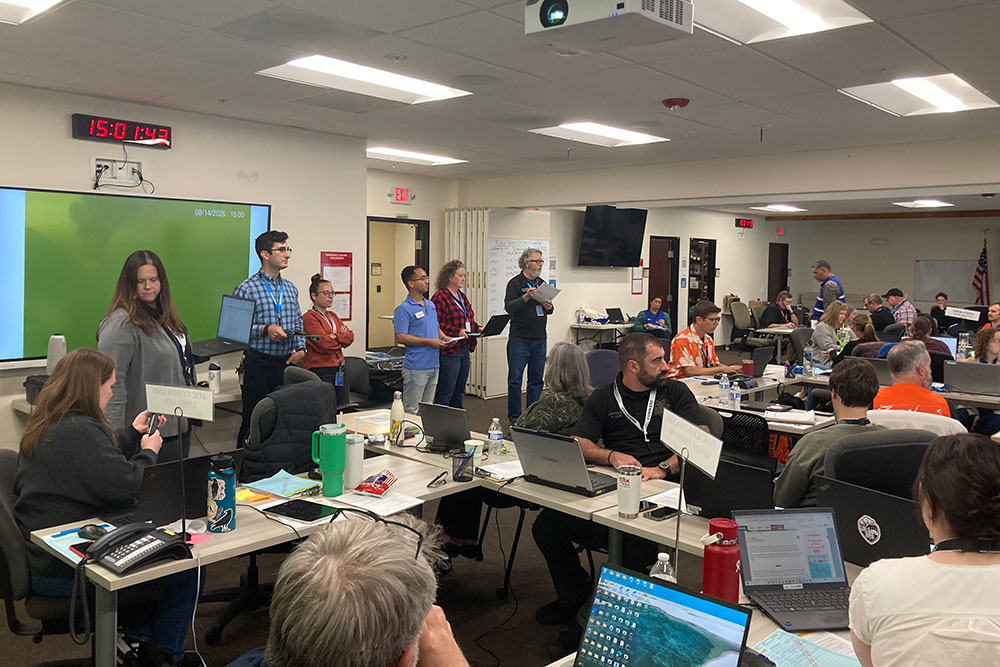
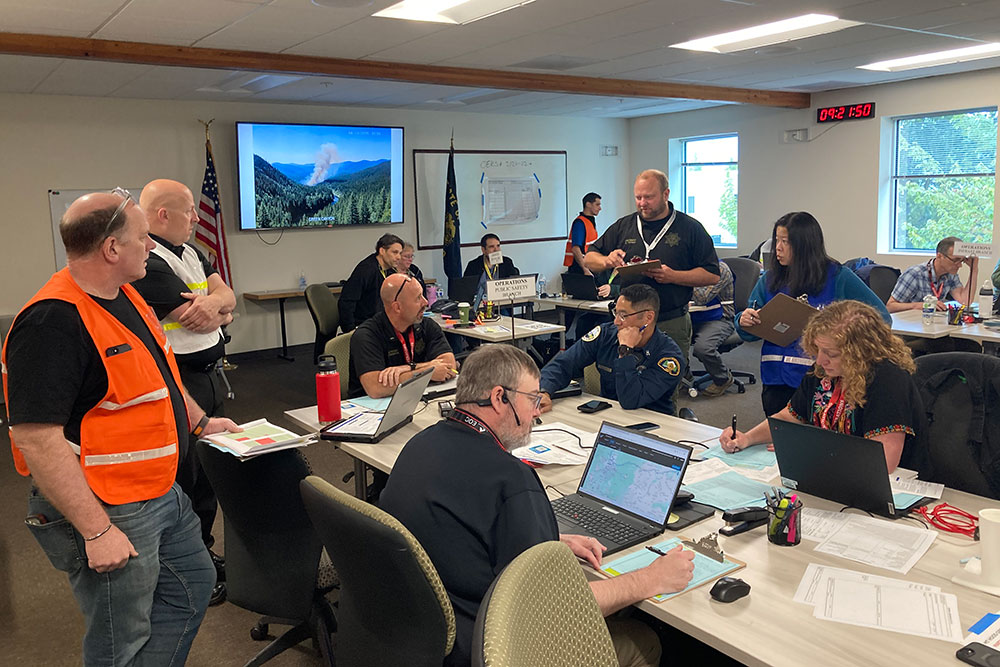
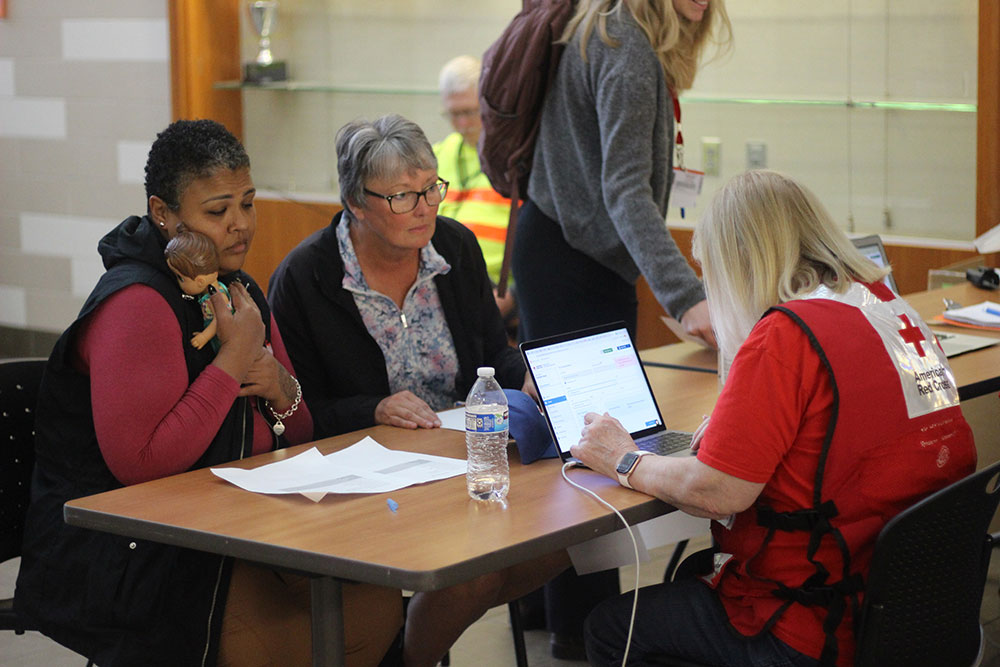
Preparedness is best built long before the disaster occurs through planning, partnerships, training, collaboration, and practice. On May 7–8, Clackamas County Disaster Management and its partners put that principle into practice through the Mt. Hood Great Escape exercise, a two-day, full-scale countywide emergency preparedness exercise designed to test and strengthen our ability to respond to both a major wildfire and Public Safety Power Shutoff (PSPS) event.
The exercise brought together 170 individuals representing 45 varying county departments, city and special district partners, public safety agencies, nonprofit organizations, utility providers, schools, and healthcare partners. Set in the Mt. Hood corridor, the exercise simulated rapidly changing conditions that required coordinated decision-making, public information efforts, evacuation planning, shelter operations, and support for impacted residents.
Throughout the exercise, participants worked from multiple locations across the county. Staff at the County Emergency Operations Center coordinated information sharing, resource requests, and the overarching response to a very complex incident. At Sandy High School, shelter staff and volunteers practiced receiving and supporting residents displaced by the simulated wildfire. At Camp Withycombe, our County Medical Examiner’s Office worked with partners at the state and local level to deploy and operate the Disaster Portable Morgue Unit (DPMU).
Additional partners exercised their own roles and responsibilities, creating a realistic environment that reflected the complexity of a real-world emergency. The cities of Milwaukie and Oregon City provided critical information sharing while exercising their emergency operations plans. The Oregon Department of Transportation (ODOT) stood up their Transportation Management Operations Center (TMOC) to coordinate evacuations and road closures. We also had several partners from Clackamas County Amateur Radio Emergency Services (CARES) and the Hoodland Emergency Communications Network (HECN) coordinate life-saving information under PSPS conditions (meaning no internet or phone capabilities).
Community volunteers also played a critical role in the exercise's success. We had community volunteers representing various Community Emergency Response Teams (CERT), individuals from the Trauma Intervention Program (TIP), as well as local community members. Volunteers participated as shelter guests, received simulated emergency alerts, and helped create realistic conditions for responders and support staff at the shelter. Their involvement provided participants with valuable opportunities to practice serving individuals and families with a wide range of needs, while also helping planners evaluate how existing systems and processes perform under realistic conditions.
One of the greatest strengths of the exercise was the level of collaboration demonstrated among participating agencies and organizations. Emergency response is rarely the responsibility of a single agency. Responses to any given hazard or incident depend on strong partnerships, clear communication, and a shared understanding of how organizations can work together during times of crisis. Exercises such as Mt. Hood Great Escape provide a valuable opportunity to build those relationships and strengthen coordination before an actual emergency occurs.
In addition to testing plans and procedures, the exercise provided an opportunity to identify areas where improvements can be made. Participants practiced operational coordination (how well we all work together), public information and warning (how well we work together to deliver alerts and public information regarding what is happening and what the public needs to do), mass care services (how well we can take care of people affected by the incident), situational assessment (effectively sizing up the incident to support decision making and response), and critical transportation coordination (evacuation planning) while working through evolving challenges presented throughout the scenario. Observations gathered during the exercise will help inform future training, planning, and improvements to emergency response capabilities across the county.
Exercises are an essential component of emergency preparedness. They allow organizations to validate plans, strengthen partnerships, identify gaps, and build confidence in the systems that support our communities during emergencies. Most importantly, they provide an opportunity to learn lessons in a controlled environment rather than during an actual disaster.
Clackamas County extends its sincere appreciation to the many agencies, organizations, volunteers, and staff members who dedicated their time, expertise, and energy to making this exercise a success. Their commitment to preparedness helps ensure that when emergencies occur, our community is better positioned to respond, recover, and support those affected.
Preparedness is a shared responsibility. Through continued collaboration, training, and partnership, we are building a more resilient Clackamas County—ready to face tomorrow’s challenges together.
What’s New with Be ClackGO Prepared!
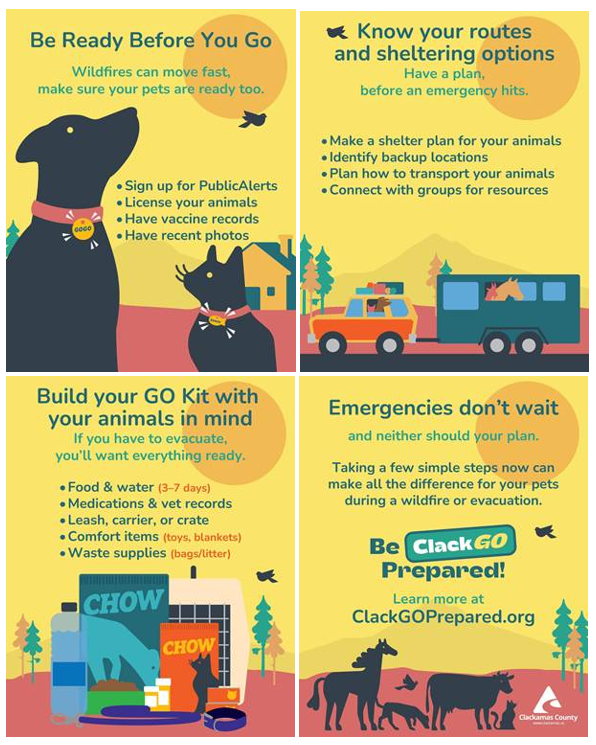
- The Be ClackGO Prepared! annual campaign now includes information about how to prepare for evacuation of animals!
- The Be ClackGO Prepared! annual campaign has launched a new Interactive Evacuation Map. This allows you to enter your address to explore your evacuation routes and then print a custom map.
- Mt. Hood Corridor Evacuation Route Maps have been updated to offer more detail including detailed neighborhood views, natural features, and community names. This is a helpful resource for tourists and community members alike.
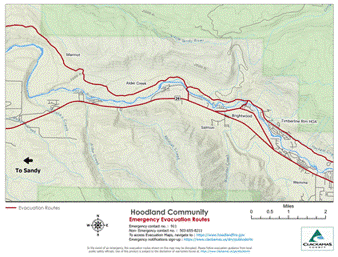
- Updates to the Evacuation Plan (Situation Annex 1) are coming soon. The participation and information shared by partners in Clackamas County during the Mt. Hood Great Escape will greatly inform updates in the Evacuation Plan. A meeting with our partners to further refine their roles and responsibilities during an evacuation is upcoming. An anticipated draft of the Evacuation Plan is set for November 2026.