 Translate




Social Services
Social Services
Mt Hood Express Parking
At this time there are no fees for parking at the following locations. No matter where you park, please be do not litter. Your parking hosts and community members thank you.
Park at your own risk, always lock your car and secure any valuables. No overnight parking available at these locations, except the Operations Center, with advance notice. If you are interested in other overnight parking, please check the TriMet website for their 24-hour park and ride locations.
- Dorman Center/Salmon Road
25400 E Salmon Road, Welches - Gresham Park and Ride
Take SAM from the Gresham Transit Center to the Sandy Transit Center, then board the Mt Hood Express. - Hoodland Senior Center/RV Village
65000 E Highway 26, Welches
Parking is located behind the Senior Center - follow driveway to the right of the building.
Please do not park in front of the Senior Center. - Sandy Park and Ride
16610 Champion Way, Sandy
Park at Sandy Operations Center to avoid downtown congestion and alleviate parking constraints for the locals. Parking is limited. Please call ahead if leaving car overnight. 503-668-3466 - Sandy City Hall (Saturday and Sunday only)
39250 Pioneer Blvd, Sandy
Turn right just past city hall to use parking lot behind building.
Located near Sandy Transit Center bus stop. - Welches Road Park and Ride
Located at the intersection of Welches Road and Highway 26.
New Format?
Off
The Villages Shuttle Schedule
- All times in () are estimates, not exact timepoints.
- Passengers must be at the stops before the bus arrives. The bus will only stop if passengers are clearly visible at the stop.
- Some stops will need to be requested in advance.
 Visit Passiogo, or download the iPhone or Android app, to see live bus locations, estimated time of arrival, and stop information. You can even set up customized alerts!
Eastbound: Sandy to Rhododendron
*Eastbound Vista Loop, Brightwood & The Resort at the Mountain will need to be requested in advance
| Operations Center | Hwy 26 & Champion Way | Ruben Ln | Sandy Transit Center | Vista Loop* | Shorty's Corner | Big Foot | Alder Creek | Brightwood* | Hoodland Senior Center | Wildwood | Welches Rd | Resort at the Mtn* | Rhododendron |
|---|---|---|---|---|---|---|---|---|---|---|---|---|---|
| 5:40 | (5:42) | (5:44) | 5:48 | (5:52) | (5:55) | (5:58) | (6:02) | (6:04) | 6:07 | (6:09) | 6:11 | (6:13) | 6:20 |
| 8:40 | (8:42) | (8:44) | 8:48 | (8:52) | (8:55) | (8:58) | (9:02) | (9:04) | 9:07 | (9:09) | 9:11 | (9:13) | 9:20 |
| 10:50 | (10:52) | (10:54) | 10:58 | (11:02) | (11:05) | (11:08) | (11:12) | (11:14) | 11:17 | (11:19) | 11:21 | (11:23) | 11:30 |
| 12:10 | (12:12) | (12:14) | 12:18 | (12:22) | (12:25) | (12:28) | (12:32) | (12:34) | 12:37 | (12:39) | 12:41 | (12:43) | 12:50 |
| 2:10 | (2:12) | (2:14) | 2:18 | (2:22) | (2:25) | (2:28) | (2:32) | (2:34) | 2:37 | (2:39) | 2:41 | (2:43) | 2:50 |
| 3:10 | (3:12) | (3:14) | 3:18 | (3:22) | (3:25) | (3:28) | (3:32) | (3:34) | 3:37 | (3:39) | 3:41 | (3:43) | 3:50 |
| 5:20 | (5:22) | (5:24) | 5:28 | (5:32) | (5:35) | (5:38) | (5:42) | (5:44) | 5:47 | (5:49) | 5:51 | (5:43) | 6:00 |
Westbound: Rhododendron to Sandy
*Westbound Welches and Hoodland Senior Center will need to be requested in advance
| Rhododendron | Welches Rd* | Hoodland* | Brighttwood | Sleepy Hollow | Kirkwood | Big Foot | Veneer | Vista Loop | STC | FM | Operations Center |
|---|---|---|---|---|---|---|---|---|---|---|---|
| 6:25 | (6:30) | (6:35) | 6:40 | (6:43) | (6:45) | (6:51) | (6:52) | 6:55 | 7:00 | (7:05) | 7:06 |
| 9:25 | (9:30) | (9:35) | 9:40 | (9:43) | (9:45) | (9:51) | (9:52) | 9:55 | 10:00 | 10:05) | 10:06 |
| 11:35 | (11:40) | (11:45) | 11:50 | (11:53) | (11:55) | (12:01) | (12:02) | 12:05 | 12:10 | (12:15) | 12:16 |
| 12:55 | (1:00) | (1:05) | 1:10 | (1:13) | (1:15) | (1:21) | (1:22) | 1:25 | 1:30 | (1:35) | 1:36 |
| 2:55 | (3:00) | (3:05) | 3:10 | (3:13) | (3:15) | (3:21) | (3:22) | 3:25 | 3:30 | (3:35) | 3:36 |
| 3:55 | (4:00) | (4:05) | 4:10 | (4:13) | (4:15) | (4:21) | (4:22) | 4:25 | 4:30 | (4:35) | 4:36 |
| 6:05 | (6:10) | (6:15) | 6:20 | (6:23) | (6:25) | (6:31) | (6:32) | 6:35 | 6:40 | (6:45) | 6:46 |
New Format?
Off
The Express Route Schedule
Eastbound: Sandy to Timberline
Visit Passiogo, or download the iPhone or Android app, to see live bus locations, estimated time of arrival, and stop information. You can even set up customized alerts!
| Operations Center | Hwy 26 & Champion Way | Ruben Ln | Sandy Transit Center | Alder Creek Rd | Hoodland Senior Center | E Greenwood Dr (Dec-Mar Only) | Welches Rd | Dorman Center/ Salmon Rd | Rhododendron across Hwy 26/ Village Mart | Ski Bowl West | Best Western Gov't Camp | Collins Lake Resort | Summit Gov't Cp E/across from Chevron Station | Timberline Lodge |
|---|---|---|---|---|---|---|---|---|---|---|---|---|---|---|
| 5:15 | 5:15 | 5:17 | 5:25 | 5:35 | 5:44 | 5:47 | 5:49 | 5:51 | 5:54 | 6:02 | 6:04 | 6:10 | 6:13 | 6:30 |
| 7:15 | 7:15 | 7:17 | 7:25 | 7:35 | 7:44 | 7:47 | 7:49 | 7:51 | 7:54 | 8:02 | 8:04 | 8:10 | 8:13 | 8:30 |
| 9:15 | 9:15 | 9:17 | 9:25 | 9:35 | 9:44 | 9:47 | 9:49 | 9:51 | 9:54 | 10:02 | 10:04 | 10:10 | 10:13 | 10:30 |
| 11:15 | 11:15 | 11:17 | 11:25 | 11:35 | 11:44 | 11:47 | 11:49 | 11:51 | 11:54 | 12:02 | 12:04 | 12:10 | 12:13 | 12:30 |
| 1:15 | 1:15 | 1:17 | 1:25 | 1:35 | 1:44 | 1:47 | 1:49 | 1:51 | 1:54 | 2:02 | 2:04 | 2:10 | 2:13 | 2:30 |
| 3:15 | 3:15 | 3:17 | 3:25 | 3:35 | 3:44 | 3:47 | 3:49 | 3:51 | 3:54 | 4:02 | 4:04 | 4:10 | 4:13 | 4:30 |
| 6:15 | 6:15 | 6:17 | 6:25 | 6:35 | 6:44 | 6:47 | 6:49 | 6:51 | 6:54 | 7:02 | 7:04 | 7:10 | 7:13 | 7:30 |
| Additional Winter Late Run (Dec 01-Mar 31 only) | ||||||||||||||
| 9:00 | 9:00 | 9:02 | 9:10 | 9:20 | 9:29 | 9:32 | 9:34 | 9:36 | 9:39 | 9:47 | 9:49 | 9:55 | 9:58 | 10:15 |
| 9:00 | 9:00 | 9:02 | 9:10 | 9:20 | 9:29 | 9:32 | 9:34 | 9:36 | 9:39 | 9:47 | 9:49 | 9:55 | 9:58 | |
Westbound: Timberline to Sandy
| Timberline Lodge | Gov't Camp E/ Chevron Station | Collins Lake Resort | Best Western Gov't Camp | Ski Bowl West | Rhododendron Village Mart | Dorman Center/ Salmon Rd | Welches Rd | E Greenwood Dr (Dec-Mar Only) | Hoodland Senior Center | Kirkwood Rd | Sandy Transit Center | Safeway/ Hwy 26 | Industrial Way @ Fred Meyer Garden Center | Operations Center |
|---|---|---|---|---|---|---|---|---|---|---|---|---|---|---|
| 7:00 | 7:12 | 7:13 | 7:15 | 7:18 | 7:29 | 7:32 | 7:33 | 7:35 | 7:40 | 7:49 | 8:05 | 8:07 | 8:10 | 8:10 |
| 9:00 | 9:12 | 9:13 | 9:15 | 9:18 | 9:29 | 9:32 | 9:33 | 9:35 | 9:40 | 9:49 | 10:05 | 10:07 | 10:10 | 10:10 |
| 11:00 | 11:12 | 11:13 | 11:15 | 11:18 | 11:29 | 11:32 | 11:33 | 11:35 | 11:40 | 11:49 | 12:05 | 12:07 | 12:10 | 12:10 |
| 1:00 | 1:12 | 1:13 | 1:15 | 1:18 | 1:29 | 1:32 | 1:33 | 1:35 | 1:40 | 1:49 | 2:05 | 2:07 | 2:10 | 2:10 |
| 3:00 | 3:12 | 3:13 | 3:15 | 3:18 | 3:29 | 3:32 | 3:33 | 3:35 | 3:40 | 3:49 | 4:05 | 4:07 | 4:10 | 4:10 |
| 5:00 | 5:12 | 5:13 | 5:15 | 5:18 | 5:29 | 5:32 | 5:33 | 5:35 | 5:40 | 5:49 | 6:05 | 6:07 | 6:10 | 6:10 |
| 7:45 | 7:57 | 7:58 | 8:00 | 8:03 | 8:14 | 8:17 | 8:18 | 8:19 | 8:24 | 8:33 | 8:49 | 8:51 | 8:55 | 8:55 |
| 10:20 | 10:32 | 10:33 | 10:35 | 10:38 | 10:49 | 10:52 | 10:53 | 10:54 | 10:56 | 11:02 | 11:04 | 11:07 | 11:10 | 11:10 |
| 10:02 | 10:03 | 10:05 | 10:08 | 10:19 | 10:22 | 10:23 | 10:24 | 10:26 | 10:32 | 10:34 | 10:37 | 10:40 | 10:40 |
New Format?
Off
Mt Hood Express
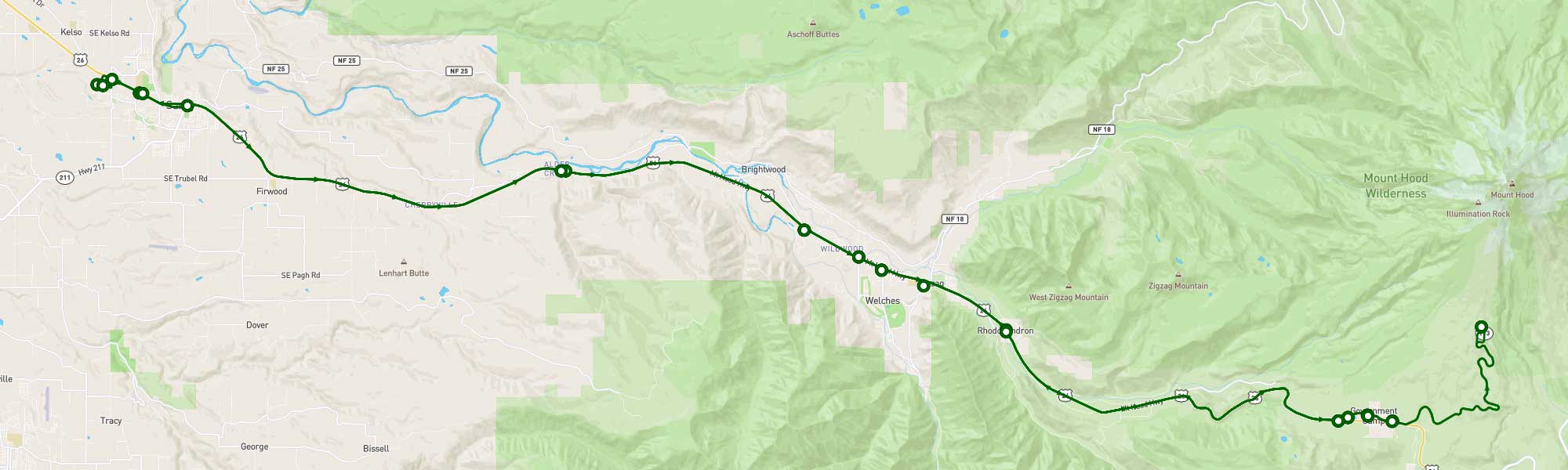
The Mt. Hood Express transit is a public bus service administered by Clackamas County and serves the communities along Highway 26, running from the city of Sandy east to Government Camp and Timberline.
Welcome to Mt Hood Express
The Mt. Hood Express transit is a public bus service administered by Clackamas County and serves the communities along Highway 26, running from the city of Sandy east to Government Camp and Timberline.
Our Routes
We offer two lines to serve you:
The Express
Operates 7 days a week as a limited stop commuter service between the City of Sandy and Timberline. Seasonal service features include bike trailers and ski boxes for the convenience of riders to stow their equipment.
The Express does not operate on Thanksgiving or Christmas Day.
The Villages Shuttle
Operates 7 days a week as a deviated fixed route for local service between Sandy and Rhododendron.
The Villages Shuttle does not operate on New Years Day, Memorial Day, Labor Day, Independence Day, Thanksgiving Day, and Christmas Day.

- View bus routes and stop schedules on an interactive map.
- Track bus locations, and see when your bus will arrive.
- Use Trip Planner to get to your destination on time.
Fares
| One Way | $2 Can be used for Mt Hood Express Villages shuttle and Express routes. |
| One Way Booklet | 20 for $30 |
| Day Pass | $5 Can be used for Villages shuttle, Express routes, and Sandy Area Metro (SAM) Routes |
| Children 6 and under | free |
You may pay exact fare on board. Passes are also available at the following locations:
| Location | $2 Tickets | $5 Day Passes |
|---|---|---|
| Best Western Sandy Inn 503-668-7100 | $5 | |
| Hoodland Library 503-622-3460 | $5 | |
| Operations Center 503-668-3466 | $2 | $5 |
| Sandy Community Center 503-668-5569 | $2 | $5 |
| Sandy City Hall 503-668-5533 | $2 | $5 |
| Sandy Historical Museum 503-668-3378 | $2 | $5 |
| Sandy Library 503-668-5537 | $5 | |
| Timberline Day Lodge 503-272-3311 | $2 |
How to Ride
- Arrive at the bus stop at least 5 minutes early.
- Make sure you are visible to the driver.
- Schedule may vary as much as 5 minutes due to traffic and/or weather conditions.
- If needed, ask the driver for assistance.
- Press the bell bar or pull cord to signal the driver of your upcoming stop.
- Use local parking options.
Bus Rules
- Children under 10 must have a person 16 years or older with them.
- Children 10-12 may ride alone if there is a person 16 years or older at the place of departure and arrival.
- No smoking, vaping, or alcohol allowed.
- Non-alcoholic beverages in covered containers allowed.
- Shirts and shoes required.
- Personal devices with headphones only.
- Remain seated
- No disruptive behavior
Accessibility
- All buses are wheelchair lift equipped and drivers are trained to provide assistance.
- Priority seating is available on all buses for senior citizens and people with disabilities.
- Controlled service animals are welcome.
- If you are visiting Timberline Lodge and need assistance due to a mobility issues, please call Timberline at 503-272-3311
Other Transportation Resources
Visit Passiogo, or download the iPhone or Android app, to see live bus locations, estimated time of arrival, and stop information. You can even set up customized alerts!
New Format?
On
Volunteer Opportunities
Ride Together and Vets Driving Vets Program
The Ride Together and Vets Driving Vets Programs are available for adults 65+ year old and/or people with disabilities, theses Volunteer Programs allows riders to recruit family members, friends, or neighbors to be their drivers. Riders and drivers schedule their rides on their own schedule, and drivers are reimbursed for miles driven.
- Ride Together (RT) is a volunteer program to help cover mileage cost when driving a family member (must live in a separate dwelling), neighbor or friend to doctor appointments, grocery trips and other critical services. You would submit your trips to our program each month for reimbursement.
- Vets Driving Vets (VDV) is a volunteer program where Vets help provide transportation to other Vets to help maintain their independence.
Our volunteers:
- Drive their own vehicle to help others. Their own insurance is the primary, and the county is the secondary coverage.
- Track rides and mileage to receive mileage reimbursement of 0.70 cents/mile.
- Receive free drivers’ safety training that may offer discounts on auto insurance.
To be eligible for RT & DVD volunteer positions, applicants need to:
- Pass county background and drivers history check
- Complete online county provided drivers education hours
- Pass a Road Test Evaluation with a staff or center member
Become a TRP Volunteer Driver
Our TRP Volunteers are the backbone to our program. They help support participants ride requests that we cannot accommodate in the schedule. Helping individuals get to their essential appointments and needs in life. Unassisted, door-to-door service is provided by drivers using their private vehicle.
Our TRP Volunteers
- Drive their own vehicle to help others. Their own insurance is the primary, and the County is the secondary coverage.
- Receive mileage reimbursement of 0.70 cents/mile.
- Give time as you can Monday-Friday 8 a.m. - 5 p.m.— drivers determine their own flexible schedule.
- Receive free drivers’ safety training that may offer discounts on auto insurance.
To be eligible for this volunteer position you must
- Provide availability to dispatch one week in advance
- Pass a Road Test Evaluation
- Pass County background and drivers history check
- Complete online County provided drivers education hours
If you would like to receive a paper copy of our Volunteer Application Form, please contact us at 503-655-8875.
Contact
Department Staff
New Format?
Off