Translate





All development projects in unincorporated Clackamas County (outside cities and special districts) must use erosion prevention and sediment control (EPSC) measures when soil is disturbed.
Some projects also require a separate erosion control permit, depending on the disturbance's size and location. See below to see if your project requires a permit.
Note: Erosion control permitting in Clackamas County is handled by different districts, including WES. Before applying, visit Erosion Control Permits in Clackamas County to confirm which district applies to your site.
Do I Need an Erosion Control Permit?
Many smaller projects do not require separate permits, but all projects must install and maintain erosion control measures when soil is disturbed.
| Soil Disturbance | Permit Required |
|---|---|
| Less than ½ acre | No separate permit required. EPSC measures must still be installed and maintained. |
| ½ to 1 acre | DTD Building Division EPSC permit |
| 1 acre or more | Oregon DEQ 1200-C permit |
| 500 sq. ft. or more within 50 feet of state surface waters | DTD Building Division EPSC |
Applying for a DTD EPSC Permit
Apply through Development Direct or visit the How to Apply for Permits page to submit your application and erosion control plans.
DTD EPSC permits generally apply to:
- Residential construction
- Small commercial additions and improvements
- Industrial additions and improvements
Note: An EPSC plan is required for all projects involving ground disturbance, even when a separate EPSC permit is not required.
Erosion Control Inspections
Most projects require an initial erosion control inspection.
- Single-family homes and additions
Inspection must be approved before or at the footing/foundation inspection. - Commercial, industrial, and multi-family projects
Inspection must be approved before any soil disturbance, except for installing erosion control measures.
A final inspection is required after the site has been permanently stabilized.
- Call 503-742-4720 to schedule your inspection
- Schedule online or through the Inspection Request app. You will need the appropriate Inspection Codes.
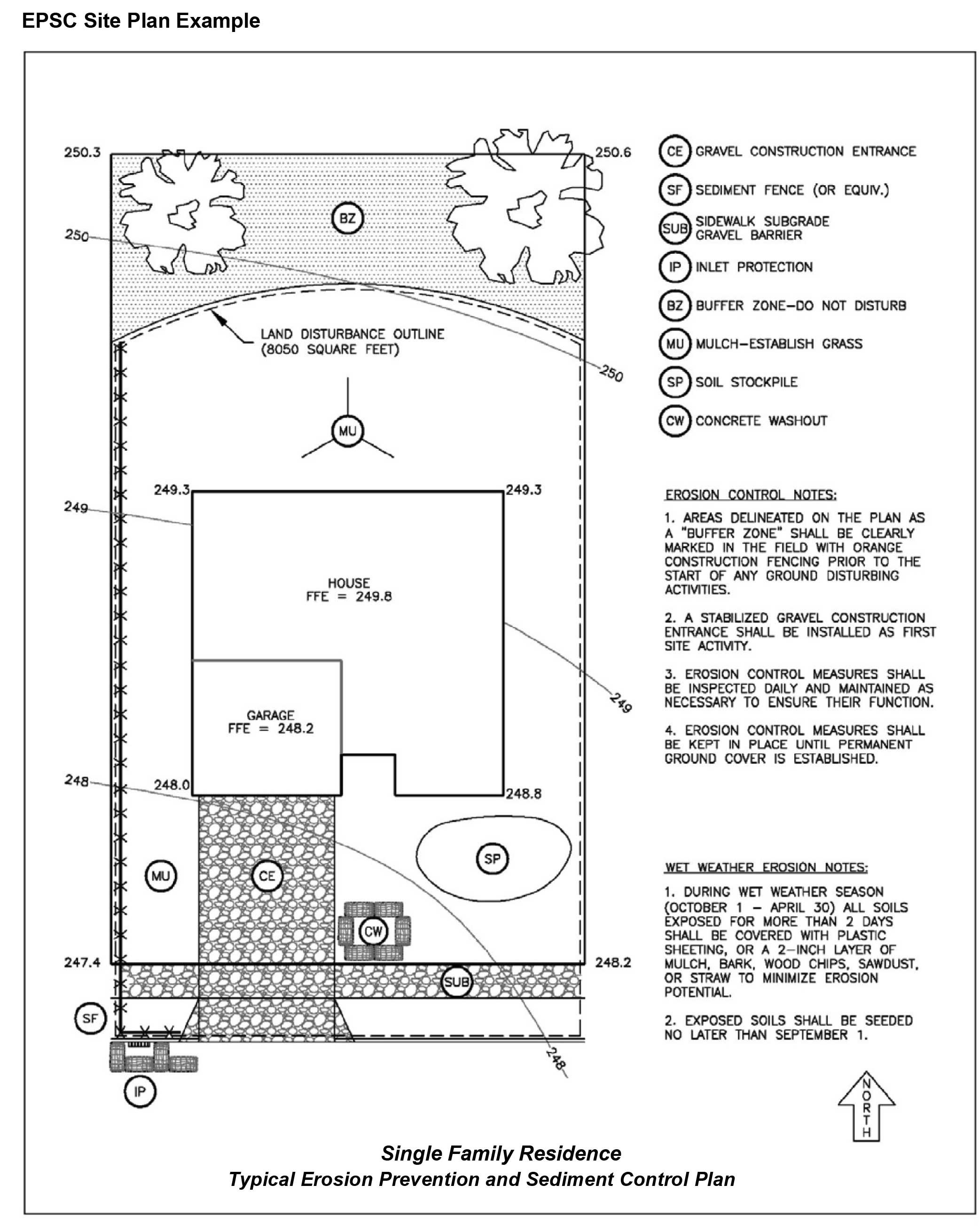
Example Site Plan
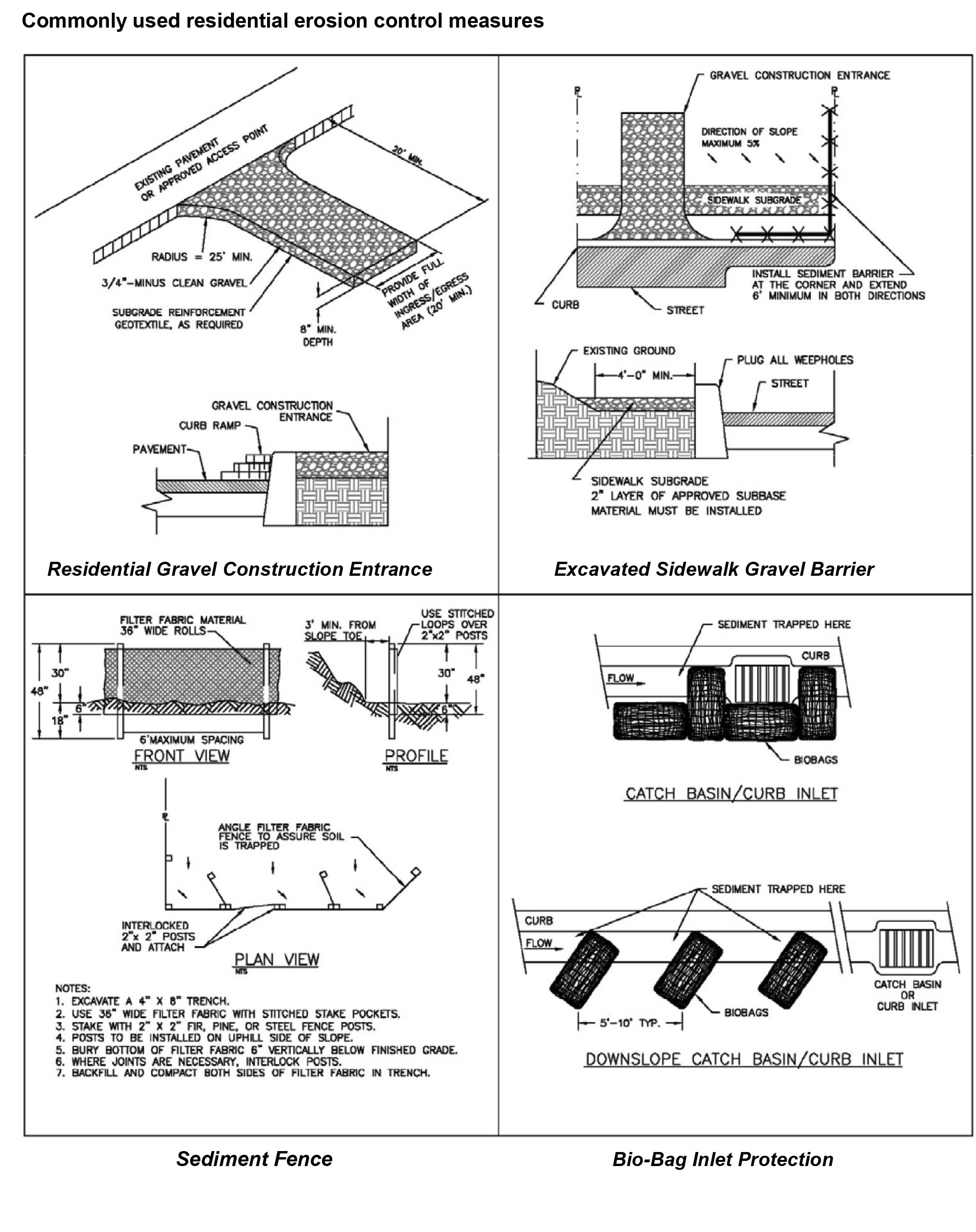
A simple Example Site Plan and basic design tips for residential construction.
Standard permit conditions:
- Prior to any ground disturbing activity on the site, Erosion Prevention and Sediment Control (EPSC) measures are required to be in place. An initial inspection by County staff is required at the time of the footing/foundation inspection or prior to any clearing or grading taking place. EPSC measures should be in place prior to the inspector arriving. To schedule your inspection, use the online inspection request system https://www.clackamas.us/building/inspectioncodes or call 503-742-4400.
- EPSC measures must be constructed in conjunction with, and prior to, all clearing and grading activities and in a manner as to ensure that sediment and sediment-laden waters do not enter the drainage system, roadways, or violate applicable water quality standards.
- EPSC measures shown on the plans are minimum requirements for anticipated site conditions. During the construction period, the EPSC measures shall be upgraded as needed for unexpected storm events and ensure that sediment and sediment-laden water does not leave the site.
- EPSC measures shall be inspected daily by the permit holder and be maintained as necessary to ensure their function.
- Stabilized gravel construction entrances shall be installed at the beginning of construction and maintained for the duration of the project. Additional measures may be required to ensure that all paved areas are kept clean for the duration of the project.
- EPSC measures shall be kept in place until permanent ground cover is established.
- All exposed soil must be permanently stabilized against wind and water erosion before the EPSC permit can be closed. Once the site is stabilized, schedule a final inspection by calling the number listed above or Accela Citizen Access. Permanent soil stabilization includes landscaping, seeding, or covering exposed soil with a minimum 2-inch layer of bark, straw, compost, or wood chips.
Wet weather permit conditions:
- Wet weather erosion prevention measures will be in effect from October 1 through April 30.
- Soil exposed for more than 2 days shall be seeded, or covered with plastic sheeting, matting, or a 2- inch layer of mulch, bark, wood chips, compost, or straw to minimize erosion potential.
- Exposed soil shall be seeded no later than September 1 to allow time for proper germination and growth before the wet weather season.
- Dry season erosion control measures will vary by site, regardless, the final inspection requirements will apply.
Where can I get assistance?
We are here to help you. Staff are typically available to answer your questions by phone from 8:00 a.m. to 4:00 p.m. on Monday through Friday 503-742-4240 or in person at the Building Division located at 150 Beavercreek Rd. Oregon City, OR 97045 from 8:00 a.m. to 4:00 p.m. Monday
EPSC Planning and Design Manual
The Erosion Prevention and Sediment Control (EPSC) Planning and Design Manual provides approved methods, materials, and maintenance standards for construction sites.
Training
Training on erosion control installation and maintenance is available from private providers. Clackamas County does not approve or endorse specific training companies.