Translate




It's estimated that, in one year in Clackamas County, $232.5 million dollars in productivity losses are attributable to deaths caused by tobacco-related disease.
Employers in the county can protect their staff, customers, community and bottom line by complying with Oregon's Indoor Clean Air Act as well as taking further action.
Indoor Clean Air Act (ICAA)
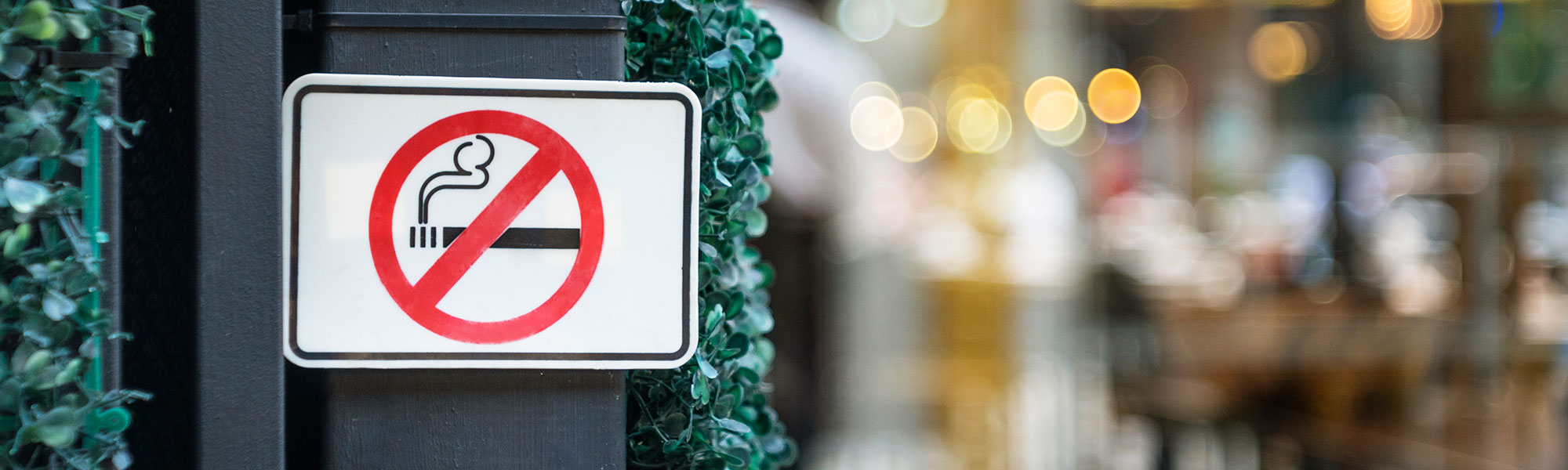
The ICAA, also known as the Smokefree Workplace Law, is designed to protect nearly all Oregonians from secondhand smoke and aerosols from vapes. The law prohibits smoking and vaping indoors as well as within 10 feet of all entrances/exits, windows that open and air intake vents.
Vaping includes e-cigarettes, vape pens, e-hookah and other devices used to deliver nicotine, cannabinoids and other substances in the form of a vapor or aerosol. Workplaces are responsible for complying with the ICAA.
Members of the public can file an ICAA complaint with the Oregon Health Authority.
Employers in need of ICAA decals may contact us at tobaccofreeclackco@clackamas.us or print signs.
Common spaces in multiunit housing are considered to be workplaces and are covered by Oregon’s Indoor Clean Air Act. Landlords can also choose to adopt smoke-free property policies. Find resources for landlords and renters or homeowners dealing with drifting smoke in their homes.
Establishing a smoke-free property policy
Workplaces are encouraged to expand upon the ICAA to further protect employees and visitors from secondhand smoke and aerosols from vapes. For instance, Clackamas County has adopted a smoking policy that is stricter than what the ICAA requires. All Clackamas County facilities are subject to the following policy:
Smoking is prohibited inside all County facilities. Smoking is restricted to designated smoking areas. Individuals may not smoke or carry any lighted smoking instrument within 25 feet of entrances, exits, windows or ventilation intakes at Clackamas County facilities. This applies to all employees, clients, contractors and visitors.
Creating a smoke-free property policy is the best way to invest in the health of your employees and help improve your bottom line. There are multiple benefits to a smoke-free property policy:
- Staff absenteeism may be lower due to a reduction in smoking-related illnesses.
- Cleaning and maintenance costs will be reduced as cigarette butts and other litter from tobacco products will be eliminated.
- Since fire risk will be reduced, you may be able to negotiate a lower insurance premium.
- Job seekers are increasingly interested in working for employers that prioritize smoke-free spaces.
- Clackamas County employers with a smoke-free property policy include Kaiser Permanente, City of Happy Valley and Providence.
For more information and assistance in establishing a tobacco-free environment, contact Clackamas County's Tobacco Prevention and Education Program at tobaccofreeclackco@clackamas.us.
Addressing tobacco products in the retail environment
The retail environment plays a role in youth use of tobacco and nicotine products. Teens in Clackamas County and across Oregon overwhelmingly use flavored e-cigarettes over conventional cigarettes, thanks to the tobacco industry’s successful marketing of flavored products. Youth-appealing flavors such as cotton candy are added to e-cigarettes and other nicotine delivery devices to soften the harsh taste and entice new users.
As of January 2026, the Food and Drug Administration (FDA) has only authorized 39 e-cigarette products for sale in the US. Currently authorized e-cigarettes are tobacco or menthol flavored. Despite this, other e-cigarette products, including those that taste like fruit, candy, and more, are still widely available. Almost all the 280+ tobacco retailers in Clackamas County sell some form of flavored products.
To combat the tobacco industry’s tactics, the Clackamas County Tobacco Prevention and Education Program educates local decision makers on the harms of youth access to and use of flavored tobacco products. City councils in Milwaukie, Lake Oswego, and Happy Valley, as well as the Oregon City Commission, have all passed resolutions supporting legislation to end the sale of flavored tobacco products in the state. The Lake Oswego School Board has also supported this effort.
A healthy retail environment is one where it is easy and cost effective to make healthy food purchases. The goal is to encourage customers to purchase and consume fruits, vegetables, water, and other nutritious products by increasing access to them while decreasing access to substances like tobacco products. Healthy retail can work well in both urban and rural areas, and programs have been launched in communities across the country.
Public Health awarded a grant to Milwaukie, Oregon’s The Little Blue Store in August 2024 to help them adopt a healthy retail business model. They agreed to end their tobacco sales and have since started offering fresh produce and dairy options, as well as hot Ethiopian dishes for takeout. To learn more about this work, visit our Healthy Retail page.