Translate




Whether you are at home, work, or school, the materials you can recycle are the same. All items should be empty and dry before going into your recycling bin.
Printable Recycle Guides

For single-family houses
- ClackCo Recycle Guide
- Guía de Reciclaje de ClackCo (Spanish)
- Руководство по переработке отходов в округе Клакамас (Russian)
- Hướng Dẫn Tái Chế ClackCo (Vietnamese)
- ClackCo 回收指引 (Simplified Chinese)
- ClackCo 재활용 가이드 (Korean)
- คมู่ อื รไี ซเคลิ แคลกโค (ClackCo Recycle Guide) (Thai)

For apartment and multifamily communities
- ClackCo Recycle Guide
- Guía de Reciclaje de ClackCo (Spanish)
- Руководство по переработке отходов в округе Клакамас (Russian)
- Hướng Dẫn Tái Chế ClackCo (Vietnamese)
- ClackCo 回收指引 (Simplified Chinese)
- ClackCo 재활용 가이드 (Korean)
- คมู่ อื รไี ซเคลิ แคลกโค (ClackCo Recycle Guide) (Thai)
Businesses: Print or request workplace recycling tools
What Can I Recycle?
- Recycling (paper, metal, plastic)
- Glass
- Batteries
- Yard Waste (urban areas only)
- Food & Yard Waste (Lake Oswego, Milwaukie & Wilsonville city limits only)
- Food Only (business accounts)
- Motor Oil
- Garbage
- Bulky Waste (mattresses, appliances, etc.)
Recycling (paper, metal, plastic)
Place in your recycling bin
A reminder: Your paper, metal, and plastic recycling all go in the same recycle bin.
Paper
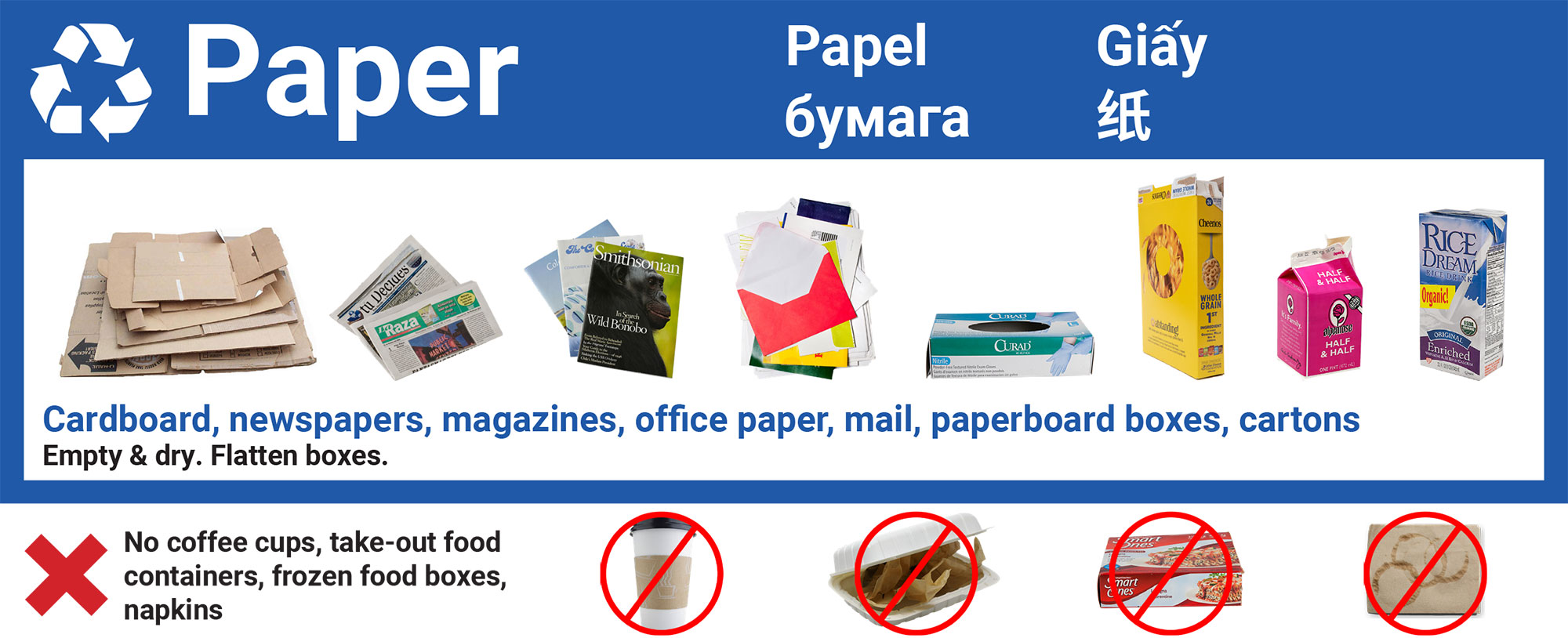
YES, these can go in your bin:
- cardboard boxes (flattened, no larger than 3 ft. x 3 ft.)*
- newspaper
- magazine
- catalogs
- phone books
- paperback books
- scrap paper
- junk mail
- cartons (milk, juice, soup)
- paper bags
- clean take-out/delivery pizza boxes (no food, grease ok)
Businesses: ask your garbage company
*Have extra cardboard? Fit as much into your bin as possible by flattening and cutting into smaller pieces. When your bin is full, flatten extra cardboard, tape together in one bundle, and lean next to your blue recycling bin. Bundles should be no larger than 3 feet in any direction.
NO, these do not belong in the recycling:
- shredded paper
- coffee cups
- to-go cups
- to-go food containers
- paper plates
- paper towels
- napkins
- facial tissue
- wax-coated cardboard
- frozen food boxes
- label-backing sheets hardback books
- paper coated with food, wax, foil or plastic
Metal
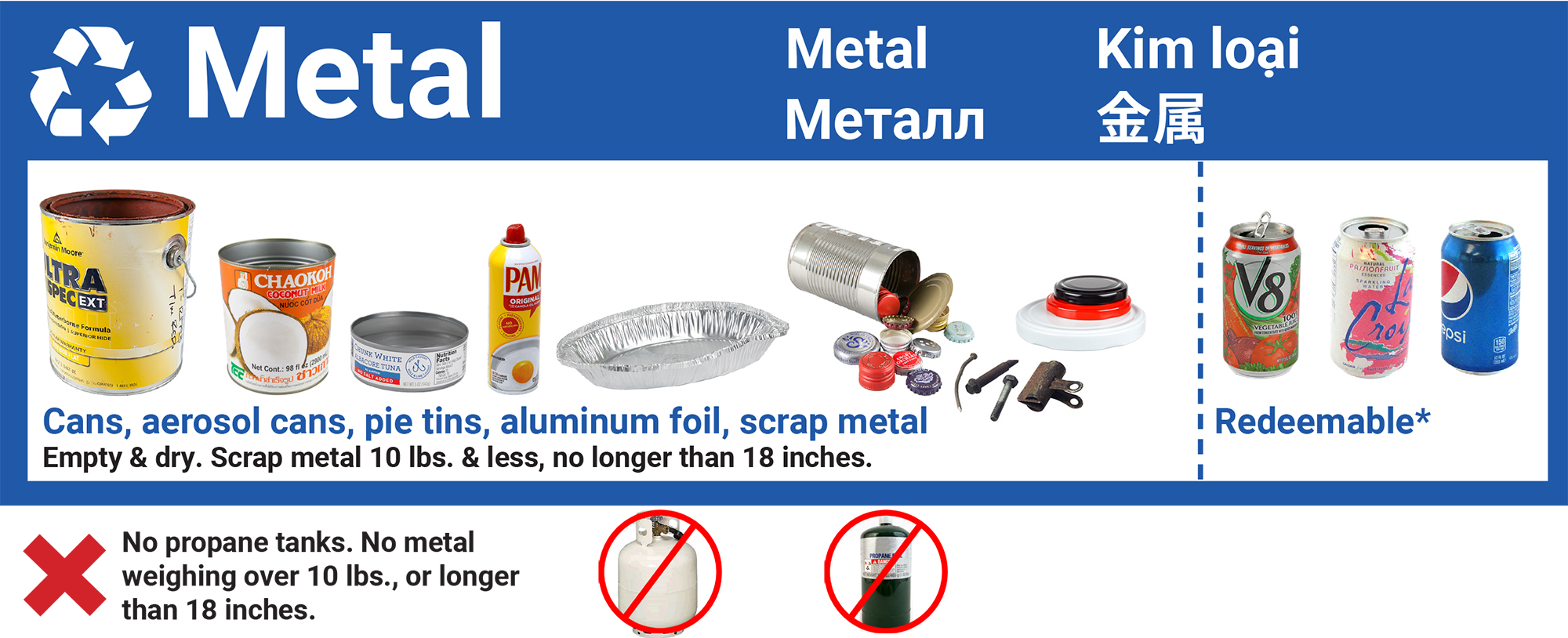
YES, these can go in your bin:
- food and drink cans
- pet food cans
- paint cans
- aerosol cans**
- aluminum foil
- scrap metal (smaller than 18 in., less than 10 lbs.).
Empty and dry. Labels okay.
Recycle small metal pieces by collecting in a can and crimping it closed before putting it in the recycling bin.
*Redeemable beverage cans with a 10-cent deposit can be recycled in your recycling bin, or you can collect your deposit funds by taking them to some grocery stores or any BottleDrop Center.
**Businesses that are hazardous waste generators must dispose of aerosol cans as hazardous waste. Find information on small business hazardous waste disposal through Metro's Very Small Quantity Generator program or call 503-234-3000.
NO, these do not belong in the recycling:
- scrap metal larger than 18 in, or more than 10 lb
- propane tanks
- Aerosol cans that still contain liquid.
Aerosol and other metal cans that still contain hazardous waste should be taken to a household hazardous waste facility.
Plastic
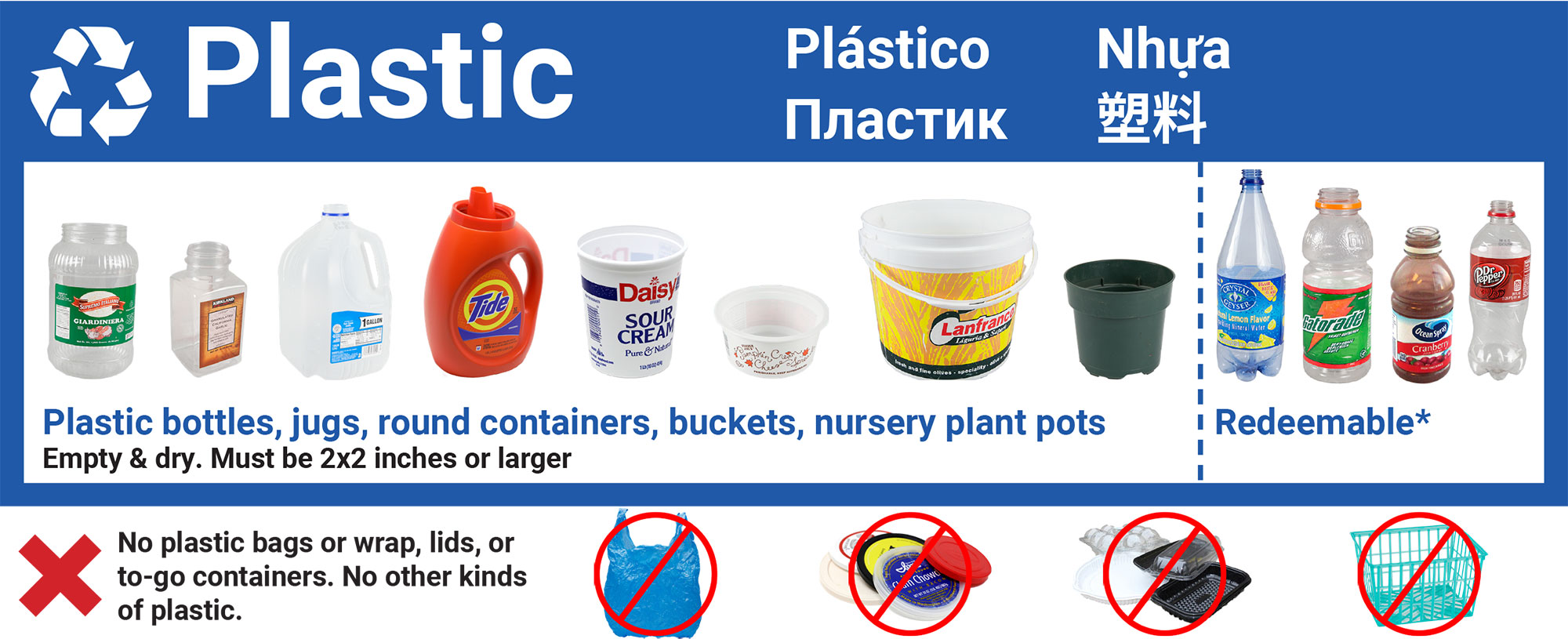
When sorting plastic, ignore the recycle symbol and numbers. Plastic recycling in Clackamas County and the Metro region is based on the shape and size of the item.
YES, these can go in your bin:
- bottles and jugs (caps ok if screwed on)
- square and round containers, including buckets and storage containers (that fall loosely from your recycle bin when emptied/serviced, nursery plant pots. Must be 2 inches x 2 inches or larger.)
Empty and dry. Labels okay.
*Redeemable beverage bottles with a 10-cent deposit can be recycled in your recycling bin, or you can collect your deposit funds by taking them to some grocery stores or any BottleDrop Center.
NO, these do not belong in the recycling:
- any plastic not shaped like a bottle, jug, bucket, round or square container
- plastic bags and plastic wrap (e.g. pallet wrap, bubble wrap)
- plastic caps (if not screwed onto a plastic bottle) and lids
- plastic to-go food containers and disposable plates, cups and cutlery. Plastics labeled "biodegradable" or "compostable."
- prescription medicine bottles and other plastic containers smaller than 2 inches in 2 dimensions
- plastic or latex gloves
- bottles that contained motor oil, pesticides or herbicides.
Glass
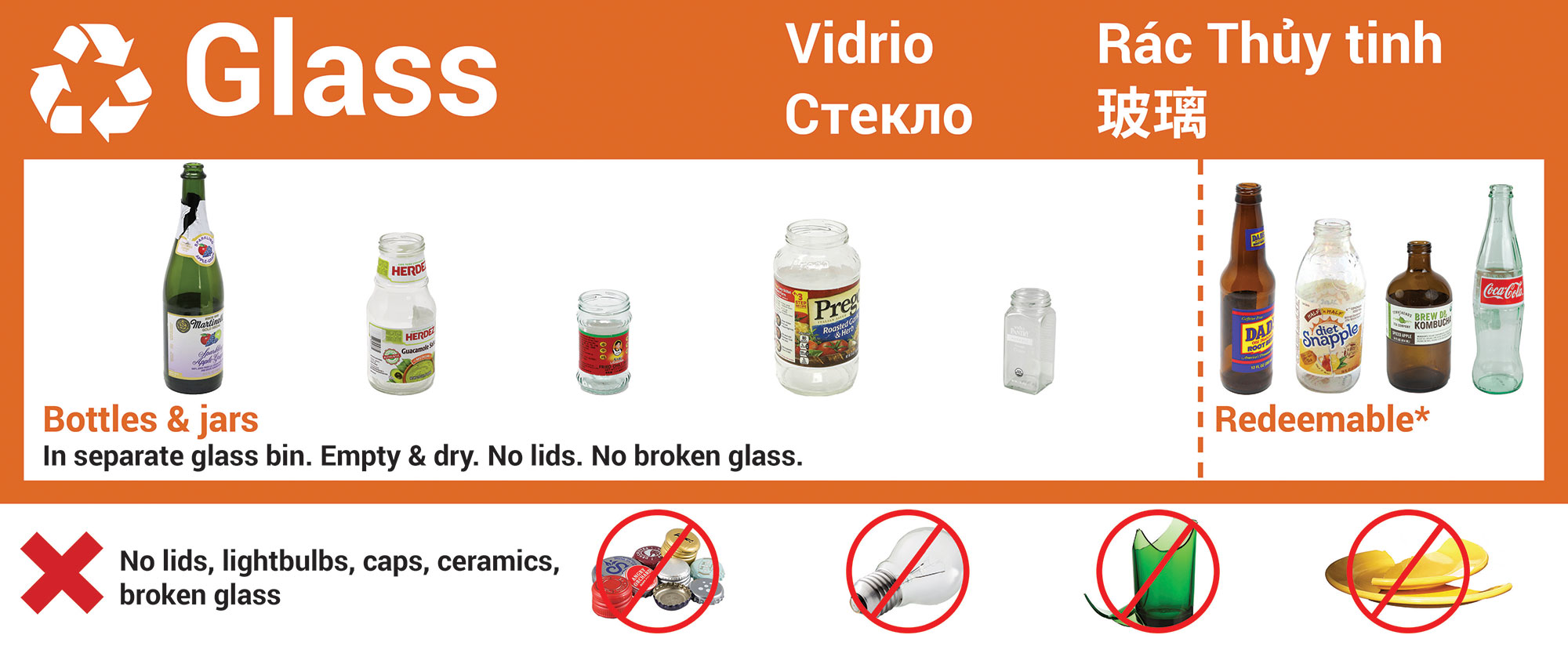
Glass is collected in a separate glass bin. Never put glass in your recycling bin. If you are missing a glass bin, please contact your garbage and recycling company.
If you are a customer of Bliss Sanitary Service, Inc., your glass recycling collection may vary slightly. Contact Bliss Sanitary for more information at 503-663-3417.
YES, these can go in your bin:
- bottles
- jars
Empty and dry. Labels okay.
*Redeemable beverage bottles with a 10-cent deposit can be recycled in your separate glass bin, or you can collect your deposit funds by taking them to some grocery stores or any BottleDrop Center.
NO, these do not belong in your glass recycling bin:
- glass that is not a bottle or jar (e.g. dishware or drinkware of any kind, ceramics, flower vases, window glass, picture frame glass, light bulbs, eyeglasses, etc.)
- caps or corks
Yard Waste* (urban areas only)
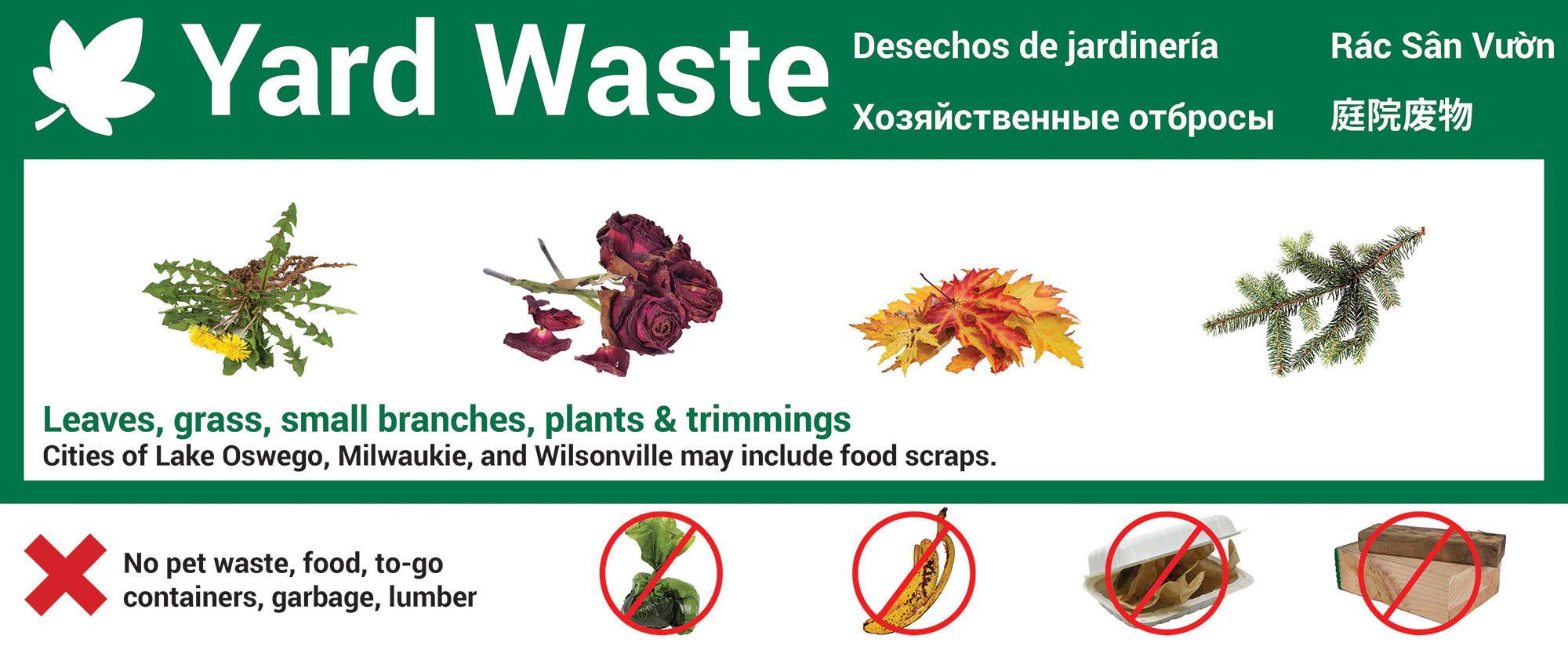
*Available in urban areas only. Residents of the cities of Lake Oswego, Milwaukie, and Wilsonville may include food waste. See Food & Yard Waste section of this guide.
YES, these can go in your bin:
- weeds
- leaves
- vines
- grass
- small branches
- flowers
- houseplants
- plant clippings (up to 4 inches thick and 36 inches long)
NO, these do not belong in your yard waste bin:
- food waste
- pet waste
- animal bedding (including straw and chicken manure)
- animal carcasses
- fireplace ashes
- dirt
- rocks
- sod
- lumber
- treated wood
- sawdust
- stumps
- large branches
- garbage
Food & Yard Waste* (Lake Oswego, Milwaukie & Wilsonville city limits only)
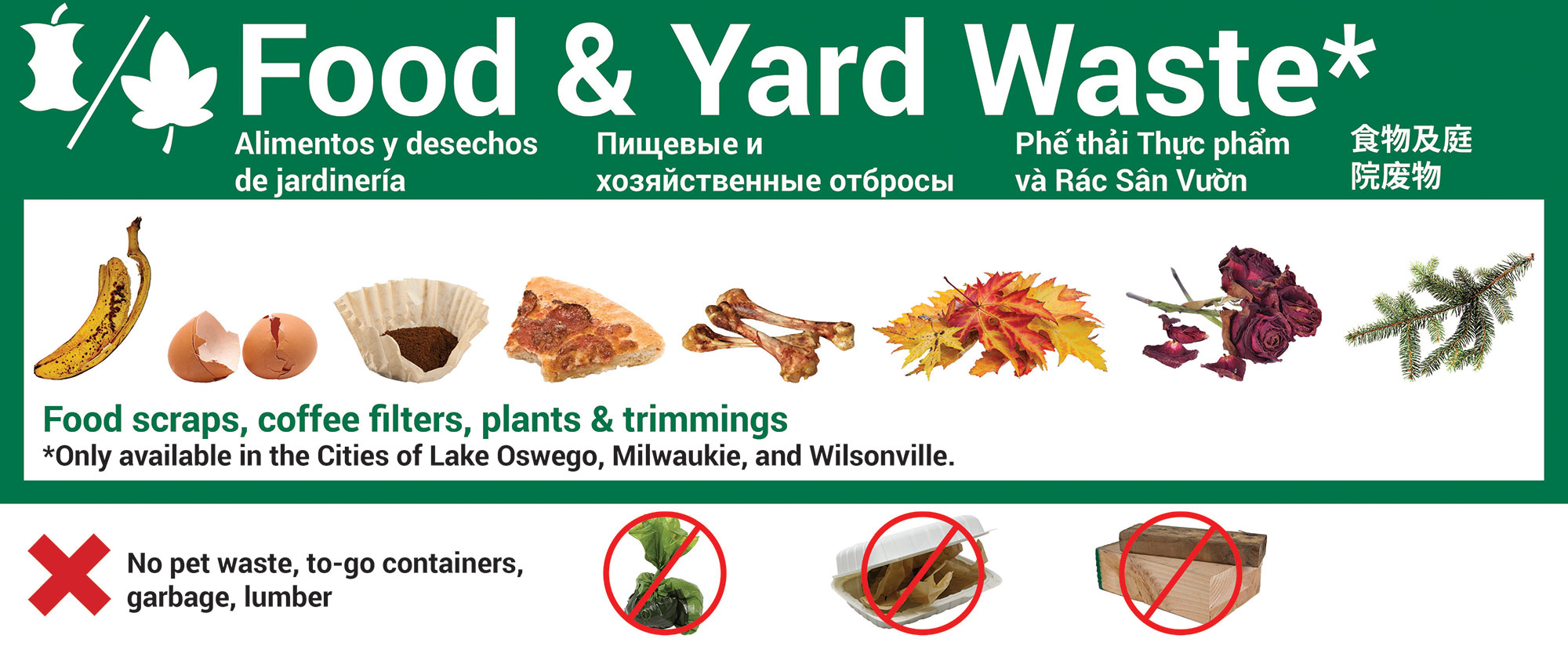
*Only residents within the city limits of Lake Oswego, Milwaukie, and Wilsonville may include food waste in their yard waste bins. Including food waste in your yard waste bin outside those city limits may result in a fee from your garbage and recycling company.
If you want this service, please let your local government know.
YES, these can go in your bin:
- Yard waste: Weeds, leaves, vines, grass, small branches, flowers, houseplants, plant clippings (no more than 4 inches thick or 36 inches long).
- Food: Meat, poultry, fish, shellfish, bones, eggs and eggshells, cheese, dairy, bread, baked goods, pasta, rice, beans, nuts, seeds, vegetables and fruit, peals and pits. Raw or cooked food, table scraps, plate scrapings, leftovers, and soiled food.
- Other: Paper coffee filters, paper tea bags, paper towels and napkins, pizza delivery boxes (remove any plastic or wax paper).
- Approved Bin Liners: Paper or paper bag. Milwaukie and Wilsonville residents may use a BPI-certified compostable bag.
Remember, waste reduction is more impactful than recycling (composting). Visit Food Waste Prevention for tips and tricks about preventing food waste.
NO,these items do not belong in your food & yard waste bin:
- Waxed paper, parchment paper or facial tissue
- coffee cups, paper plates, to-go containers or wrappers
- drink cups, straws or utensils
- no liquids, grease, or cooking oil
- no items labeled "compostable" or "biodegradable" (except BPI-certified compostable bags in Milwaukie and Wilsonville).
- pet waste
- animal bedding (including straw and chicken manure)
- animal carcasses
- fireplace ashes
- dirt
- rocks
- sod
- lumber
- treated wood
- sawdust
- stumps
- large branches
- garbage
Food Only* (business accounts)
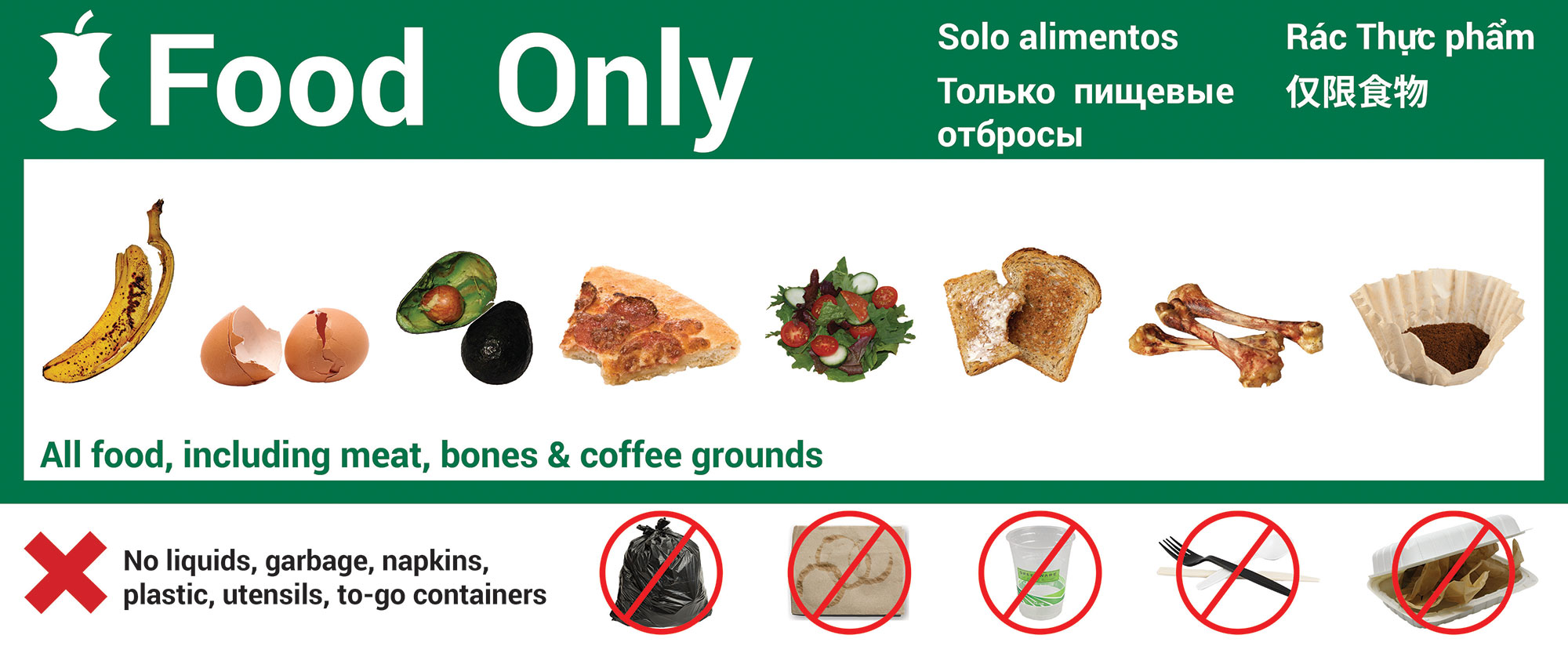
*Restaurants, food businesses, and some multifamily communities may have a food only bin.
YES, these can go in your bin:
- Food: Meat, poultry, fish, shellfish, bones, eggs and eggshells, cheese, dairy, bread, baked goods, pasta, rice, beans, nuts, seeds, vegetables and fruit, peels and pits. Raw or cooked food, plate scrapings, leftovers, and spoiled food are all OK.
- Other: Paper coffee filters and paper tea bags. BPI-certified compostable bags may be used by restaurants and food businesses.
NO, these items do not belong in a food waste only bin:
- waxed or plastic-coated cardboard, pizza boxes, parchment paper, napkins, and paper towels
- paper plates, to-go containers or wrappers, drink cups, straws, stir sticks, or utensils.
- items labeled "compostable" or "biodegradable"
- liquids, grease, or cooking oil*
- garbage, bags, plastic wrap/film, metal, glass
- yard waste.**
*Businesses can set up collection of used cooking oil and/or animal rendering from independent processors. Find companies through Metro's What Goes Where tool or call 503-234-3000.
**Businesses can set up collection of yard waste from their garbage and recycling company.
Motor Oil*
Set used motor oil next to your glass bin in a marked container with a screw-top cap. Container must be 2 gallons or less.
*Available for single-family residential customers only. Not available at apartments or businesses.
Garbage
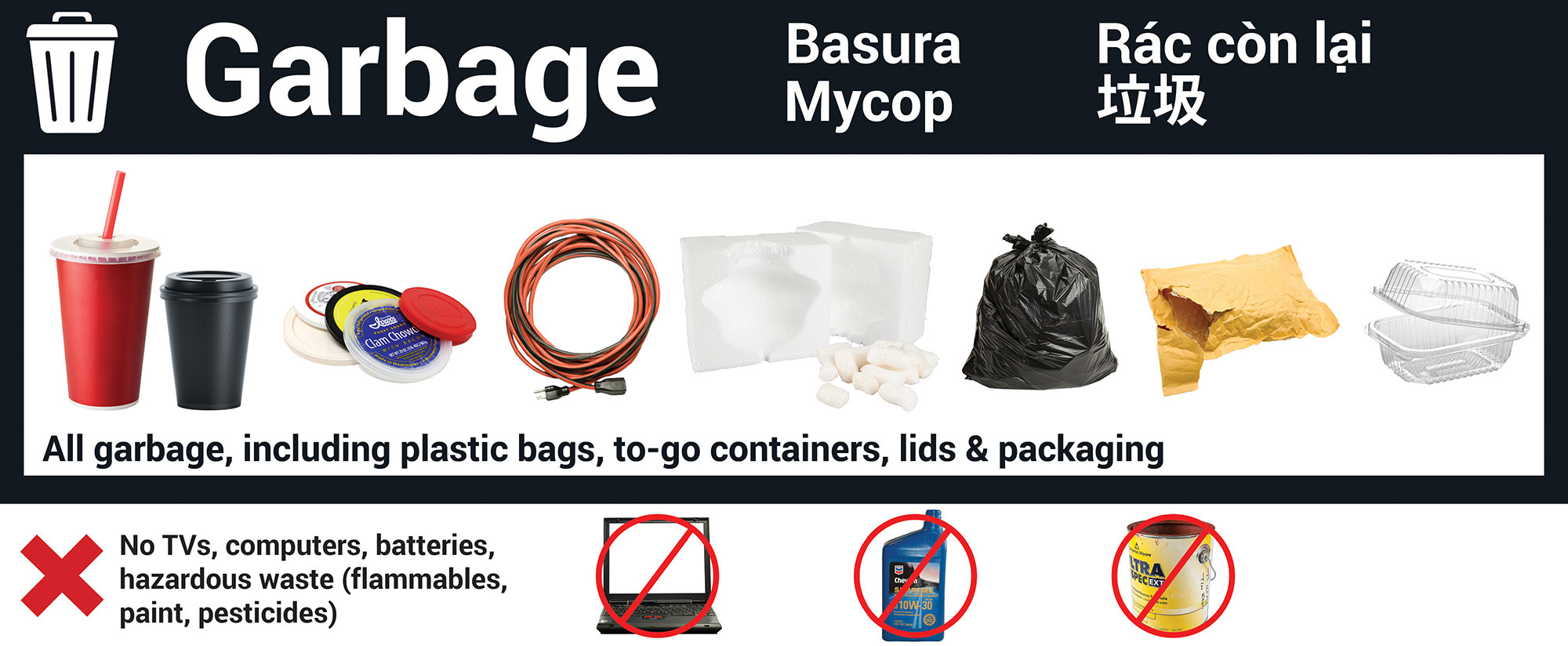
(Some items can be recyclable at drop-off locations).
YES, these can go in your bin:
- Paper: Coffee cups, to-go food containers, paper plates, paper towels, napkins, facial tissue, wax-coated cardboard, frozen food boxes, label-backing sheets. Paper coated with food, wax, foil or plastic.
- Plastic: Any plastic not shaped like a bottle, jug, bucket, or round container. Plastic containers smaller than 2x2 inches. Plastic bags, plastic padded envelopes, and plastic wrap (e.g. pallet wrap, bubble wrap). Plastic caps (if not screwed on to plastic bottles/jugs) and lids. Plastic to-go food containers and disposable plates, cups, cutlery, and straws. Plastics labeled "biodegradable" or "compostable." Plastic microwave meal boxes and trays. Styrofoam™. Prescription medicine bottles smaller than 2x2 inches. Plastic or latex gloves. Bottles that have come in contact with motor oil, pesticides or herbicides.
- Metal: Metal items larger than 18 in or more than 10 lbs. Aerosol cans* that still contain liquid. Aerosol and other metal cans that still contain hazardous waste should be taken to a household hazardous waste facility.
- Businesses that are hazardous waste generators must dispose of aerosol cans as hazardous waste. Find information on small business hazardous waste disposal through Metro's Very Small Quantity Generator program or call 503-234-3000.
- Glass: Glass that is not a bottle or jar (e.g. dishware or drinkware of any kind, ceramics, flower vases, window glass, picture frame glass, eyeglasses, etc.).
- Other: Food waste. Extension cords and garden hoses. Painted and stained wood. Lumber, plywood, and treated wood. Pet waste and animal bedding (including straw and chicken manure).
- Cooking oil, kitchen fats and grease: Must be in a sealed container before putting in the garbage.
- Businesses can set up collection of used cooking oil and/or animal rendering from independent processors. Find companies through Metro's What Goes Where tool or call 503-234-3000.
- Bag all garbage, including: Broken glass, diapers, cat litter, feminine hygiene products, cold ashes, sawdust, small animal carcasses, and packing peanuts.
NO, these items do not belong in the garbage:
- batteries
- computers
- monitors
- TVs
- compact fluorescent light bulbs (CFLs)
- hazardous waste
- propane tanks/fuel canisters
- chemicals
Look up drop-off locations or call 503-234-3000.
Bulky Waste (mattresses, appliances, etc.)
Homeowners (Houses, small-plexes, and those who have their own garbage account): If an item is too large to fit in your garbage bin and cannot be donated, call your garbage company to ask if they can pick it up (extra fees may apply). Otherwise, take to a drop-off location.
Multifamily residents and businesses: Talk to your landlord or property manager if you need to set out large items or extra garbage.
Other Reuse, Recycling & Disposal Options
- Recycle+: An optional, add-on service to recycle even more.
- Batteries: Learn how to safely dispose of household batteries in Clackamas County.
- Deposit Containers: Return containers with a 10-cent redeemable deposit to BottleDrop Centers, retailers or grocery stores.
- Computers, Monitors, TVs, Printers, Keyboards and Mice: Take up to seven qualifying items at a time to an Oregon E-Cycles collection site for free recycling.
- Hazardous Waste: Learn where to safely dispose of common household hazardous waste.
- Paints and Stains: PaintCare makes it easy to recycle leftover paint, primers, stains, sealers and more for no fee.
- Styrofoam™: The only local option for polystyrene plastics recycling (for a fee) is Green Century Recycling in NW Portland.
- Plastic Bags and Wrap: Learn more about plastic film, including which types you can recycle and where to recycle them for free.
- Medications: Safely dispose of unwanted medications at a drug take-back box.
- Sharps (needles, lancets, syringes): Learn the Oregon laws about containment and disposal of medical sharps.
- Still Have Questions? Look up how to dispose of an item or call 503-234-3000.
- Reuse & Donation: Buy, sell, and donate good-condition items.
- Food Waste Prevention: Tips and tricks for your household to save money and prevent wasted food.
Why Can't I Recycle This?
Clothes and fabric
Textiles get wound up in the sorting machinery and can cause severe, expensive damage. If in good condition, please donate; otherwise, put in the garbage.
"Compostable" plastics
Compostable plastics are not plastics, and cannot be recycled into new materials. They also are not compostable in our local compost facilities. Learn why composters serving Oregon do not want compostable packaging and service ware (PDF from DEQ).
Envelopes lined with bubble wrap (paper and plastic)
These items get wound up in the sorting machinery and can cause severe, expensive damage. You can collect plastic bubble wrap envelopes (clean and dry, no labels nor stickers) and return to local participating retailers for recycling.
Frozen food boxes (for ice cream, microwave dinners, etc.)
Cardboard boxes that go in the freezer are infused with plastic to help them withstand moist, cold conditions. Because of this, they cannot be turned into new paper products.
Glassware, ceramics, light bulbs, etc. (glass other than bottles and jars)
These kinds of glass have different melting points than glass bottles and jars. If mixed together during the recycling process, it can result in weak glass that can crack or explode.
Large bulky plastics like lawn chairs, kiddie pools, laundry baskets, etc.
Our recycling facilities cannot process these materials.
Plastic bags and plastic wrap
Plastic bags and plastic wrap get wound up in the sorting machinery and can cause severe, expensive damage. Put these items in the garbage, or collect it (clean and dry, no labels or stickers) and return plastic film and wrap to local participating retailers for recycling.
Plastic lids, tops, and (loose) caps
Besides being a low-grade plastic, thin lids are mistaken as paper and cardboard by sorting machines and are accidently sent to paper mills. Small caps fall through the machine and end up in the garbage. (Plastic caps that are screwed on to plastic bottles/jugs are accepted.)
Plastic produce, fruit, and pastry containers
The manufacturing process of these containers make them low-grade, low value and difficult to recycle. Due to their brittle nature, they can break apart in the sorting machinery and can accidently be sorted as paper or cardboard.
Styrofoam™
This material breaks and crumbles. It makes a mess and mixes with other recyclables. Put in the garbage.
For those traveling to NW Portland, Green Century Recycling will accept a 45-gallon bag of Styrofoam™ and other materials for $10.
Take-out food containers, cups, utensils, straws, etc. (paper, cardboard, and plastic)
The manufacturing process of these items make them low-grade, low value and difficult to recycle. Cardboard take-out boxes and coffee cups are often lined with plastic, which makes them unrecyclable. Utensils and straws are mistaken as paper and cardboard by sorting machines and are accidently sent to paper mills. These items are also often contaminated with food.
Still Have Questions?
- Find a Recycler: Look up easy options to recycle, donate or reuse anything from batteries and packing peanuts to that old dishwasher.
- Metro Recycling Information Center: Call for your garbage and recycling questions at 503-234-3000.
- Instagram: You can also direct message pictures of questionable items to @recycleornot (@ReciclarONo en español) on Instagram.
- Play the game: Test your recycling knowledge with this interactive game. (Juegue ReciclarONo)