Garbage and Recycling

Garbage and Recycling

Become a Leader in Sustainability

Get Certified

Leaders in SustainablityThe Leaders in Sustainability certification program provides workplaces with guidance and recognition for meaningful achievements in sustainability practices. There are proven benefits of environmental, social and economic advancements (called the triple bottom line) for workplaces of all types and sizes. 

Starting is easy. First, review the eligibility criteria, certification requirements and steps to certification below. Then download the application and get to work!

Leaders in Sustainability Application

See who’s certified on our Green Business Directory.

91766

Why get certified?

Organizations that go through the Leaders in Sustainability application process take concrete steps to:

trash
Minimize waste

water
Conserve energy and water

water
Prevent pollution

water
Support staff and
the community

You’ll become part of a network of businesses sharing sustainability solutions and broadening one another’s reach.  By joining, your workplace can:

trash
Be part of community of leaders with shared values

water
Meet sustainability peers; associate your brand with other green companies

water
Gain marketing recognition

water
Attract and retain the best talent

Promote your certification

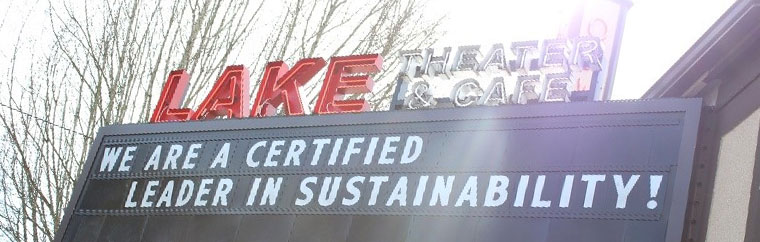
Lake Theatre

Certification lasts for 3 years. Certified workplaces receive:

  • a custom plaque
  • a window decal showing your certification level
  • a listing on Clackamas County's Green Business Directory
  • promotion in the County newspaper, our e-newsletter, and other outlets when available
  • resources for the organization's own promotion, including the logo to include on marketing materials, the website, email signatures, etc.

But the best promotion will always be what you do, so shout it from the rooftops! Promote your accomplishment on social media, tell customers and partner organizations about it, and show off your award plaque where people will see it.

New Format?
Off

Meet Sustainability Requirements

Businesses generate over half the waste in our region. 

Businesses are responsible for meeting local regulations to separate certain materials for recycling and to have identifiable internal bins and educational signs for employees. Food businesses must also minimize plastic waste and in some areas, separate food scraps to be composted. To help you comply with these requirements, we provide free tools and support.

Recycling

Effective 2009, all workplaces — including businesses, schools, public agencies and non-profit organizations—are required to recycle the materials listed below, have internal containers designated for recycling, post signs showing employees what can be recycled, and at least once a year educate employees on the guidelines of what is allowed in the program.

Separate these materials for recycling:

  • Paper and cardboard
  • Plastic bottles, jugs, round tubs and buckets
  • Metal
  • Glass – bottles and jars (collected separately)

Everyone in Clackamas, Multnomah and Washington Counties can include the same items in their recycling at work and home. Businesses with dumpster or cart-based garbage service have access to mixed recycling service as part of the fee.

For more information about the requirements, view Clackamas County Code (see Chapter 10.03.145 Business Recycling Requirement).

Download and print recycling posters
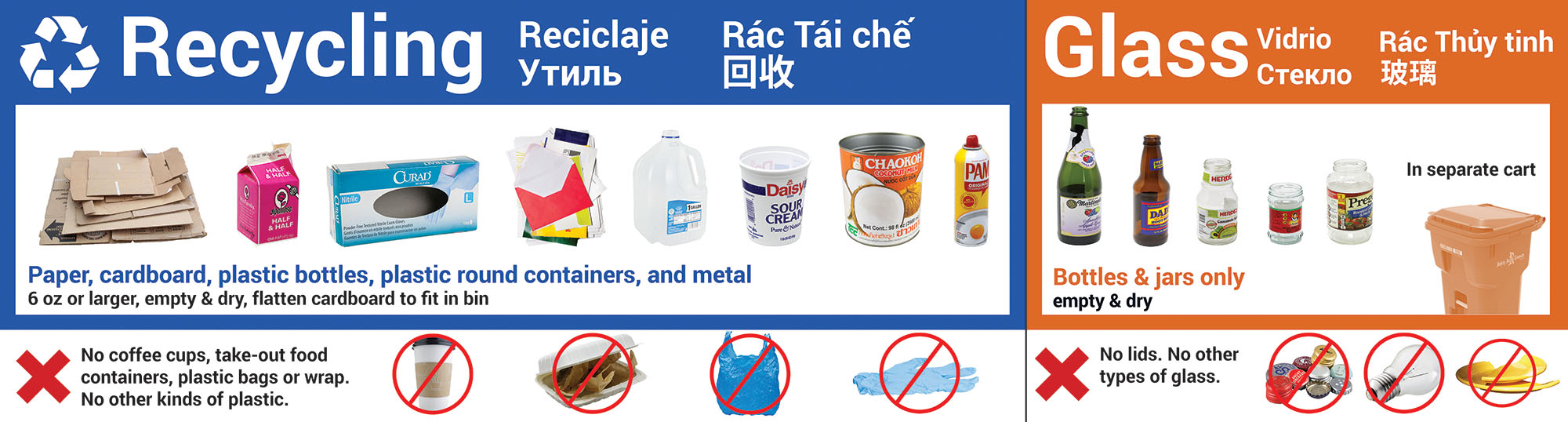
Example of recycling posters

Food Waste

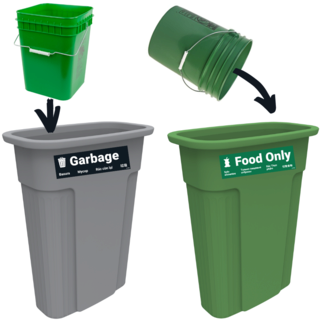
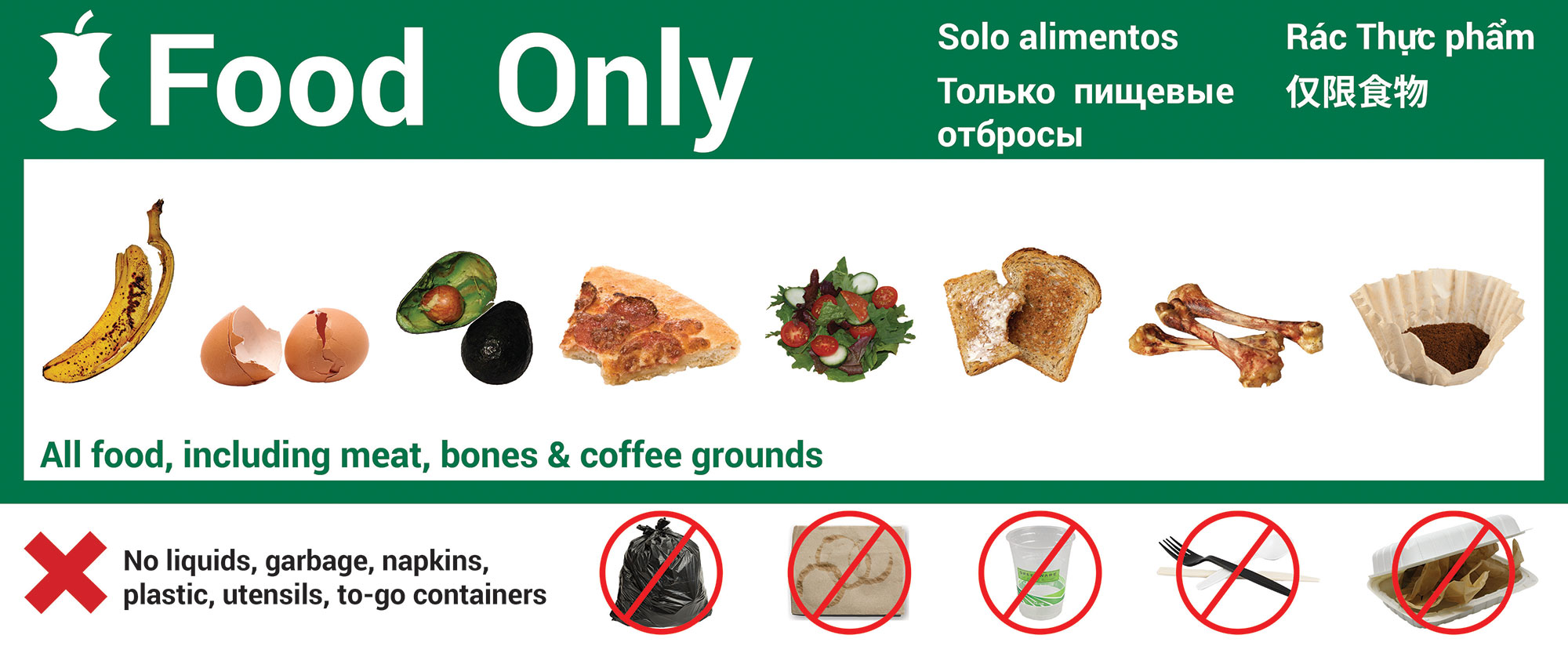
Recycling binsFood businesses within the Metro District that dispose of at least 60 gallons of food waste per week must separate that material for collection. This requirement covers all businesses that sell, cook, serve, process, and/or assemble food: restaurants, grocers, manufacturers, hospitality, etc. The covered material includes all waste from fruits, vegetables, meats, breads and grains, dairy, fish and shellfish, nuts, seeds, coffee grounds, and other foods.
Food businesses within the Metro District that dispose of at least 60 gallons of food waste per week must separate that material for collection. This requirement covers all businesses that sell, cook, serve, process, and/or assemble food: restaurants, grocers, manufacturers, hospitality, etc. The covered material includes all waste from fruits, vegetables, meats, breads and grains, dairy, fish and shellfish, nuts, seeds, coffee grounds, and other foods.

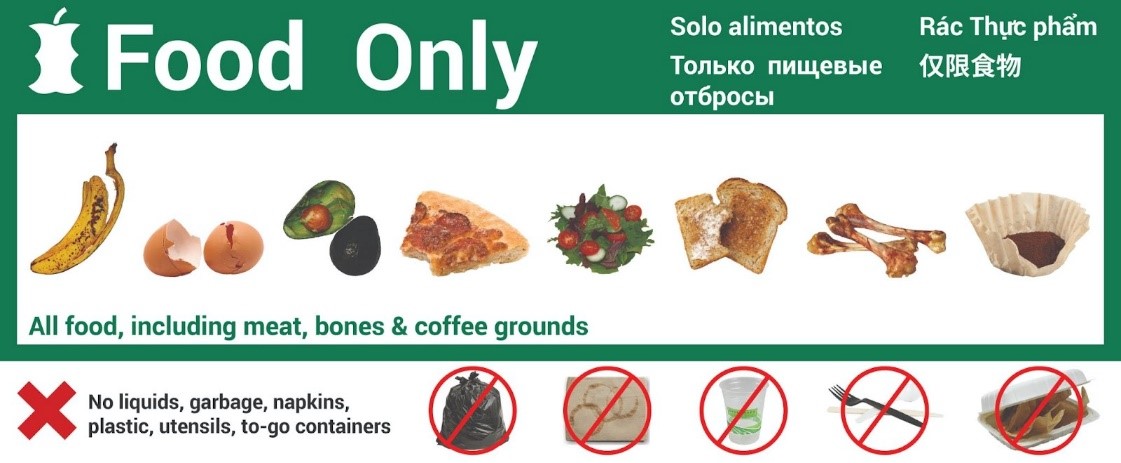
Food waste poster

 The regulation only applies to wasted food handled by employees. Businesses are not required to collect food scraps that have been disposed of directly by customers in front-of-house operations.

Property owners and managers must allow for the collection of food waste by these businesses or help secure the service for lessees that are covered under the requirement.

For more information about the requirements, view Clackamas County Code (see Chapter 10.03.147 Food Waste Requirement) or visit How to Reduce Food Waste.

Statewide Policies

Single-use Plastic Bag Ban

Plastic bag with strikethroughRetail stores and restaurants are prohibited from providing single-use plastic checkout bags to customers. Businesses may still provide reusable or recycled-content paper bags and must charge a fee for providing the bag.

Paper bags must be made with at least 40% post-consumer recycled fiber. Reusable bags include fabric bags or thick plastic (4 mil or more). The per-bag fee for paper or reusable plastic is 5 cents in Clackamas County, except in Lake Oswego, where it is 10 cents.

Learn more about the statewide single-use bag ban.

Print and hang educational posters to inform and educate customers. 

Single-use Plastic Straws in Food Service Facilities

Straws with strike throughEffective January 2020, food service establishments (restaurants, bats, hospitality, etc.) are prohibited from automatically providing plastic, single-use straws (PDF from the Oregon Health Authority). They are to be available by request only. Automatically providing single-use plastic straws to customers is prohibited. Dine-in customers must request plastic straws. Drive-thru and takeout customer can be asked if they need one. Paper or bamboo straws can still be provided automatically.

Polystyrene Foam and PFAS Container Ban

Oregon is foam-free starting 2025!

In 2023, Oregon adopted SB 543 that bans the use and sale of polystyrene foam containers and containers with intentionally added PFAS for prepared foods. It also bans the sale of foam packing peanuts and single-use foam coolers.

Please refer directly to the bill or the Department of Environmental Quality for more details and definitions.

What containers and foam are banned?

  • Polystyrene foam containers
    Polystyrene is often called Styrofoam™, but there are many brands of foam to-go bowls, plates, cups, lids, clamshells (hinged), food trays, and other containers used for serving prepared foods.
  • Polystyrene foam packaging peanuts
    Loose foam peanuts used commonly for packing and shipping. 
  • Single-use foam coolers
  • PFAS containers
    Perfluoroalkyl or polyfluoroalkyl substances, more commonly referred to as PFAS, are a group of chemicals used with paper packaging to prevent the absorption of oil and moisture.

Who is impacted?

This new law impacts anyone selling prepared foods to the public, including restaurants, delis and food trucks. It also impacts anyone selling and/or distributing any of the banned products. 

What to use instead

There are many alternatives to foam and PFAS containers on the market. First, use reusable dishware whenever possible. Reusable items have the lowest environmental impact, save money, and are better for our health. (See how reusables compare to disposable items.)

You can also allow customers to use their own clean, reusable containers for food and beverages per Oregon Health Authority guidelines. This is a win-win solution: It saves the business money and encourages reuse. SB 545 was adopted in 2023.  

If disposable is your only option, there are many types of paper or non-foam containers that are safer for food use. If you are buying a paper container, check what kind of moisture barrier is being used to verify that it is not PFAS.

Why ban these items?

These bans reduce litter and protect health in humans and wildlife. Foam containers easily break apart into small pieces, creating litter that contaminates our environment and may be ingested by wildlife and humans.

Both PFAS and polystyrene leach toxic chemicals into our environment and bodies. PFAS are considered forever chemicals, meaning that they don’t break down (or take hundreds of years to do so) and instead build up in the environment, people, and animals over time. They have been linked to cancer, reproductive issues, increased cholesterol, and more.

By restricting the use of products containing these synthetic chemicals, exposure to them may be reduced which is a benefit for the environment and our health.

Resources

To learn more about the impacts of these chemicals:

  • Polystyrene
  • PFAS
    • CDC - What are the effects of PFAS? 
    • FDA - Per- and Polyfluoroalkyl Substances (PFAS)
    • EPA - Our Current Understanding of the Human Health and Environmental Risks of PFAS

Free Assistance

We’re here to help you meet and maintain compliance. Every year we provide hundreds of workplaces with free tools and support to make recycling easier for their employees. We offer the following at no charge:

  • Virtual consultations and customized assistance
  • Virtual presentations and staff trainings
  • Customized posters and educational flyers
  • Curbside delivery of resources
  • Help navigating waste options and service with your franchised waste hauler

Beyond Recycling to Sustainability

We also help workplaces go beyond basic recycling to reduce waste, operate more efficiently and receive recognition for their sustainability efforts. Contact us today!

New Format?
On

Garbage and Recycling Transfer Stations and Depots

There are several locations within Clackamas County where you can take your garbage, recycling, household hazardous waste and yard debris. Make sure to call locations ahead to confirm hours and materials accepted.

Large appliances, furniture, and other items can be picked up by the garbage and recycling company, even if you are not a regular customer. Call your franchised garbage and recycling company for a quote and arrange a pickup time.

Find a Disposal Location

Metro logoUnsure where to properly dispose of an item? Search using the Metro Find a Recycler tool or call 503-234-3000.

Transfer stations

Construction, demolition or remodeling debris? The Oregon Department of Environmental Quality requires asbestos testing and documentation before disposal of construction, demolition and remodeling debris. Transfer stations will not accept suspect asbestos-containing materials without documentation.

Recycling, salvaging, and reusing construction debris can reduce disposal costs and save resources.

Note: facilities may close during extreme weather events.

19600 SE Canyon Valley Rd, Sandy
503-260-1577

Hours:

  • Thursday–Monday, 9 a.m. to last load 4:30 p.m.
  • Closed Thanksgiving, Christmas, and New Year's Day
  • Closed at 1 p.m. on Christmas Eve and New Year's Eve

2001 Washington St, Oregon City
503-234-3000

Hours:

  • March through September, 7 a.m. to 7 p.m. daily
  • October through February, 7 a.m. to 6 p.m. daily
  • Closed Thanksgiving, Christmas and New Year’s Day

17827 Whitney Lane NE, Woodburn
503-588-5169

Hours:

  • 8 a.m. to 5 p.m. daily
  • Visit their website for holiday closures

Household hazardous waste facility

Note: facilities may close during extreme weather events.

2001 Washington St, Oregon City
503-234-3000

Hours:

  • 9 a.m. to 4 p.m. daily
  • Closed Thanksgiving, Christmas and New Year’s Day.

Yard waste facilities

Always check with the location to confirm accepted items and pricing.

Recycling depots

These locations accept various materials for recycling, including some not accepted in your curbside recycling bin. 

Always check with the location to confirm accepted items and pricing.

K.B. Recycling (Clackamas location)
9602 SE Clackamas Road, Clackamas
503-659-7004

K.B. Recycling (Canby location)

1600 SE 4th Ave, Canby
503-266-7903

2001 Washington St., Oregon City
503-234-3000

10105 SE Mather Rd, Clackamas
503-655-5433

10151 SE Jennifer St., Clackamas
503-772-2236

Willamette Resources, Inc.

10295 SE Ridder Rd, Wilsonville
503-570-0626

Reuse and donation

Buying, selling, and donating good-condition items is a great way to save money and minimize waste.

Find more information and locations near you.

Other options

New Format?
On

Garbage and Recycling Enclosures

We’re here to help you design garbage and recycling enclosures that meet county standards. Our team can advise on size, placement, and access, coordinate with your local solid waste collector, and share sample plans.

Before investing in detailed drawings, contact us at 503-557-6363 (option 7) or wasteinfo@clackamas.us to discuss your site’s needs.

Process

Step 1: Pre-Application Meeting

During this informal discussion, county staff—including Sustainability & Solid Waste—review your preliminary plans and outline requirements from solid waste, water, fire, sewer, and other service providers.

Step 2: Update Your Plans

If your project moves forward and is approved by staff and the Design Review Committee, revise your site plan to meet any required conditions. Most projects require meeting garbage and recycling enclosure standards and receiving a sign-off from Sustainability & Solid Waste.

Timing Matters

Engage with us early in your design process. Not meeting ZDO Section 1021 requirements can delay your Certificate of Occupancy or require costly enclosure reconstruction.

Basic Requirements

Size & Access

  • Enclosures must accommodate all required garbage and recycling containers.
  • Service trucks—similar in size to fire trucks—must be able to access, service, and exit the enclosure with minimal backing.
  • See ZDO Section 1021 for full specifications.

Building Materials

Options include masonry, brick, or chain-link with slats, and more. Materials should reduce the visual impact of stored containers.

Pad

Pads must be poured Portland cement concrete on level ground for durability and weight support.

Gates, Bumpers & Signage

  • Gates must fully open, be secured in the open and closed positions, and allow straight removal of containers.
  • Interior bumpers protect the structure.
  • “No Parking” signage and striped curbs keep the enclosure accessible.

What to Avoid

  • Inadequate size: Small enclosures lead to containers being left outside or packed too tightly, creating safety and access problems. Larger spaces allow more recycling—saving money as recycling is included in the cost of garbage service.
  • Poor siting: Avoid locations without adequate truck maneuvering room, such as dead-end alleys or tight corners. Improper siting puts drivers, pedestrians, vehicles, and property at risk.
  • Inadequate gates: Gates that are too narrow or that swing shut can hinder safe collection.
  • Insufficient pad: Uneven, soft, or sloped surfaces make moving heavy containers unsafe and can cause water to pool. Access grades must not exceed 3%.
  • Failure to post no-parking signs: Parked vehicles can block access and prevent collection at any time—including early mornings, holidays, or staff schedule changes.
  • No bumpers: Without interior bumpers, enclosure walls can be damaged by container impacts.

Waste Prevention Assistance for Businesses

We offer free technical assistance to help businesses reduce waste, reuse materials, and improve recycling. Support includes desk-side recycling boxes and guidance for setting up efficient indoor and outdoor systems.

Call 503-557-6363 (option 3) for a free consultation.

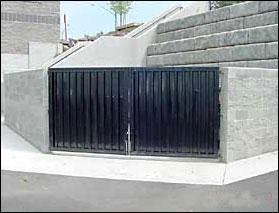
Nice looking enclosure

Enclosures do not have to be unsightly. This enclosure was designed to complement a new commercial office building.

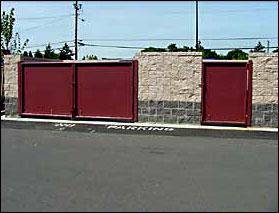
Enclosure with service door

Another large, well-designed enclosure, this includes a smaller service door. It encourages employees and janitorial staff to put materials inside the enclosure because they do not have to open the heavier gates.

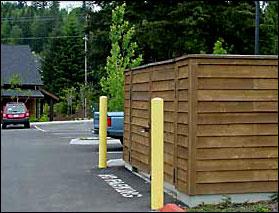
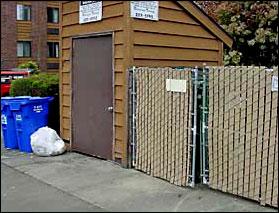
Enclosure with cedar siding

Built with the same cedar siding as the professional office building, this spacious enclosure looks good and works well. Posts provide extra protection.

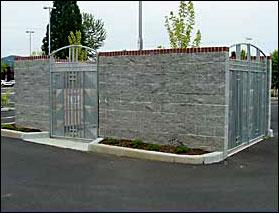
Enclosure that matches building

Using design elements from the main building, this enclosure sits in the middle of a parking lot. Service vehicles have good access to it.

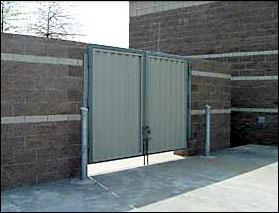
Enclosure that matches municipal building

This large enclosure uses design elements from the new municipal building.

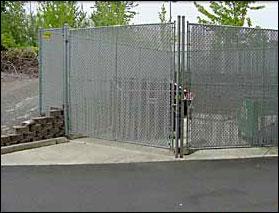
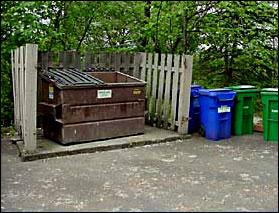
Chain link enclosure

An example of a chain link and slat enclosure.

Damaged enclosure

Too small for a group of strip mall tenants, this enclosure has been damaged. Tenants leave trash outside, creating an unsightly and potentially rat-infested area. Furthermore, it is not conducive to recycling.

Small enclosure

Small and unsightly, this enclosure does not meet the needs of this multifamily dwelling.

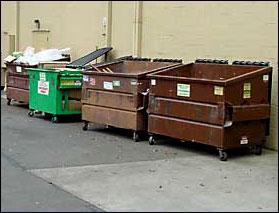
Unsightly enclosure

Approved before ZDO Section 1021 - this shopping mall places containers in full view of the street. It is unsightly for the residential development across the street, it promotes illegal dumping, and is prone to contamination of recyclables.

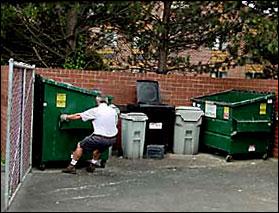
Poorly designed enclosure

Don't try this at home! The collector is pulling out a 1,200 pound container that could have been picked up mechanically if the enclosure had been well designed.

New Format?
On

Repair Fairs

Free community events that bring volunteers with fixing skills and people with broken items together.

Experienced fixers will attempt to repair or mend your items and may teach you how to fix them yourself. There are no guarantees for a repair. Some items are more difficult to repair, can take longer than we have time for at the event, or even break more during a repair attempt. Fixers can diagnose an issue and offer their best, unbiased advice. Our repair rate is over 75%. Some replacement parts may be available.

What to Bring

Please check the event page on the repair fair schedule for individual repair availability for each event. Examples of possible repair include clothing, textiles, bicycles, small electronics and small home appliances. We also do minor jewelry repair, and sometimes we have someone to sharpen knives and tools. Only bring items small enough to be easily carried by one person, and do not bring any items that are leaking, dangerous, dirty or have a strong odor. We do not do clothing alternations. All clothing must be clean. Repairers can turn down any items that do not meet these guidelines.

A maximum of one broken item per person will be examined at a time. After each item is examined/repaired, you must return to the registration table to be matched with another fixer volunteer for a second item.

Repair fair schedule

Find upcoming repair fairs below. Additional events will be added as they are scheduled.

Become a repair fair volunteer

Repair fair volunteer inspects electric lampWe are only limited in what we can fix by the skills of our volunteers. 

If you have repair skills and want to be involved, contact wasteinfo@clackamas.us or 503-557-6363.

Host a repair fair in your community

We can provide assistance for your event and guide you along the way. Contact wasteinfo@clackamas.us or 503-557-6363.

New Format?
On

School Resources and Presentations

Man giving presentation at a schoolWe offer resources and assistance to help your school set and meet recycling and waste reduction goals. Our work is in partnership with the Clackamas County Refuse and Recycling Association. Explore our resources below.

Contact: wasteinfo@clackamas.us

Classroom Presentations

We provide engaging and hands-on presentations in K-12 classrooms. If you do not see a presentation you are looking for, please contact us.

105976

Mini-Grants For School Waste Reduction Projects

Clackamas County provides small grants to schools to help meet waste reduction goals. Examples of past grant projects include:

  • Replacing disposable items used in school meal service: School meal service can generate a significant amount of waste. Switching to washable items like trays, plates, silverware, and cups can be a great way to reduce waste.
  • Purchasing party kits to reduce party waste: Teachers report that classroom party kits reduce waste by a minimum of one large trash bag per classroom party.
  • Installing a water bottle filling station: Reduce the use of disposable plastic bottles by installing a convenient water bottle filling station.
  • Support a school’s composting program: Some schools collect fruit and vegetable scraps to compost on-site. Our grant can help purchase items like compost tumblers and collection containers.
  • And more: Share your idea with us!

Free Resources

Educational posters for the classroom, office, and cafeteria

Make sure everyone in your building knows what to do with their recyclable, compostable, and disposable items. These posters can support your school’s waste reduction program.

Free recycling and composting bins 

Recycling collection in kitchens or copy rooms

Bottle and can collection in cafeterias or common areas

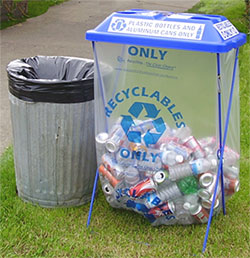
Bottle and can collection in cafeterias or common areas

Paper recycling for classrooms and offices

Food scraps collection in cafeterias

Food scraps collection in kitchens

Workbooks and Guides

An Apple isn’t just an Apple
Educational activity book about food and food waste. Best for grades 2-3.

Una Manzana no es solo una Manzana
Educational activity book about food and food waste in Spanish. Best for grades 2-3.

Oregon School Food Share Program Guide (PDF from the EPA)
A step-by-step guide to measure and reduce wasted food through a School Food Share Program.

Oregon Green Schools

Sunsetting of Oregon Green Schools certification

Oregon Green Schools logo The Oregon Green Schools certification program has ended after nearly 30 years. In that time, it helped over 250 schools across Oregon to reduce waste in classrooms and cafeterias, teach children to conserve water and energy, and help children realize their leadership skills.

While the program has ended, Clackamas County Sustainability and Solid Waste remains committed to ensuring that the program’s legacy lives on. We will continue to support our dedicated teachers, parents, students, and volunteers by providing mentorship, presentations, materials, and mini-grants to assist Clackamas County schools in achieving their sustainability goals.

To everyone who contributed to the success of Oregon Green Schools by doing your part in our little corner of Oregon, thank you for your determination, vision, and teamwork. The knowledge you have shared, the leadership you have shown, and the positive habits you have fostered will continue to inspire lasting change for years to come.

Together, you have made Oregon’s schools healthier, safer, and more sustainable.

Certified schools

We want to applaud the student green teams, teachers, and volunteers whose hard work helped build sustainability-minded cultures within their schools. The following schools are the last to be certified as Oregon Green Schools:

  • Clackamas High School (NCSD) Reduce, Reuse, Recycle, 2024-2027
  • Gardiner Middle School (OCSD) Reduce, Reuse, Recycle, 2024-2027
  • John McLoughlin Elementary School (OCSD) Green Lunchrooms, 2024-2027
  • Summit Learning Charter (Estacada School District) Reduce, Reuse, Recycle, 2023-2026
  • Sunset Primary School (WLWVSD) Green Lunchrooms, 2023-2026
  • Forest Hills Elementary School (LOSD) Green Lunchrooms, 2022-2025
  • Hallinan Elementary School (LOSD) Green Lunchrooms, 2022-2025
  • Lakeridge Middle School (LOSD) Green Lunchrooms, 2022-2025
  • Lakeridge High School (LOSD) Green Lunchrooms, 2022-2025
  • Lake Grove Elementary School (LOSD) Green Lunchrooms, 2022-2025
  • Lake Oswego Middle School (LOSD) Green Lunchrooms, 2022-2025
  • Lake Oswego High School (LOSD) Green Lunchrooms, 2022-2025
  • Oak Creek Elementary School (LOSD) Green Lunchrooms, 2022-2025
  • Palisades World Language School (LOSD) Green Lunchrooms, 2022-2025
  • River Grove Elementary School (LOSD) Green Lunchrooms, 2022-2025
  • Westridge Elementary School (LOSD) Green Lunchrooms, 2022-2025 

Reduce Wasted Food At School

Compost food scraps at school

Some schools in Clackamas County are eligible to collect compostable food scraps through a commercial composting program. Other schools may consider a small garden composting program. Whatever your needs, we are here to help. Contact us for assistance. 

Milk dispensers 

Since 2017, Clackamas County has been helping schools transition from disposable milk cartons to using milk dispensers with a washable cup for milk service. This transition has saved thousands of gallons of milk and prevented hundreds of thousands of cartons from ending up in the landfill.

New Format?
On

Fluorescent Lamp Recycling From a Businesses

Fluorescent lamps are energy-efficient, long-lasting, and can be recycled—but they contain mercury and must be handled carefully to protect public health and the environment. 

Identify Fluorescent Lamps 

Compact fluorescent lightbulbs

Includes: 

  • Compact fluorescent lights (CFLs) 
  • Linear tubes, U-tubes, circular tubes 
  • UVA bulbs 
  • High-intensity discharge lamps (mercury vapor, metal halide, high-pressure sodium) 
  • Neon lighting 

Create a Lamp Recycling Plan 

  1. Assign responsible staff: Know regulations and good management practices. Contact DEQ at 503-229-5913 if unsure. 
  2. Store lamps properly
    • Use cardboard boxes (original box works well). 
    • Do not tape or rubber-band lamps. 
    • Keep in a safe, dry location. 
    • Label boxes with handling instructions. 
  3. Choose a recycling method
    • Property manager recycling program 
    • Mail-back service 
    • Local recycling facility 
  4. Assign collection responsibility: Determine who takes full boxes to recycling. 
  5. Educate staff: Show collection areas and proper handling. 

Where to Recycle 

Drop-off Locations

Pick-up Services

  • Environmental Protective Services
    503-393-1239 
  • URT 
    503-722-2236 

Retail Outlets (CFLs only)

  • IKEA
  • Home Depot
  • Lowes
  • True Value 

Other Resources

How Fluorescent Lamps Are Recycled 

Diagram showing how lamps are recycled

  • Mercury is removed from glass using specialized equipment. 
  • Glass, metal, and mercury are recycled separately. 

How to Clean Up Broken Lamps 

  1. Leave the area for 15 minutes. 
  2. Open windows and shut off forced air. 
  3. Use damp paper towels or wet wipes to collect debris (do not vacuum). 
  4. Seal debris in a plastic bag and place in trash. 

Additional Resources 

New Format?
On

Inclement Weather Policy

Severe weather can make roads unsafe for collection trucks. When conditions are hazardous, franchisees may postpone pickup to ensure the safety of drivers and the community. Here’s how collection is managed during adverse weather.

Garbage Collection

Garbage is the top priority when service is disrupted.

  • Postponed garbage (and commercial food waste) will be collected as soon as road conditions allow.
  • If collection must be delayed to a future week, all accumulated garbage up to your normal service level will be collected.

Recycling Collection

Recycling collection may be postponed when weather makes pickup unsafe.

  • Service will resume as conditions improve.
  • If multiple days of severe weather occur, recycling may be delayed beyond the following week while crews focus on catching up on garbage routes.

Yard Debris Collection

Yard debris service may also be postponed.

  • Collection will take place as soon as roads are safe.
  • Like recycling, yard debris pickup may be delayed beyond the next week if crews are prioritizing garbage and recycling.
  • When service resumes, all accumulated yard debris up to your subscribed service level will be collected.

Customer Notifications

Franchisees will:

  • Notify Clackamas County by 10 a.m. on any day collection is postponed.
  • Update their voicemail and website at least once per day with the latest service information.

Customers should check their garbage and recycling company’s website or phone line for the most current updates.

Billing Information

Postponed collections due to inclement weather are not considered missed collections. Because service is provided once conditions improve, billing credits are not issued for weather-related delays.

From the Franchisee General Responsibilities section of the Administrative Regulations for Clackamas County Solid Waste and Recycling Collection Services for Franchisee and Customer. 

New Format?
On