Planning and Zoning

Planning and Zoning

ZDO 316

316 Rural Area Residential 1-Acre (Ra-1), Rural Area Residential 2-Acre (Ra-2), Recreational Residential (Rr), Rural Residential Farm Forest 5-Acre (Rrff-5), Farm Forest 10-Acre (Ff-10), And Future Urban 10-Acre (Fu-10) Districts

316.01 Purpose

Section 316 is adopted to implement the policies of the Comprehensive Plan for Unincorporated Community Residential, Rural, and Future Urban areas.

316.02 Applicability

Section 316 applies to land in the Rural Area Residential 1-Acre (RA-1), Rural Area Residential 2-Acre (RA-2), Recreational Residential (RR), Rural Residential Farm Forest 5-Acre (RRFF-5), Farm Forest 10-Acre (FF-10), and Future Urban 10-Acre (FU-10) Districts, hereinafter collectively referred to as the rural residential and future urban residential zoning districts.

316.03 Uses Permitted

  1. Uses permitted in each rural residential and future urban residential zoning district are listed in Table 316-1, Permitted Uses in the Rural Residential and Future Urban Residential Zoning Districts. Uses not listed are prohibited.
  2. As used in Table 316-1:
    1. "P" means the use is a primary use.
    2. "A" means the use is an accessory use.
    3. "C" means the use is a conditional use, approval of which is subject to Section 1203, Conditional Uses.
    4. "CPUD" means the use is allowed as a conditional use in a planned unit development.
    5. "X" means the use is prohibited.
    6. "Type II" means the use requires review of a Type II application, pursuant to Section 1307, Procedures.
    7. Numbers in superscript correspond to the notes that follow Table 316-1.
  3. Permitted uses are subject to the applicable provisions of Subsection 316.04, Dimensional Standards; Section 1000, Development Standards; and Section 1100, Development Review Process.

316.04 DIMENSIONAL STANDARDS

  1. General: Dimensional standards applicable in the rural and future urban residential zoning districts are listed in Table 316-2, Dimensional Standards in the Rural Residential and Future Urban Residential Zoning Districts. As used in Table 316-2, numbers in superscript correspond to the notes that follow the table.
  2. Modifications: Modifications to the standards in Table 316-2 are established by Sections 800, Special Use Requirements; 903, Setback Exceptions; 1012, Lot Size and Density; 1107, Property Line Adjustments; and 1205, Variances.

Table 316-1: Permitted Uses in the Rural Residential and Future Urban Residential Zoning Districts

UseRA-1RA-2RRRRFF-5FF-10FU-10
Accessory Buildings and Uses, Customarily Permitted, such as amateur (Ham) radio antennas and towers, arbors, bicycle racks, carports, citizen band transmitters and antennas, cogeneration facilities, courtyards, decks, decorative ponds, driveways, electric vehicle charging stations, family child care homes, fountains, garages, garden sheds, gazebos, greenhouses, HVAC units, meeting facilities, outdoor kitchens, parking areas, patios, pergolas, pet enclosures, plazas, property management and maintenance offices, recreational facilities (such as bicycle trails, children's play structures, dance studios, exercise studios, playgrounds, putting greens, recreation and activity rooms, saunas, spas, sport courts, swimming pools, and walking trails), rainwater collection systems, satellite dishes, self-service laundry facilities, shops, solar energy systems, storage buildings/rooms, stormwater management facilities, television antennas and receivers, transit amenities, trellises, utility service equipment, and utility service linesAAAAAA
Aircraft Land UsesXXXCCC
Aircraft Landing AreasXCC1XXX
Bed and Breakfast Inns, subject to Section 832CCCCCX
Bed and Breakfast Residences, subject to Section 832CCCCCC
Bus SheltersPPPPPP
CampgroundsCCCCCC
Cemeteries, subject to Section 808CCXCCC
Child Care FacilitiesCCCCCC2
Commercial or Processing Activities that are in Conjunction with Farm or Forest Uses3XXXCCX
Community HallsCPUDCPUDCPUDCPUDCPUDX4
Composting Facilities, subject to Section 834XXXCCX
Conservation Areas or Structures for the Conservation of Water, Soil, Forest, or Wildlife Habitat ResourcesPPPPPP
Crematories, subject to Section 808CCXXXX
Daycare Services, AdultCCCCCC5
Dwellings, including:
Accessory Dwelling Units, subject to Section 839A6A6A6A6A6A6
Accessory Historic Dwellings, subject to Section 843A7A7A7A7A7X
Detached Single-Family DwellingsP8P8P8P8P8P8
DuplexesC8XXXXX
Manufactured DwellingsP8P8P8P8P8P8
Prefabricated StructuresP8P8P8P8P8P8
Recreational Vehicles as Second Dwellings, subject to Section 847A6A6A6A6A6A6
Single Room OccupanciesP8,9P8,9P8,9P8,9P8,9P8,9
Energy Source DevelopmentXXCXXX
Farm Uses, including3:
Raising, harvesting, and selling cropsPPP10PPP
Feeding, breeding, management and sale of, or the produce of, livestock, poultry, fur-bearing animals, or honeybeesX11PX11PPP
Dairying and the sale of dairy productsX11PX11PPP
Any other agricultural or horticultural use or animal husbandry or any combination thereofX11PX11PPP
Preparation, storage, and disposal by marketing or otherwise of the products or by-products raised on such land for human or animal usePPP10PPP
Propagation, cultivation, maintenance, and harvesting of aquatic, bird, and animal species that are under the jurisdiction of the Oregon Fish and Wildlife Commission, to the extent allowed by the rules adopted by the commissionX11PX11PPP
Growing cultured Christmas treesPPP10PPP
Farmers' Markets, subject to Section 840AAAAAA
Fish or Wildlife Management ProgramsXXXPPP
Forest Practices, including the following operations conducted on or pertaining to forestland: reforestation of forestland, road construction and maintenance, harvesting of forest tree species, application of chemicals, disposal of slash, and removal of woody biomassP12P12PP12P12P12
Fraternal Organization LodgesC13C13C13C13C13C13
Government Uses, unless such a use is specifically listed as a primary, accessory, conditional, or prohibited use in the applicable zoning districtC13C13C13C13C13C13
Guest Houses, subject to Section 833AAAAAA
Guest Ranches and LodgesXXCXXX
Home Occupations, including bed and breakfast homestays, subject to Section 82214AAAAAA
Home Occupations to Host Events, subject to Section 806CCCCCC
KennelsC15C15XC15C15X
Kitchens, AccessoryA16A16A16A16A16A16
LibrariesCPUDCPUDCPUDCPUDCPUDX4
Livestock, subject to Section 821PX11AX11X11X11
Marijuana ProcessingXXXXXX
Marijuana Production, subject to Section 841XXXAAX
Marijuana RetailingXXXXXX
Marijuana WholesalingXXXXXX
Operations Conducted for the Exploration, Mining, or Processing of Geothermal Resources or Other Subsurface ResourcesXXXCCX
Places of Worship, subject to Section 804PPPPPP
Produce StandsA17A17A17A17A17A17,18
Radio and Television Transmission and Receiving Towers and Earth StationsC13,19C13,19C13,19C13,19C13,19C13,19
Recreational Uses, including boat moorages, community gardens, country clubs, equine facilities, gymnastics facilities, golf courses, horse trails, pack stations, parks, playgrounds, sports courts, swimming pools, ski areas, and walking trails20C13C13,21C13C13,21C13,21C13,21
Recreational Uses, Government-Owned, including amphitheaters; arboreta; arbors, decorative ponds, fountains, gazebos, pergolas, and trellises; ball fields; bicycle and walking trails; bicycle parks and skate parks; equine facilities; boat moorages and ramps; community buildings and grounds; community and ornamental gardens; courtyards and plazas; fitness and recreational facilities, such as exercise equipment, gymnasiums, and swimming pools; horse trails; miniature golf, putting greens, and sports courts; pack stations; parks; picnic areas and structures; play equipment and playgrounds; nature preserves and wildlife sanctuaries; ski areas; tables and seating; and similar recreational uses20P22P22P22PPP
Recreational Uses, Government-Owned Golf Courses20P22P22P22PPP
Recreational Vehicle Camping Facilities, subject to Section 813C13C13CC13C13X
Recyclable Drop-Off Sites, subject to Section 819A23A23A23A23A23A23
Retailing—whether by sale, lease, or rent—of any of the following new or used products: apparel, appliances, art, art supplies, beverages, bicycle supplies, bicycles, books, cameras, computers, computer supplies, cookware, cosmetics, dry goods, electrical supplies, electronic equipment, flowers, food, furniture, garden supplies, hardware, interior decorating materials, jewelry, linens, medications, music (whether recorded or printed), musical instruments, nutritional supplements, office supplies, optical goods, paper goods, periodicals, pet supplies, pets, plumbing supplies, photographic supplies, signs, small power equipment, sporting goods, stationery, tableware, tobacco, toiletries, tools, toys, vehicle supplies, and videos.CPUD24XXXXX
RoadsPPPPPP
Sanitary Landfills and Debris FillsXXXCCX
Schools, subject to Section 805C25C25CC25C25C26
Services, Commercial—Food and Beverage, including catering and eating and drinking establishmentsCPUD24XXXXX
Services, Commercial—Personal and Convenience, including barbershops, beauty salons, dry cleaners, laundries, photo processing, seamstresses, shoe repair, tailors, and tanning salons. Also permitted are incidental retail sales of products related to the service provided.CPUD24XXXXX
Services, Commercial—Studios of the following types: art, craft, dance, music, and photographyCPUD24XXXXX
Short-Term Rental in a dwelling unit or guest house permitted by this table27PP28PP28P28P28
Signs, subject to Section 1010A29A29A29A29A29A29
Surface Mining, subject to Section 818XXXCCX
Temporary Buildings for Uses Incidental to Construction Work. Such buildings shall be removed upon completion or abandonment of the construction work.AAAAAA
Temporary Storage within an Enclosed Structure of Source-Separated Recyclable/Reusable Materials Generated and/or Used On-site Prior to On-site Reuse or Removal by the Generator or Licensed or Franchised Collector to a User or BrokerAAAAAA
Transfer Stations, subject to Section 819XXCXXC
Utility Facilities, including:
Sewer System Components that Serve Lands Inside an Urban Growth Boundary, subject to OAR 660-011-0060(3)Type II30Type II30Type II30Type II30Type II30Type II30
Sewer Systems and Extensions of Sewer Systems to Serve Land Outside an Urban Growth Boundary and Unincorporated Community, subject to OAR 660-011-0060(4)Type II31Type II31Type II31Type II31Type II31Type II31
Stormwater Management FacilitiesP,C32P,C32P,C32P,C32P,C32P,C32
Utility CabinetsP,C33P,C33P,C33P,C33P,C33P,C33
Utility Facilities, except Utility Lines, in Road Rights-of-WayPPPPPP
Utility Facilities Not Otherwise Listed in Table 316-1C13,34C13,34C13,34C13,34C13,34C13,34
Utility LinesP,C35P,C35P,C35P,C35P,C35P,C35
Wireless Telecommunication Facilities, subject to Section 835See Table 835-1See Table 835-1See Table 835-1See Table 835-1See Table 835-1See Table 835-1

1 Aircraft landing areas are permitted for use by emergency aircraft (e.g., fire, rescue) only.

2 This use is limited to alteration or expansion of a lawfully established child care facility.

3 As used in Table 316-1, farm uses do not include marijuana production, marijuana processing, marijuana wholesaling, or marijuana retailing. See separate listings in Table 316-1 for these uses.

4 Even though it is prohibited in this category, this use is included in the "government use" category.

5 This use is limited to alteration or expansion of a lawfully established adult daycare service.

6 This use is not permitted in an urban reserve established pursuant to OAR 660, Division 21 or OAR 660, Division 27. Recreational Vehicles as Second Dwellings are also not permitted within the urban growth boundaries of Barlow, Canby, Estacada, Molalla, and Sandy.

7 This use is permitted only outside of both an urban growth boundary and an urban reserve established pursuant to OAR 660, Division 21 or OAR 660, Division 27.

8 Except as allowed by Section 839, Accessory Dwelling Units, Section 843, Accessory Historic Dwellings, or Section 1204, Temporary Permits, each lot of record may be developed with only one of the following: detached single-family dwelling, duplex (only if approved as a conditional use in the RA-1 District), manufactured dwelling, prefabricated structure, or single room occupancy.

9 This use is permitted only inside an urban growth boundary and shall contain a maximum of six units.

10 This use is permitted only on lots larger than five acres.

11 In the RA-2, RRFF-5, FF-10, and FU-10 Districts, livestock is permitted as described under the use category of farm uses. In the RA-1 and RR Districts, livestock is permitted as described under the use category of livestock.

12 For land inside the Portland Metropolitan Urban Growth Boundary, refer to Subsection 1002.02 regarding a development restriction that may apply if excessive tree removal occurs.

13 Uses similar to this may be authorized pursuant to Section 106, Authorizations of Similar Uses.

14 A use may be permitted as a home occupation, subject to Section 822, even if such use is also identified in another use listing in Table 316-1.

15 The portion of the premises used shall be located a minimum of 200 feet from all property lines.

16 An accessory kitchen is permitted only in a detached single-family dwelling, a manufactured dwelling, or a prefabricated structure. Only one accessory kitchen is permitted in each single-family dwelling, manufactured dwelling, or prefabricated structure.

17 A produce stand shall be subject to the parking requirements of Section 1015, Parking and Loading.

18 In addition to selling produce grown on-site, a produce stand may sell agricultural products that are produced in the surrounding community in which the stand is located.

19 The base of such towers shall not be closer to the property line than a distance equal to the height of the tower.

20 This use may include concessions, restrooms, maintenance facilities, and similar support uses.

21 Equine facilities are a primary use, subject to the following standards and criteria:

  1. The number of horses shall be limited to no more than one horse per acre or five horses in total, whichever is less. Horses owned by the operator of the equine facility, or owned by a 501(c)(3) organization and being temporarily fostered by the operator of the equine facility, do not count toward the maximum number of horses. The one-horse-per-acre standard shall be calculated based on the area of the lot of record or tract on which the equine facility is located.
  2. Services offered at the equine facility, such as riding lessons, training clinics, and schooling shows, shall be provided only to the family members and nonpaying guests of the operator of the equine facility, the owners of boarded horses, or the family members and nonpaying guests of the owners of boarded horses.

22 Any principal building or swimming pool shall be located a minimum of 45 feet from any other lot in a residential zoning district.

23 Recyclable drop-off sites are permitted only if accessory to an institutional use.

24 The use is subject to the following standards and criteria:

a. The use shall be located in a planned unit development (PUD) with a minimum of 100 dwelling units. No building permit for the use shall be issued until a minimum of 100 dwelling units are constructed within the PUD.

b. The area occupied by all uses subject to Note 23 and located in a single PUD, including their parking, loading, and maneuvering areas, shall not exceed a ratio of one-half acre per 100 dwelling units in the PUD.

c. The use shall be an integral part of the general plan of development for the PUD and provide facilities related to the needs of residents of the PUD.

d. The use shall be located, designed, and operated to efficiently serve frequent trade and service needs of residents of the PUD and not persons residing elsewhere.

e. The use shall not, by reason of its location, construction, manner or hours of operation, signs, lighting, parking arrangements, or other characteristics, have adverse effects on residential uses within or adjoining the PUD.

f. The maximum building floor space per commercial use is 4,000 square feet except that no maximum applies to uses authorized under Oregon Statewide Planning Goals 3 and 4 and uses intended to serve the community and surrounding rural area or the travel needs of people passing through the area.

25 Schools are prohibited within the areas identified as Employment, Industrial, and Regionally Significant Industrial on the Metropolitan Service District's 2040 Growth Concept Map.

26 This use is limited to alteration or expansion of a lawfully established school.

27 This use is prohibited in an accessory dwelling unit established pursuant to Subsection 839.04. This use is prohibited in a recreational vehicle established pursuant to Section 847, Recreational Vehicles as Second Dwellings, and in the primary dwelling on the same lot of record as the recreational vehicle.

28 This use is not permitted in an urban or rural reserve established pursuant to OAR 660, Division 27.

29 Temporary signs regulated under Subsection 1010.13(A) are a primary use.

30 Components of a sewer system that serve land outside urban growth boundaries or unincorporated community boundaries are prohibited.

31 The use is limited to sewer systems that: are designed and constructed so that their capacity does not exceed the minimum necessary to serve the area within the boundaries described under OAR 660-011-0060(4)(b)(B), except for urban reserve areas as provided under OAR 660-021-0040(6); and do not serve any uses other than those existing or allowed in the identified service area on the date the sewer system is approved.

32 Stormwater management facilities are a primary use if:

a. They are underground, except for an outlet structure if applicable;

b. They are vegetated, except for an outlet structure if applicable; or

c. They are approved in conjunction with a development approved through another land use permit (e.g., a subdivision or design review).

33 Utility cabinets are a primary use if they comply with Section 830, Utility Cabinets, or if they are inside a road right-of-way.

34 Except for hydroelectric facilities and telephone exchanges, utility facilities shall not include shops, garages, or general administrative offices.

35 Utility lines are a conditional use only if they are gas transmission lines or electric transmission lines.

Table 316-2: Dimensional Standards in the Rural Residential and Future Urban Residential Zoning Districts

StandardRA-1RA-2RRRRFF-5FF-10FU-10
Minimum Lot Size11 acre2,32 acres32 acres2 acres, provided that the minimum average lot size of all lots or parcels in a subdivision, partition, or replat is 5 acres3,4,5,610 acres3,4,710 acres4
Minimum Front Setback30 feet830 feet815 feet, except 20 feet to garage and carport motor vehicle entries930 feet830 feet830 feet
Minimum Rear Setback30 feet10,1130 feet10,1215 feet1030 feet10,1230 feet10,1230 feet12
Minimum Side Setback10 feet10,1310 feet105 feet1010 feet1010 feet1010 feet
Maximum Lot CoverageNoneNone40 percentNoneNoneNone
Minimum Building Separation above 3,500 Feet in ElevationNoneNone20 feet between buildings with contiguous snow slide areasNoneNoneNone

1 The minimum lot size standards apply as established by Sections 1012 and 1107. Notwithstanding the minimum lot size standard, a lot of record may be developed subject to other applicable standards of this Ordinance, except minimum lot size standards of Section 800 apply.

2 In a planned unit development, there is no minimum individual lot size. However, the minimum average lot size is one acre except for lots to be developed with a duplex, in which case the minimum average lot size is two acres. The average lot size is calculated by determining the lot area of the land proposed for subdivision, partition, or replat and dividing by the number of lots or parcels in the proposed planned unit development.

3 The minimum lot size inside the Portland Metropolitan Urban Growth Boundary is 20 acres. The 20-acre minimum lot size is applicable to subdivisions, partitions, and Type II replats, but not to Type I replats or property line adjustments. Where this standard applies, it supersedes any other minimum lot size standard in Table 316-2.

4 For the purpose of complying with the minimum lot size standard, lots with street frontage on County or public road rights-of-way may include the land area between the front lot line and the centerline of the County or public road right-of-way.

5 The minimum lot size inside the urban growth boundaries of the cities of Canby, Estacada, Molalla, and Sandy is five acres.

6 The average lot size is calculated by determining the lot area of the land proposed for subdivision, partition, or replat and dividing by the number of lots or parcels in the proposed partition, subdivision, or replat.

7 In a planned unit development, the minimum individual lot size is two acres, except inside the urban growth boundaries of the cities of Canby, Estacada, Molalla, and Sandy, where the minimum individual lot size is five acres. In all cases, the minimum average lot size is 10 acres. The average lot size is calculated by determining the lot area of the land proposed for subdivision, partition, or replat and dividing by the number of lots or parcels in the proposed planned unit development.

8 In a planned unit development, the minimum front setback is 20 feet.

9 For a corner lot located above 3,500 feet in elevation, one of the minimum front setbacks is 10 feet, except 20 feet to garage and carport motor vehicle entries.

10 In a planned unit development, there are no minimum rear and side setbacks except from rear and side lot lines on the perimeter of the final plat. Where this standard applies, it supersedes any other rear or side setback standard in Table 316-2.

11 The minimum rear setback for an accessory building shall be five feet except as established by Note 10.

12 The minimum rear setback for an accessory building shall be 10 feet except as established by Note 10.

13 The minimum side setback for an accessory building shall be five feet except as established by Note 10.

[Added by Ord. ZDO-252, 6/1/2015; Amended by Ord. ZDO-253, 6/1/2015; Amended by Ord. ZDO-254, 1/4/2016; Amended by Ord. ZDO-263, 5/23/2017; Amended by Ord. ZDO-266, 5/23/2018; Amended by Ord. ZDO-269, 9/6/2018; Amended by Ord. ZDO-268, 10/2/2018; Amended by Ord. ZDO-280, 10/23/2021; Amended by Ord. ZDO-282, 7/1/2022; Amended by Ord. ZDO-273, on remand, 5/30/2023; Amended by Ord. ZDO-287, 8/3/2023; Amended by Ord. ZDO-283, 9/5/2023; Amended by Ord. ZDO-285, 9/3/2024; Amended by Ord. ZDO-288, 9/9/2024]

Sidebar Heading
Related Information
New Format?
Off

ZDO 202: Definitions

ACCESSORY BUILDING OR USE: A subordinate building or use, the function of which is clearly incidental to that of the main building or use on the same lot.

ACCESSWAY: A public right-of-way, a portion of which is hard surfaced, for use by pedestrians and bicyclists providing a direct route where public roads require significant out of direction travel. 

ACCESS DRIVE:  A private way, with a travel surface generally no more than 12 feet in width, created by deed or easement to provide vehicular ingress to, or egress from not more than two lots or parcels. 

ACTIVE RECREATIONAL AREA: An area such as a park, sports field, or golf course, where turf lawn provides a playing surface that is dedicated to active play.

ADJOINING: Contiguous or abutting exclusive of street width. It shall include the terms adjacent, abutting or contiguous.

AIRPORT, PERSONAL-USE: An airstrip restricted, except for aircraft emergencies, to use by the owner and, on an infrequent and occasional basis, by his invited guests, and to commercial activities in connection with agricultural operations only.

AIRPORT, PRIVATE USE: An airport restricted, except for aircraft emergencies, to use by the owner and his invited guests. The determination as to whether an airport is private or public-use is made by the Oregon Department of Aviation. 

AIRPORT, PUBLIC-USE: An airport that is open to use by the flying public, with or without a request to use the airport. 

ALLEY: A travel way that is used primarily for vehicular service access to the back or side of properties otherwise abutting on a street.

ALTERATION, CULTURAL RESOURCE: Any exterior change or modification, through public or private action, of any cultural resource or of any property located within an historic district including, but not limited to, exterior changes to or modification of structure, architectural details or visual characteristics such as paint color and surface texture, grading, surface paving, new structures, cutting or removal of trees and other natural features, disturbance of archaeological sites or areas, and the placement or removal of any exterior objects such as signs, plaques, light fixtures, street furniture, walls, fences, steps, plantings and landscape accessories affecting the exterior visual qualities of the property.

ANTIQUES: Goods that, by virtue of their age or unusual quality, are generally considered to be of historical and/or artistic interest, ordinarily such items are in good state of preservation or are restorable to their original conditions.

AQUIFER: A layer of rock or alluvial deposit which holds water.

ARCHITECTURAL FEATURES: Features include, but are not limited to cornices, canopies, sunshades, gutters, chimneys, fireplaces, flues and eaves. Architectural features shall not include any portion of a structure built for the support, occupancy, shelter or enclosure of persons or property of any kind.

ARCHITECTURAL FEATURES, CULTURAL RESOURCE: The architectural elements embodying style, design, general arrangement and components of all of the outer surfaces of an improvement, including, but not limited to, the kind, color, texture of the building materials and type and style of all windows, doors, lights, signs and other fixtures appurtenant to such improvements.

AUTOMATIC IRRIGATION CONTROLLER: An automatic timing device used to remotely control valves that operate an irrigation system. Automatic irrigation controllers schedule irrigation events using either evapotranspiration (weather-based) or soil moisture sensor data.

BABYSITTER: A person who goes into the home of a child to give care during the temporary absence of the parent or legal guardian or custodian.

BASEMENT: A portion of a building which has less than one-half of its height measured from finished floor to finished ceiling above the average elevation of the adjoining ground, but not an "underground structure" as defined in this ordinance.

BEACON: Any light with one or more beams directed into the atmosphere or directed at one or more points not on the same site as the light source; also, any light with one or more beams that rotate or move.

BED AND BREAKFAST HOMESTAY:  A use that is conducted in an owner-occupied single-family dwelling, provides rooms for rent on a daily or weekly basis to the public, and includes breakfast as part of the cost of the room. A maximum of two guest rooms and a maximum of five guests at one time are permitted. 

BED AND BREAKFAST INN:  A use that is conducted in an operator- or owner-occupied single-family dwelling, provides rooms for rent on a daily or weekly basis to the public, and includes breakfast as part of the cost of the room. A bed and breakfast inn may include a restaurant offering meals to the general public as well as to overnight guests. 

BED AND BREAKFAST RESIDENCE: A use that is conducted in an operator- or owner-occupied single-family dwelling, provides rooms for rent on a daily or weekly basis to the public, and includes breakfast as part of the cost of the room. In addition to the required breakfast, other occasional family-style meals may be provided for overnight guests.

BICYCLE RACK: An apparatus designed to support the central frame of a bicycle and allow locking of both wheels, without the removal of wheels. 

BIKEWAY: A paved facility provided for use by cyclists. There are five types of bikeways. 

  • Shared Roadway: A type of bikeway where motorists and cyclists occupy the same roadway area. Shared roadways are allowed on neighborhood streets and on rural roads and highways. 
  • Shoulder Bikeway: A bikeway which accommodates cyclists on paved roadway shoulder. 
  • Bike Lane: A section of roadway designated for exclusive bicycle use, at the same grade as the adjacent roadway. 
  • Bike Path: A bike lane constructed entirely separate from the roadway.
  • Cycle Track: An exclusive "grade-separated" bike facility elevated above the street level using a low-profile curb and a distinctive pavement material.

BLANKETING: The visual blocking of one sign by another as seen by a motorist traveling a street or highway.

BLOCK: A parcel of land bounded by streets, railroad rights-of-way, waterways, parks, unsubdivided acreage, or a combination thereof. 

BUILDING: Any structure used or intended for supporting or sheltering any use or occupancy.

BUILDING ENVELOPE: The three dimensional space which is to be occupied by a building.

BUILDING LINE: A straight line that is parallel and adjacent to the front side of the main building and parallel to the front lot line.

BUILDING OR STRUCTURE HEIGHT: The term "height of building" shall be calculated by the methods identified in the State of Oregon Structural Specialty Code or the State of Oregon One and the Two Family Dwelling Specialty Code, as applicable. 

BULK PLANT: Hazardous substances at the bulk plant level are manufactured, collected, repackaged, stored, or distributed, but are generally not used on the site. The primary emphasis of uses at the bulk plant level is on hazardous substances. Materials are stored in large permanent tanks. Bulk plant quantities are larger than amounts transported in or out in any single shipment. Processors of hazardous substances will generally be at this level. Uses which produce hazardous substances as a by-product or accessory to another product are not in this category. 

CANNABINOID: Any of the chemical compounds that are the active constituents of marijuana.

CANNABINOID CONCENTRATE:  A substance obtained by separating cannabinoids from marijuana by a mechanical extraction process; a chemical extraction process using a nonhydrocarbon-based or other solvent, such as water, vegetable glycerin, vegetable oils, animal fats, isopropyl alcohol, or ethanol; a chemical extraction process using the solvent carbon dioxide, provided that the process does not involve the use of high heat or pressure; or any other process identified by the Oregon Liquor Control Commission, in consultation with the Oregon Health Authority, by rule.

CANNABINOID EDIBLE: Food or potable liquid into which a cannabinoid concentrate, cannabinoid extract, or dried marijuana leaves or flowers have been incorporated.

CANNABINOID EXTRACT: A substance obtained by separating cannabinoids from marijuana by a chemical extraction process using a hydrocarbon-based solvent, such as butane, hexane or propane; a chemical extraction process using the solvent carbon dioxide, if the process uses high heat or pressure; or any other process identified by the Oregon Liquor Control Commission, in consultation with the Oregon Health Authority, by rule.

CANNABINOID PRODUCT: A cannabinoid edible and any other product intended for human consumption or use, including a product intended to be applied to the skin or hair, that contains cannabinoids or dried marijuana leaves or flowers. Cannabinoid product does not include usable marijuana by itself, a cannabinoid concentrate by itself, a cannabinoid extract by itself, or industrial hemp as defined in Oregon Revised Statutes (ORS) 571.300.

CARE: The provision of room and board and other services as needed to assist in activities of daily living, such as assistance with bathing, grooming, eating, medication management, money management, or recreation. 

CHILD CARE FACILITY: As defined in ORS 329A.250 but excluding a family child care home.

CLACKAMAS REGIONAL CENTER: The regional center identified on Comprehensive Plan Map 10-CRC-1, Regional Center, Corridors, and Station Community, excluding the portion in the City of Happy Valley.

CLACKAMAS REGIONAL CENTER AREA: The Clackamas Regional Center Area identified on Comprehensive Plan Map 10-CRC-1, Regional Center, Corridors, and Station Community, excluding the portion in the City of Happy Valley.

COGENERATION FACILITY: A facility that produces, through the sequential use of energy, electric energy and useful thermal energy including but not limited to heat or steam, used for industrial, commercial, heating, or cooling purposes; and is more than 50 percent owned by a person who is not an electric utility, an electric holding company, an affiliated interest, or any combination thereof. 

COMMERCIAL USE: The use of land and/or structures for the conduct of retail, service, office, artisan, restaurant, lodging, child care, adult daycare, entertainment, private recreational, professional, and similar uses.

COMMON OWNERSHIP: Land commonly owned to include open space lands dedicated in planned unit developments and lands dedicated for open space which are owned by homeowners associations.

COMMUNITY GARDEN:  A site where any kind of plant, except marijuana, is grown, and several individuals or households cultivate the site. The site may be divided into individual allotments, or gardeners may work together to cultivate the entire property. The land may be publicly or privately owned. The plants are grown for personal use by the gardeners, or for donation, and sales are prohibited.

COMPOSTING: The managed process of controlled biological decomposition of green feedstocks. It does not include composting for the purposes of soil remediation. 

COMPOSTING FACILITY:  A site or facility, excluding home composting and agricultural composting conducted as a farm use, which utilizes green feedstocks to produce a useful product through a managed process of controlled biological decomposition. Composting may include amendments beneficial to the composting process. Vermiculture and vermicomposting are considered composting facilities. 

CONGREGATE HOUSING FACILITY: A building that contains more than one dwelling unit and provides common facilities and services for residents who require or desire a more supportive living environment than typically afforded to residents in other types of dwellings. Regular on-premise supervision by a registered physician, registered nurse, or other health care provider may be included. 

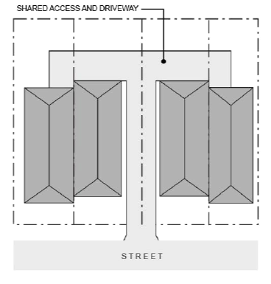
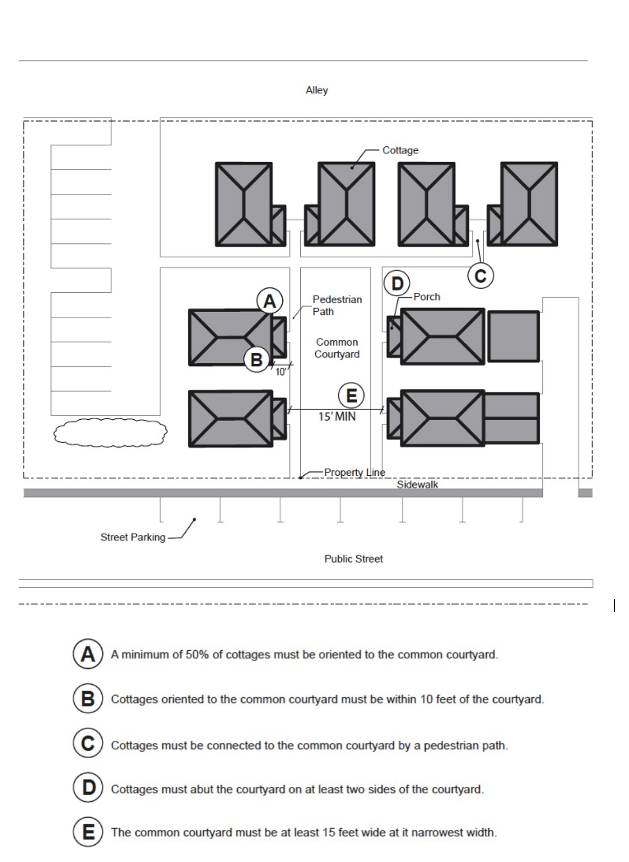
COTTAGE CLUSTER: A group of four or more detached dwelling units with a common courtyard, all of which are located on the same lot of record or on middle housing lots.

COTTAGE CLUSTER DEVELOPMENT:  A development site with one or more cottage clusters.

CULTURAL RESOURCE: Improvements, buildings, structures, signs, fea­tures, sites, places, areas or other objects of scientific, aesthetic, educational, cultural, architectural, or historical significance to the community members of the county.

CULTURAL RESOURCE INVENTORY: The official list of designated cultural features, sites, districts subject to the provisions of Section 707, Historic Landmark (HL), Historic District (HD), and Historic Corridor (HC).

CULTURAL RESOURCES OBJECT: A material thing of functional, aesthetic, cultural, symbolic or scientific value, usually by design or nature movable.

DEDICATION: The designation of land by its owner for any general or public use. 

DESIGNATED SITE (historic site, cultural resource site, landmark site): A parcel or part thereof on which a cultural resource is situated, and any abutting parcel or part thereof constituting part of the premises on which the cultural resource is situated, and which has been designated pursuant to this Ordinance.

DESIGNATED STRUCTURE (landmark, cultural resource, historic structure): Any improvement that has special historical, cultural, aesthetic or architectural character, interest or value as part of the development, heritage or history of the county, the State of Oregon, or the nation and that has been designated pursuant to this ordinance.

DIMENSIONAL STANDARD: A numerical measurement for a distance or area standard of this Ordinance, such as building height, lot size, or setback; or a percentage of a distance or area measurement of this Ordinance, such as lot coverage or landscaped area.

DIRECT ROUTE: The shortest reasonable route between two points. A route is considered direct if it does not involve significant out of direction travel that could be avoided. Out of direction travel is significant if it is more than 50 percent longer than the straight line between two points. 

DISTINCTIVE URBAN FOREST: Forested or woodland areas which are visually prominent or contain unique or rare tree and plant communities. These areas are usually found in association with other open space resources within the urban area.

DRIP LINE, TREE: The outermost edge of a tree's canopy; when delineating the tree drip line on the ground, it will appear as an irregularly shaped circle defining the canopy's perimeter.

DROUGHT-TOLERANT PLANTS:   Plants that will survive in the typical or somewhat less than typical amount of rainfall in the Willamette Valley, and therefore require very little or no supplemental water once established.

DUPLEX: A building that contains exactly two dwelling units, both of which are located on the same lot of record or on middle housing lots. If one of the two dwelling units is an accessory dwelling unit, the building is not a duplex. 

DWELLING: A building that contains one or more dwelling units. A dwelling may be a residential trailer or a manufactured dwelling but not a recreational vehicle, except when the recreational vehicle is approved as a temporary dwelling pursuant to Section 1204, Temporary Permits, or as a second dwelling pursuant to Section 847, Recreational Vehicles as Second Dwellings. 

DWELLING, ACCESSORY HISTORIC: A detached single-family dwelling legally constructed between 1850 and 1945 that was converted from a primary dwelling to an accessory dwelling, pursuant to Section 843, Accessory Historic Dwellings.

DWELLING, DETACHED SINGLE-FAMILY: A building that contains only one dwelling unit and is detached from any other dwelling, except where otherwise permitted for an accessory dwelling unit. A manufactured dwelling, residential trailer, or dwelling unit in a cottage cluster is not a detached single-family dwelling. 

DWELLING, MULTIFAMILY: A building that contains five or more dwelling units. 

DWELLING UNIT: A building, or portion thereof, with one or more rooms designed for residential occupancy by one family. 

EASEMENT: A right of usage of real property granted by an owner to the public or to specific persons, firms, and corporations. 

EDIBLE GARDEN: A garden that contains plants that produce food for human consumption.

ELECTRIC VEHICLE CHARGING STATION: A location where a vehicle can plug into an electrical source to re-charge its batteries.

EQUINE FACILITY: Premises that are used for the stabling or training of equines, including, but not limited to, providing riding lessons, training clinics, and schooling shows.

FAMILY: Any individual or group of persons, regardless of relationship but not exceeding 15 persons, living together as a single housekeeping unit within a dwelling unit. 

FAMILY CHILD CARE HOME: A child care provider who provides child care to 16 or fewer children, including children of the provider, regardless of full-time or part-time status, in the home of the provider. Child and child care are as defined in ORS 329A.250.

FARMERS' MARKET: An organized seasonal outdoor market dedicated to the direct sales by growers of agricultural goods, including plants, produce, meats, and other animal products (e.g., eggs, cheese, honey), but excluding marijuana.

FLAG: Any fabric, banner, or bunting containing distinctive colors, patterns, or symbols.

FLOOR AREA: The area inside the perimeter walls of a building or portion thereof. For a building, or portion thereof, not provided with perimeter walls, the floor area shall be the area under the horizontal projection of the roof or floor above. Floor area shall not include exterior stairs, exterior covered entries, or portions of buildings used for parking of vehicles. In a multi-story building, floor area is the sum of the floor area of each floor. For the purposes of calculating floor area, mezzanines and lofts are considered to be floors within perimeter walls.  

FLOOR AREA RATIO (FAR): A measurement of density expressed as the ratio of floor area (in square feet) to net site area (in square feet). The greater the ratio, the greater the density. For example, a building occupying one-fourth of the net site area has a FAR of 0.25:1, or 0.25; adding a second floor of equal area to the same building increases the FAR to 0.5:1, or 0.5.

GOVERNMENT CAMP: The unincorporated community of Government Camp, as identified on Comprehensive Plan Map 10-MH-4, Government Camp Village Plan, Land Use Plan & Boundary.

GRADE: The line of the street or ground surface deviation from the horizontal. 

GREEN FEEDSTOCKS:  Yard debris, non-treated wood waste, vegetative food waste, produce waste, vegetative restaurant waste, vegetative food processor by-products, crop waste, and livestock manure. Non-treated wood waste excludes wood waste treated with paint, varnish, or other chemicals or preservatives. 

GREEN ROOF: A vegetated roof designed to treat storm runoff.

GROUNDWATER: Any water, except capillary moisture, beneath the land surface or beneath the bed of any stream, lake, reservoir, or other body of surface water, whatever may be the geological formation or structure in which such water stands, flows, percolates, or otherwise moves.

GUEST HOUSE: An accessory building, or portion thereof, that includes at least one bedroom and is—with the exception of bathrooms, closets, and halls—constructed as habitable space under the Oregon Residential Specialty Code.

HARDSCAPES:  In the practice of landscaping, refers to the inanimate, manmade, non-planted, outdoor areas where the soil is no longer exposed and that are surfaced with pervious or non-pervious durable materials such as masonry, wood, stone, paving, tile, or similar material to create patios, walkways, water fountains, benches, gazebos, etc.

HAZARDOUS SUBSTANCE, MATERIAL, OR WASTE: Any hazardous substance, material, or waste listed in the following federal regulations: 

  1. Superfund Amendments and Reauthorization Act (SARA) of 1986, Section 302 Extremely Hazardous Substances List (40 C.F.R 355, App. A and B);
  2. Comprehensive Environmental Response Compensation & Liability Act Superfund (CERCLA) of 1980, Hazardous Substances List (40 C.F.R 302, Table 302.4);
  3. SARA of 1986, Section 313, Toxic Chemicals List (40 C.F.R Section 372.65);
  4. Resource Conservation and Recovery Act (RCRA) of 1976 and 1984 Amendments, Hazardous Wastes List (P & U Categories) (40 C.F.R Section 261.33(e) and (f)); and
  5. DOT Hazardous Materials Table (49 C.F.R Part 172.101). 

HISTORIC AREA: Any area containing improvements which have a special character, historical interest or aesthetic value or which represent one or more architectural periods or styles typical of the history of the County and which improvements constitute a distinct section of the County that has been designated a cultural resource district pursuant to this ordinance.

HOME COMPOSTING:  A composting area operated and controlled by the owner or person in control of a single-family dwelling and used to dispose of vegetative waste, garden wastes, weeds, lawn cuttings, leaves, and prunings generated from that property. 

HOME OCCUPATION: An occupation or business activity that results in a product or service and is conducted, in whole or in part, in a dwelling unit, an accessory building normally associated with primary uses allowed in the subject zoning district, or both. Home occupations do not include garage sales, yard sales, holiday bazaars, or home parties which are held for the purpose of the sale or distribution of goods or services unless such sales and parties are held more than six times in a calendar year or operate in excess of 24 total days in a calendar year. 

HOMEOWNERS ASSOCIATION: The grouping or uniting of persons residing within a defined area, such as a subdivision, into an incorporated entity for the prosecution of a common enterprise. 

HOSPITAL, ANIMAL: A building or premises for the medical or surgical treatment of domestic animals or pets, including dog, cat, and veteri­nary hospitals.

HOTEL: A building which is designed or used to offer short-term lodging for compensation, with or without meals, for six or more people. A facility that is operated for the purpose of providing care beyond that of room and board is not a "hotel".

HOUSEKEEPING UNIT: A living arrangement within a dwelling unit in which the kitchen, living and dining rooms, and other general living areas of the dwelling unit are shared in common, and the duties, rights, and obligations associated with the performance of domestic tasks and management of household affairs, are shared by the residents by virtue of legal relationship or mutual agreement. Such a living arrangement also may include the provision of food, shelter, personal services, care, and when appropriate, a planned treatment or training program of counseling, therapy, or other rehabilitative social service, for persons of similar or compatible conditions or circumstances who are members of the resident family.

HYDROELECTRIC FACILITY: Any facility relating to the production of electricity by waterpower, including, but not limited to the power generating plant, associated dams, diversions, penstocks, navigation locks, fish ladders, fish screens, reservoirs and detention areas, recreation facilities, substations, access roads, offices or commercial and industrial structures proposed to be built in connection with the energy facility; and activities involved in their construction and operation.

IMPROVEMENT: Any building structure, parking facility, fence, gate, wall, work of art or other object constituting a physical betterment of real property, or any part of such betterment.

INDIRECT ILLUMINATION: A nonelectric sign illuminated by an indirect or separate light source.

INDUSTRIAL USE: The use of land and/or structures for the manufacturing or processing of primary, secondary, or recycled materials into a product; warehousing and associated trucking operations; wholesale trade; and related development.

INSTITUTIONAL USE: The use of land and/or structures for activities such as child care, adult daycare and pre-school facilities, public and private schools, colleges, universities, art, music, trade and other educational and training facilities, convalescent care facilities, nursing homes, hospitals, places of worship, fraternal lodges, municipal and civic buildings, transit centers and park-and-ride facilities, parks, swimming pools and other recreational facilities open to the public or a membership group, senior and community centers, libraries, museums, cemeteries and mausoleums, utility facilities, and similar public and private uses.

INVASIVE NON-NATIVE OR NOXIOUS VEGETATION:  Plant species that are listed in the Oregon Department of Agriculture's Noxious Weed Policy and Classification System.

KENNEL: Any lot or premises on which four or more dogs, more than six months of age or with permanent canine teeth, are kept for purposes other than a veterinary clinic.

KIOSK: A small structure used as a newsstand, information booth, refreshment stand, bandstand, or display of goods, etc.

KITCHEN, ACCESSORY: A kitchen that complies with all of the following standards:

  1. It shall be incidental to a primary dwelling.
  2. It shall be located in a room that is approved for residential occupancy and used for a purpose in addition to that of a kitchen (e.g., a recreation room, a bedroom).
  3. It shall not be located in a detached accessory building. 
  4. Any of the following features shall be located within a contiguous area that is no more than 30 inches deep and 10 feet long: cooking appliances, sinks, refrigerators, dishwashers, counters, and cabinets. 

LANDSCAPING: Areas of land planted with groundcover, grasses, shrubs, annuals, perennials, or trees.

LIMITED USE: A use allowed in a district on a limited basis and subject to conditions specified therein which are generally more restrictive than the conditions placed on primary or accessory uses within the same district.

LIVESTOCK: One or more domesticated animals raised to produce commodities, such as food, fiber, and labor. Livestock includes, but is not limited to, miniature livestock, fowl, and farmed fish.

LOT: A single unit of land that is created by a subdivision of land. For the purposes of this Ordinance, lot includes parcel and lot of record unless otherwise specified in the context of the specific provisions. 

LOT AREA OR LOT SIZE: The total surface area (measured horizontally) within the lot lines of a lot.

LOT, CORNER:  A lot with street frontage on two streets intersecting at a corner of the lot. A lot within the radius curve of a single street is not a corner lot. A lot may be both a corner lot and a through lot.

LOT COVERAGE: The area of a lot covered by a building or buildings, exclusive of architectural features and swimming pools, expressed as a percentage of the total lot area.

LOT DEPTH: The mean horizontal distance between the front lot line and the rear lot line of a lot.

LOT, FLAG: A lot that has access to a road by means of a narrow strip of lot or easement.

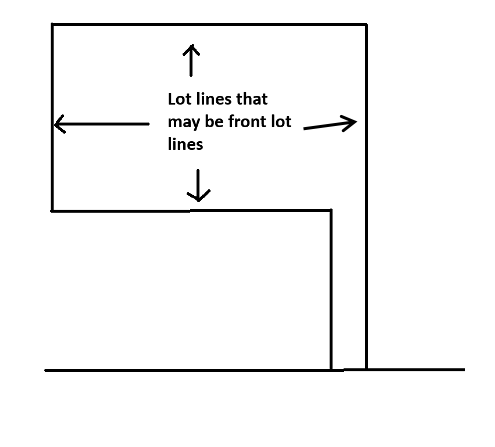
LOT LINE, FRONT: Any boundary line separating a lot from a County, public, state, or private road, or from an access drive. Exceptions are:

  1. Except as otherwise provided in Subsection 903.08, the front lot line of a flag lot shall be within the boundaries of the lot by a distance equal to the width of the narrow strip of lot or easement providing access to the lot. The front lot line shall be parallel to the lot line extending from the road to the lot line opposite and most distant from the road. (See Figure 202-1.)
  2. A corner lot has at least two front lot lines, except where one of the lot lines that would otherwise be a front lot line abuts a private road or access drive and motor vehicle access from the lot is not taken to that private road or access drive. In that case, the lot line where motor vehicle access is not taken is a side lot line.
  3. A through lot has at least two front lot lines except where one of the lot lines that would otherwise be a front lot line abuts a collector, arterial, expressway, interstate, or other feature that precludes motor vehicle access. In that case, the lot line where access is precluded is the rear lot line.
Diagram of a flag lot
Diagram of a corner lot

LOT LINE, REAR:  Any boundary line opposite and most distant from the front lot line and not intersecting a front lot line. Exceptions are:

  1. For a corner lot, the rear lot line is any one of the boundary lines opposite the front lot lines. Any other opposite boundary line is a side lot line. (See Figure 202-2.) 
  2. A triangular-shaped lot has no rear lot line.
  3. A through lot has no rear lot line except where one of the lot lines that would otherwise be a front lot line abuts a collector, arterial, expressway, interstate, or other feature that precludes motor vehicle access. In that case, the lot line where access is precluded is a rear lot line.

LOT LINE, SIDE: Any boundary line that is not a front or rear lot line.

LOT OF RECORD: 

  • A lot or parcel created by a subdivision or partition plat, as defined in ORS chapter 92, filed with the Clackamas County Surveyor and recorded with the Clackamas County Clerk;
  • A unit of land created by a recorded deed or recorded land sales contract and in compliance with all applicable planning, zoning, and subdivision or partition ordinances and regulations, if any, in effect on the date the deed or land sales contract was signed by the parties to the deed or contract; or
  • A unit of land created solely to establish a separate tax account or for mortgage purposes; that did not conform to all planning, zoning, or subdivision or partition ordinances or regulations in effect on the date it was created; and that was sold prior to September 5, 2023, under the foreclosure provisions of ORS chapter 88.

LOT, THROUGH: A lot that has street frontage on two or more non-intersecting streets. A lot may be both a corner lot and a through lot.

LOT WIDTH: The mean horizontal distance between the side lot lines of a lot.

LOT, ZONING: A "zoning lot or lots" is a single tract of land located within a single block, which (at the time of filing for a building permit) is designated by its owner or developer as a tract to be used, developed, or built upon as a unit under single ownership or control. Therefore, a "zoning lot or lots" may or may not coincide with a lot of record.

LOW VOLUME IRRIGATION: The application of irrigation water at low pressure through a system of tubing or lateral lines and low-volume emitters such as drip, drip lines, and bubblers. Low volume irrigation systems are specifically designed to apply small volumes of water slowly at or near the root zone of plants.

MAJOR TRANSIT STOP: A transit center, major bus stop, or light rail stop, as identified on Comprehensive Plan Map 5-8a, Transit, Urban.

MAJOR TRANSIT STREET: A street with a Frequent Service Bus Line, as identified on Comprehensive Plan Map 5-8a, Transit, Urban; existing or planned High Capacity Transit, as identified on Comprehensive Plan Map 5-8c, High Capacity Transit (HCT) System Plan; or both.

MANUFACTURED DWELLING: A mobile home or manufactured home but not a residential trailer or recreational vehicle. 

MANUFACTURED DWELLING PARK: Any place where four or more manufactured dwellings or prefabricated structures that are relocatable and more than eight and one-half feet wide, are located within 500 feet of one another on a lot, tract, or parcel of land under the same ownership, the primary purpose of which is to rent or lease space or keep space for rent or lease to any person for a charge or fee paid or to be paid for rental or lease or use of facilities or to offer space free in connection with securing the trade or patronage of such person. Manufactured dwelling park does not include a lot or lots located within a subdivision being rented or leased for occupancy by no more than one manufactured dwelling per lot.

MANUFACTURED HOME: A structure constructed on or after June 15, 1976, for movement on the public highways that has sleeping, cooking, and plumbing facilities, that is intended for human occupancy by one family, that is being used for residential purposes, and that was constructed in accordance with federal manufactured housing construction and safety standards and regulations in effect at the time of construction. 

MARIJUANA: The plant Cannabis family Cannabaceae, any part of the plant Cannabis family Cannabaceae, and the seeds of the plant Cannabis family Cannabaceae. Marijuana does not include industrial hemp as defined in ORS 571.300.

MARIJUANA ITEMS: Marijuana, cannabinoid products, cannabinoid concentrates, and cannabinoid extracts.

MARIJUANA PROCESSING: The processing, compounding, or conversion of marijuana into cannabinoid products, cannabinoid concentrates, or cannabinoid extracts, provided thatis licensed by the Oregon Liquor Control Commission (OLCC), a holder of a research certificate issued by the OLCC,  or registered with the Oregon Health Authority.

MARIJUANA PRODUCTION: The manufacture, planting, cultivation, growing, trimming, harvesting, or drying of marijuana, provided that the marijuana producer is licensed by the Oregon Liquor Control Commission (OLCC), a holder of a research certificate issued by the OLCC, or registered with the Oregon Health Authority and a "person designated to produce marijuana by a registry identification cardholder."

MARIJUANA RETAILINGis licensed by the Oregon Liquor Control Commission or registered with the Oregon Health Authority

MARIJUANA WHOLESALING: The purchase of marijuana items for resale to a person other than a consumer, provided that the marijuana wholesaler is licensed by the Oregon Liquor Control Commission.

MASTER PLAN: A sketch or other presentation showing the ultimate development layout of a parcel of property that is to be developed in successive stages or subdivisions. The plan need not be completely engineered but shall be of sufficient detail to illustrate the property's inherent features and probable development pattern.

MIDDLE HOUSING: A duplex, triplex, quadplex, townhouse, or cottage cluster.

MIDDLE HOUSING LAND DIVISION: A partition or subdivision of a lot of record that is developed, or proposed to be developed, with more than one middle housing dwelling unit. The type of middle housing developed on the original lot of record is not altered by a middle housing land division.

MIDDLE HOUSING LOT: A lot or parcel created through a middle housing land division. A middle housing lot is a separate lot of record; however, development on a middle housing lot is limited by conditions imposed at the time of the middle housing land division. Middle housing lots are not divisible.

MILL SITE, ABANDONED OR DIMINISHED: A mill, plant, or other facility engaged in the processing or manufacturing of wood products, including sawmills and facilities for the production of plywood, veneer, hardboard, panel products, pulp, and paper, that is located outside of urban growth boundaries; was closed after January 1, 1980, or has been operating at less than 25 percent of capacity since January 1, 2003; and contains or contained permanent buildings used in the production or manufacturing of wood products. 

MIXED-USE:  A mix of uses located within a single building, such as retail on the first floor and residential or office uses on the upper floors. 

MOBILE HOME: A structure constructed for movement on the public highways that has sleeping, cooking, and plumbing facilities, that is intended for human occupancy by one family, that is being used for residential purposes, and that was constructed between January 1, 1962, and June 15, 1976, and met the construction requirements of Oregon mobile home law in effect at the time of construction. 

MOBILE VENDING UNIT: A vehicle that is used in selling and dispensing goods or services to the customer. Notwithstanding this definition, a mobile vending unit shall not be used in selling and dispensing marijuana items. As used in this definition, a vehicle is motorized or non-motorized transportation equipment containing an axle and intended for use on public roads, including, but not limited to, a car, van, pickup, motorcycle, recreational vehicle, bus, truck, detached trailer, or a truck tractor with no more than one trailer.

MOTEL: A building or series of buildings in which lodging only is offered for compensation and which may have more than five sleeping rooms or units for this purpose and which is distinguished from a hotel primarily by reason of providing direct independent access to and adjoining parking for each rental unit designed primarily for automobile tourists and transient persons. The term includes auto courts, tourist courts, tourist homes, and motor lodges.

NATIVE PLANTS: Any indigenous or resident species currently or historically found in the Willamette Valley.

NATURAL AREA: An area of land or water that has substantially retained its character and functions as an important habitat for plant and animal life. 

NONCONFORMING DEVELOPMENT: An element of development, such as landscaping, parking, height, signage, or setbacks that was created in conformance with development regulations which, due to a change in the zone or zoning regulations, is no longer in conformance with the current applicable regulations. 

NONCONFORMING USE: A use of any building, structure or land allowed by right when established or that obtained a required land use approval when established but, due to a change in the zone or zoning regulations, is now prohibited in the zone. 

NURSERY: The propagation of trees, shrubs, vines or flowering plants for transplanting, sale, or for grafting or budding; planting of seeds or cuttings; grafting and budding one variety on another; spraying and dusting of plants to control insects and diseases, and buying and selling the above plant stock at wholesale or retail. Help and season­al labor may be employed. The term "nursery" contemplates the sale of a product of such nursery. The conduct of a nursery business presumes parking places for customers, the keeping of sales records, and quarters for these functions. However, the use does not include the business of reselling goods purchased off the premises, except plant stock, or the establishment of a roadside stand.

NURSING HOME: A nursing, convalescent, or rest home facility licensed by the State under ORS chapters 441 and 442, or an assisting living facility licensed under ORS 443, which provides, for a period exceeding 24 hours, the continuous services of licensed nursing personnel to care for chronically ill or infirm patients, exclusive of those patients related to the owner or facility administrator by blood or marriage. Such nursing, convalescent, or rest home must provide nursing services to those patients who, in the judgment of a physician, registered nurse, or facility administrator, require remedial, restorative, supportive, or preventive nursing measures. 

OPEN SPACE: Land within a development which has been dedicated in common to the ownership within the development or to the public specifically for the purpose of providing places for recreational uses or for scenic purposes. Open space shall be used as such in perpetuity. 

OVERBURDEN: Earth that lies above a natural deposit of a mineral.

OVERHEAD SPRINKLER IRRIGATION: The application of irrigation water from spray heads, rotors, or other above-ground emitters that send water through the air.

OWNER: Person or persons holding fee title to a parcel, lot or tract of land, except in those instances when the land is being sold on contract, the contract purchaser shall be deemed the owner.

PARCEL: A single unit of land that is created by a partition of land. For the purposes of this Ordinance, parcel includes lot and lot of record unless otherwise specified in the context of the specific provisions. 

PARKING STRUCTURE: A building having at least two levels that are designed and used for parking vehicles, or a building having one level of covered parking area under an open space or recreational use. A one-level surface parking area, garage, or carport is not a parking structure. 

PARTITION: To divide an area or tract of land into two or three parcels within a calendar year when such area or tract of land exists as a unit or contiguous units of land under single ownership at the beginning of such year. "Partition" does not include divisions of land resulting from lien foreclosures, divisions of land resulting from foreclosure of recorded contracts for the sale of real property and divisions of land resulting from the creation of cemetery lots; and "partition" does not include any adjustment of a lot line by the relocation of a common boundary where an additional parcel is not created. "Partition" does not include the sale of a lot in a recorded subdivision, even though the lot may have been acquired prior to the sale with other contiguous lots or property by a single owner. 

PEDESTRIAN AMENITIES: Outdoor improvements directly visible and accessible to pedestrians that promote and facilitate pedestrian use, including plazas, pocket parks, courtyards, awnings or other weather protection, kiosks, gazebos, water features, drinking fountains, sculpture, outside seating areas, planters, trellises, and street furniture.

PEDESTRIAN PATHWAY: A hard-surfaced or permeable hard-surfaced pedestrian facility adjacent to a public roadway where there is no curb, but is protected from vehicular traffic or set back behind a planting strip. 

PEDESTRIAN-SCALE LIGHTING:  Street lights designed to illuminate sidewalks to provide security for nighttime use by pedestrians. Pedestrian scale lighting includes ornamental lighting with a 14- to 25-foot mounting height and which meets the Illumination Society guidelines for Commercial Collector roadways.

PENNANT: Any lightweight plastic, fabric, or other material, whether or not containing a message of any kind, suspended, usually in series, from a rope, wire, or string, and designed to move in the wind.

PERSON DESIGNATED TO PRODUCE MARIJUANA BY A REGISTRY IDENTIFICATION CARDHOLDER: A person designated to produce marijuana by a registry identification cardholder under ORS 475B.420 who produces marijuana for a registry identification cardholder at an address other than the address where the registry identification cardholder resides or at an address where more than 12 mature marijuana plants are produced.

PERVIOUS: Any surface or material that allows the passage of water through the material and into the underlying soil.

PLAT, FINAL: A final map and other writing containing all the descriptions, locations, specifications, dedications, provisions, and information concerning a partition or subdivision and recorded as required by ORS Chapter 92. 

PLAT, PRELIMINARY: A clearly legible and approximate drawing of the proposed layout of streets, blocks, lots and other elements of a subdivision or partition which shall help furnish a basis for the approval or disapproval of the general layout of a partition or subdivision. As used in this Ordinance, preliminary plat shall be synonymous with tentative plan as used in ORS Chapter 92. 

POROUS PAVEMENT: Surface to walk, drive or park on that may reduce stormwater runoff by allowing water to soak into the ground. Examples are permeable pavers, pervious concrete, porous asphalt, and gravel.

PREFABRICATED STRUCTURE: A building or subassembly that has been in whole or substantial part manufactured or assembled using closed construction at an off-site location to be wholly or partially assembled on-site; is relocatable; is more than eight and one-half feet wide; and is designed for use as a single-family dwelling. A prefabricated structure is not a manufactured dwelling or "small home", as defined in ORS Chapter 455.

PREMISES: A lot, building, or portion of a lot or building, occupied by a use with its appurtenances. 

PRESERVATION, CULTURAL RESOURCES: The identification, study, protec­tion, restoration, rehabilitation or enhancement of cultural resources.

PRIMARY BUILDING WALL: Exterior building wall which contains a public entrance to the occupant's premises and faces either a street or a parking area. 

PRODUCE STAND:  A table, bench, cart, or structure, any of which may be covered, that is located or erected for the purpose of direct sales by growers of agricultural goods, including vegetables, fruits, flowers, bulbs, herbs, plants, honey, and similar products, but not including marijuana or processed foods such as jams or jellies, that are produced on the same tract on which the produce stand is located. 

PROFESSIONAL SERVICES: Activities such as those offered by a physician, surgeon, dentist, lawyer, architect, engineer, accountant, artist, teacher, real estate agent, and insurance agent.

PROPERTY LINE ADJUSTMENT: A relocation or elimination of all or a portion of the common property line between two abutting lots of record that does not create an additional lot of record. As used in this definition, a property line is the division line between two abutting lots of record.

PUBLIC OWNERSHIP: Land owned by federal, state, regional, or local government, or governmental agency. 

PUBLIC WATER SYSTEM: A system for the provision to the public of piped water for human consumption, if such system has more than three service connections and is a facility licensed by the State of Oregon Health Division. 

QUADPLEX: A building that contains exactly four dwelling units, all of which are located on the same lot of record or on middle housing lots.

RAINWATER COLLECTION SYSTEM:  A system of pipes, container (rain barrel, rainwater tank, pond, or rainwater reservoir), valves and associated apparatus for collecting and storing harvested rainwater runoff, typically from rooftops via rain gutters, but also from ground catchment systems.

RECREATIONAL VEHICLE: A vehicle licensed by the State of Oregon, with or without motive power, that is designed for human occupancy and to be used temporarily for recreational, seasonal, or emergency purposes, and has a gross floor area not exceeding 400 square feet in the set-up mode. These shall include but are not limited to park trailers, travel trailers, pickup campers, motor homes, fifth wheel trailers, camping and tent trailers. 

RECYCLABLE DROP-OFF SITE: A convenient location not within a public right-of-way where mobile depots or drop boxes may be sited as a recyclable material collection point for nearby residents prior to delivery to a broker or user of such materials.

RECYCLE/RECYCLING: A process by which solid waste materials are transformed into new products in such a manner that the original products may lose their identity. It shall also include the collection, transportation, or storage of products by other than the original user or consumer, giving rise to the product's being in the stream of commerce for collection, disposal, recycling, reuse, resource recovery, or utilization. 

RECYCLING CENTER: A facility that primarily purchases for recycling or reuse principal recyclable materials which have been source-separated by type, such as vegetative yard debris, paper, glass, and metal, by the person who last used the unseparated solid wastes, but not a salvage or junkyard. Principal recyclable materials are those items defined as such by the Oregon Department of Environmental Quality.

RELATIVE: A parent, child, brother, sister, grandparent, or grandchild of a person or person's spouse. 

REPLAT: The act, other than a property line adjustment or a middle housing land division, of platting the lots, parcels, tracts, or easements in a final plat to achieve a reconfiguration of the existing final plat or to increase or decrease the number of lots or parcels.

RESERVE STRIP: A strip of land, usually one foot in width, across the end of a street or alley which shall be under the ownership of the County to insure street extensions where needed. 

RESIDENTIAL TRAILER: A structure constructed for movement on the public highways that has sleeping, cooking, and plumbing facilities, that is intended for human occupancy by one family, that is being used for residential purposes, and that was constructed before January 1, 1962. 

RESOURCE RECOVERY FACILITY: Any facility at which solid waste is processed for the purpose of extracting, converting to energy, or otherwise separating and preparing solid waste for reuse, but not a salvage or junkyard.

RHODODENDRON: The unincorporated community of Rhododendron, as identified on Comprehensive Plan Map 4-7, Non-Urban Area Land Use Plan, Mt. Hood Corridor Land Use Plan.

RIGHT-OF-WAY: The legal right, established by usage or grant, to pass through property owned by another, or the strip of land subject to a nonowner's right to pass through. 

ROAD: A public or private way created to provide ingress to, or egress from, one or more lots, parcels, areas or tracts of land, or that provides for travel between places by vehicles. A private way created exclusively to provide ingress and egress to land in conjunction with a forest, farm or mining use is not a "road". The terms "street", "access drive" and "highway" for the purposes of this Ordinance shall be synonymous with the term "road".

ROAD, COUNTY:  A public way under County jurisdiction which has been accepted into the County road maintenance system by order of the Board of County Commissioners.

ROAD, PRIVATE: A private way created by deed or easement to provide vehicular ingress to, or egress from, three or more lots or parcels.

ROAD, PUBLIC: A public way dedicated or deeded for public use but not accepted into the County road maintenance system, intended primarily for vehicular circulation and access to abutting properties.

ROADWAY: That portion of a road or alley that has been improved for vehicular and pedestrian traffic. 

SALVAGE: Separating, collecting, or retrieving reusable solid waste for resale.

SALVAGE, JUNKYARD: A location at which solid wastes are separated, collected, and/or stored pending resale.

SCHOOL, COMMERCIAL: A building where instruction is given to pupils in arts, crafts, or trades, and operated as a commercial enterprise as distinguished from schools endowed or supported by taxation.

SENSITIVE GROUNDWATER AREA: Any area classified by the State of Oregon as a groundwater limited area, critical groundwater area, or other area where new groundwater appropriations are restricted by the State of Oregon.

SERVICE STATION: A commercial establishment with sales and services limited to the sale of motor fuels and supplying goods and service generally required in the operation and maintenance of automotive vehicles and fulfilling a motorist's needs. These may include sale of petroleum products; sale and servicing of tires, batteries, automotive accessories and replacement items; washing and lubricating services; the performance of minor automotive maintenance and repair, and the supplying of other incidental customer services and products. Major automotive repairs, painting and fender work are excluded. An electric vehicle charging station is not a service station.

SETBACK:  The shortest horizontal distance between a structure and the lot line.

SETBACK, FRONT:  The shortest horizontal distance between a structure and the front lot line.

SETBACK, REAR: The shortest horizontal distance between a structure and the rear lot line. 

SETBACK, SIDE:  The shortest horizontal distance between a structure and the side lot line. 

SHARED PARKING:  Parking spaces used jointly by two or more uses within the same development, or separate adjacent developments, which either have peak hours of operation that do not overlap, or typically provide services to many of the same patrons (e.g., restaurant in an office complex or hotel providing lodging for convention participants within the same development), provided satisfactory legal evidence is presented in the form of deeds, leases, or contracts securing full access to such parking spaces for all parties jointly using them.

SHORT-TERM RENTAL: The rental of a dwelling unit, portion of a dwelling unit, or guest house for overnight residential purposes, for a period of up to 30 consecutive nights. Overnight occupancy of the dwelling unit plus any guest house shall not exceed 15 persons. A short-term rental may include use of accessory structures, such as decks or swimming pools, that are located on the same lot as the dwelling unit or guest house being rented.

SIDEWALK: A concrete pedestrian facility adjacent to a curb along a road or set back from the curb behind a planting strip. 

SIGN: A presentation or representation, other than a house number, by words, letters, figures, designs, pictures or colors displayed out of doors in view of the general public so as to give notice relative to a person, a business, an article of merchandise, a service, an assemblage, a solicitation, or a request for aid or other type of identification. This definition specifically includes billboards, ground signs, freestanding signs, wall signs, roof signs, logo signs, and signs on the following: marquees, awnings, canopies, street clocks and furniture and includes the surface upon which the presentation or representation is displayed.

SIGN, ANIMATED: Any sign that uses movement or change of lighting to depict action or create a special effect or scene.

SIGN AREA, OR SURFACE AREA: The area, on the largest single face of a sign, within a perimeter which forms the outside shape of a sign. If the sign consists of more than one module, the total area of all modules will constitute the sign area. The area of a sign having no such perimeter or border shall be computed by enclosing the entire copy area within the outline of either a parallelogram, triangle, circle or any other easily recognized geometric shape and then computing the area. Where a sign is of a three-dimensional, round or irregular shape, the largest cross section shall be used in flat projection for the purpose of computing sign area.

SIGN, BUILDING: Any sign attached to any part of a building, as contrasted to a freestanding sign.

SIGN, CHANGEABLE COPY: A sign or portion thereof with characters, letters, or illustrations that can be changed or rearranged without altering the face or the surface of the sign. A sign on which the message changes more than eight times per day shall be considered an animated sign and not a changeable copy sign for purposes of this ordinance. 

SIGN, COMMERCIAL: Any sign associated with a commercial activity.

SIGN, DIRECTORY: An onsite sign that identifies and directs traffic to a number of tenants, uses, or buildings within a development.

SIGN, DRIVE-THRU: A freestanding or building sign for a commercial drive-thru window service that is oriented toward a drive-thru lane on the same property and that is for viewing by drivers and their passengers while they are in the drive-thru lane, but does not extend higher than eight feet above grade.

SIGN, ELECTRONIC MESSAGE CENTER: A sign, display, or device, or portion thereof, whose message may be changed by electronic process or remote control, and includes electronic time and temperature displays and the device known in the advertising industry as a commercial electronic variable message sign. 

SIGN, FREESTANDING: A sign not attached to a building.

SIGN, INCIDENTAL: A sign, generally informational, that has a purpose secondary to the use of the site on which it is located, such as "no parking," entrance," "loading only," "telephone," and other similar directives. 

SIGN, INTEGRAL ROOF: Any sign erected or constructed as an integral or essentially integral part of a normal roof structure of any design, such that no part of the sign extends vertically above the highest portion of the roof and such that no part of the sign is separated from the rest of the roof by a space of more than six inches.

SIGN, LOGO: A sign consisting of a trademark or symbol.

SIGN, MESSAGE: Anything displayed on an electronic message center sign, including copy and graphics.

SIGN, MONUMENT: A sign which extends from the ground or which has a support which places the bottom thereof less than two feet from the ground.

SIGN, OFF-PREMISES: A sign which advertises goods, products or services which are not sold, manufactured, or distributed on or from the premises or facilities on which the sign is located.

SIGN, POLE: A sign erected and maintained on a freestanding frame, mast or pole and not attached to any building but does not include ground-mounted signs.

SIGN, PORTABLE: Any sign not permanently attached to the ground or other permanent structure, and/or designed to be transported, including, but not limited to, signs designed to be transported by means of wheels; signs converted to A- or T-frames; menu and sandwich board signs; balloons used as signs; umbrellas used for advertising; and signs attached to or painted on vehicles parked and visible from the public right-of-way, unless said vehicle is used as other than a sign in the normal day-to-day operations of the business for transportation of goods and/or personnel.

SIGN, PROJECTING: Any sign affixed to a building or wall in such a manner that its leading edge extends more than six inches beyond the surface of such building or wall.

SIGN, PUBLIC SERVICE INFORMATION: Any sign, or message on an electronic message center sign, which provides the time, date, temperature, weather, or information concerning civic, charitable or other noncommercial activities. 

SIGN, RESIDENTIAL: Any sign associated with a dwelling.

SIGN, ROOF: Any sign erected and constructed wholly on and on top of the roof of a building, supported by the roof structure.

SIGN, SEGMENTED MESSAGE: Any message or distinct subunit of a message presented by means of at least one display change on an electronic message center sign. 

SIGN, TEMPORARY: Any sign that is normally considered to be of temporary duration and is not permanently mounted. Examples include, but are not limited to: commercial signs for limited term events, election signs, real estate signs, etc. 

SIGN, TRAVELING MESSAGE: A message which appears to move across an electronic message center sign. 

SIGN, WALL: Any sign parallel to, and attached within six inches of a wall, painted on the wall surface, or erected and confined within the limits of an outside wall of any building or structure, which is supported by such wall or building, and which displays only one sign surface.

SIGN, WINDOW: Any sign, pictures, symbol, or combination thereof, that is placed inside a window or upon the window panes or glass and is visible from the exterior of the window.

SIGNIFICANT NATURAL AREAS: Natural areas as defined in "Oregon National Areas - Clackamas County Data Summary" published by The Nature Conservancy. This list of natural areas may be amended by the County as additional areas are identified.

SINGLE ROOM OCCUPANCY: A residential development with no fewer than four attached units that are independently rented and lockable and provide living and sleeping space for the exclusive use of an occupant, but require that the occupant share sanitary or food preparation facilities with other units in the occupancy.

SNOW SLIDE AREA: The area around a building that may be subject to snow buildup as a result of snow sliding from the sloped roof of the building. 

SOIL MOISTURE SENSOR: A device that measures the amount of water in the soil. The device also suspends and initiates irrigation events.

SOLAR ENERGY SYSTEM: Any solar collector, or other solar energy device, the primary purpose of which is to provide for the collection, storage, and distribution of solar energy for space heating or cooling, water heating, or electricity. 

  1. The power generating capacity of a roof-mounted solar energy system that is located on a primary use, conditional use, or limited use structure is limited only by the size of the system that can fit within the confines of the roof surface to which it is mounted. 
  2. The power generating capacity of a ground-mounted solar energy system, or of a roof-mounted solar energy system that is located on an accessory structure, is limited to power consumed by the development to which the system is accessory, or—if the system feeds power into the grid of a public utility company—to an amount equivalent to no more than the annual usage of the development to which the system is accessory. 

SOLID WASTE: As defined in Chapter 10.03, Solid Waste and Wastes Management, of the Clackamas County Code.

STORMWATER MANAGEMENT FACILITY: Any facility that is designed, constructed, and maintained to collect, treat, filter, retain, or detain surface water runoff during and after a storm event for the purpose of controlling flows or reducing pollutants in stormwater runoff. Stormwater management facilities include, but are not limited to, constructed wetlands, rain gardens, water quality swales, stormwater planters, infiltration facilities, and ponds.

STORY: A portion of a building included between a floor and the ceiling next above it, exclusive of a basement.

STREAM: A body of perennial running water, together with the channel occupied by such running water.

STREAM CORRIDOR AREA: An area including the streambed and a required strip or buffer of land on each side of the streambed necessary to maintain streamside amenities and existing water quality. The width of the stream corridor area varies with the site conditions and shall be determined by on-the-ground investigation, as provided under Subsection 1002.04(B). The intent of the stream corridor area shall be to preserve natural environmental qualities and the function of land to purify water before it reaches the stream but not to prohibit timber management activities pursuant to the State Forest Practices Act. 

STREET FRONTAGE: The entire linear distance of a lot abutting a street. Toe strips or flair strips shall not be used to satisfy the minimum street frontage requirements of the Ordinance. 

STREET: See "ROAD".

STREET FURNITURE: Any structural element other than residential, industrial or commercial buildings, streets, sidewalks and curbs shall be considered street furniture including, but not limited to, benches, bus shelters, newsstands, bulletin boards, kiosks, drinking fountains, bicycle stalls, etc.

STRUCTURE: Anything constructed or erected, which requires location on the ground or attached to something having a location on the ground.

SUBDIVIDE: To divide an area or tract of land into four or more lots within a calendar year when such area or tract exists as a unit or contiguous units, under a single ownership at the beginning of such year, whether or not that area or tract of land is divided by a water course or a road right-of-way. 

  • SUBDIVISION: A division of property creating four or more lots in the same calendar year.
  • SUBDIVISION, MAJOR: A subdivision creating 11 or more lots in the same calendar year.
  • SUBDIVISION, MINOR: A subdivision creating four to 10 lots in the same calendar year.

SUNNYSIDE VILLAGE: The Sunnyside Village community plan area, as identified on Comprehensive Plan Map 10-SV-1, Sunnyside Village Plan, Land Use Plan Map.

SURFACE MINING: Includes the mining of minerals by removing overburden and extracting a natural mineral deposit thereby exposed, or simply such extraction. Surface mining includes open-pit mining, auger mining, production of surface mining waste, prospecting and exploring that extracts minerals or affects land, processing to include rock crushing and batch plant operations, and excavation of adjacent offsite borrow pits other than those excavated for building access roads. Surface mining does not mean operations within a road right-of-way or other easement for the purpose of construction, reconstruction, or maintenance; excavations of sand, gravel, clay, rock, or other similar materials by a landowner or tenant for the purpose of construction, reconstruction, or maintenance of access roads; excavation or grading in the process of farming, forestry, or cemetery operations, or other onsite construction, unless more than 5,000 cubic yards of such materials are removed from the property for compensation, except that more than 5,000 cubic yards of such materials may be removed from the property for compensation when the construction activities are authorized by a building permit.

SURFACE MINING, MINERALS: Soil, clay, stone, sand, gravel, and any other inorganic solid excavated from a natural deposit in the earth for commercial, industrial, or construction use. 

SURFACE MINING, NONAGGREGATE MINERALS: Coal and metal-bearing ores, including, but not limited to, ores that contain nickel, cobalt, lead, zinc, gold, molybdenum, uranium, silver, aluminum, chrome, copper, or mercury. 

SURFACE MINING, OPERATOR: A legal entity engaged in surface mining or in an activity at a surface mining site preliminary to surface mining.

SURFACE MINING, RECLAMATION: Procedures designed to minimize the disturbance from surface mining and to provide for the rehabilitation of surface resources through the use of plant cover, soil stabilization, and other procedures to protect the surface and subsurface water resources, and other measures appropriate to the subsequent beneficial use of mined lands. 

SURFACE WATER MANAGEMENT REGULATORY AUTHORITY: The surface water management district in which the subject property is located, or, if there is no such district, the County.

TOWNHOUSE: A dwelling unit that shares at least one wall, or portion thereof, with another townhouse and is located on a separate lot of record from any other dwelling that is not an accessory dwelling unit. 

TRACT: One or more contiguous lots of record under the same ownership. Notwithstanding the preceding definition, as used in Sections 706, Habitat Conservation Area District, 709, Water Quality Resource Area District, 1012, Lot Size and Density, 1013, Planned Unit Developments, and 1105, Subdivisions, Partitions, Replats, Condominium Plats, and Vacations of Recorded Plats, a tract is a unit of land (other than a lot or parcel) created by a subdivision, partition, or replat.

TRAIL: A hard- or soft-surfaced facility for pedestrians, bicyclists, or equestrians that is separate from vehicular traffic. Trails often go through natural areas and are designed to have a minimal impact on the natural environment. 

TRANSFER STATION: A fixed or mobile facility used as part of a solid waste collection and disposal system or resource recovery system, between a collection route and a processing facility or a disposal site, including, but not limited to, drop boxes made available for general public use. Solid waste collection vehicles are not transfer stations. 

TRANSIT STOP: Any posted bus or light rail stop. 

TRIPLEX: A building that contains exactly three dwelling units, all of which are located on the same lot of record or on middle housing lots.

TURF LAWN: A ground-cover surface made up of thick, closely mowed, cultivated grass.

UNDERGROUND STRUCTURE: A structure in which more than 50 percent of the cubic footage of the enclosed, covered space is (1) constructed below the highest elevation of the ground adjoining the structure site prior to excavation; and (2) covered over by ground materials, such as soil, sod, sand or exterior paving, which are continuous on at least one side of the structure with contiguous surface ground materials. Conventional roofing materials may be used to cover any portion of the structure which extends above ground elevation.   

UNINCORPORATED COMMUNITY: A settlement that conforms to the definition set forth in chapter 660, division 22 of the Oregon Administrative Rules. The County's unincorporated communities are identified in Chapter 4 of the Comprehensive Plan and shown on Map 4-7 of the Comprehensive Plan. 

USE: The purpose for which land or a building is arranged, designed or intended, or for which either land or a building is or may be occupied. 

UTILITY CABINET: A small enclosure used to house utility equipment intended for off-site service, such as electrical transformer boxes, telephone cable boxes, cable television boxes, fire alarm boxes, police call boxes, traffic signal control boxes, and other similar apparatus.

UTILITY FACILITY: A building, structure, or any constructed portion of a system that provides for the production, transmission, conveyance, delivery, or furnishing of heat, light, power, gas, water, sanitary sewer, stormwater, telephone, cable television, internet, or other similar service. Utility facility does not include wireless telecommunication facility.

UTILITY LINE: A utility facility consisting of a cable, conduit, pipe, wire, drainageway, or other linear conveyance system. A utility line may include support poles, support towers, and equipment for the monitoring or operation of the utility line, provided that such equipment is mounted on the poles or towers; underground; or both aboveground and not exceeding five feet in length, width, and height.

UTILITY SERVICE LINE: A utility line that ends at the point where the utility service is received by the customer. A service line is distinguished from larger utility lines including, but not limited to, distribution lines, mainlines, transmission lines, and trunk lines.

 VEHICLE, COMMERCIAL: A commercially licensed and operated vehicle exceeding the capacity of one ton.

VISUALLY SENSITIVE AREAS: Prominent natural landscape features such as hillsides, forests, and waterways; historic district; visual corridors along major highways and rivers. Natural landscapes that occur within the urban area and along traffic corridors are of higher visual significance. 

WALKWAY:  A hard-surfaced facility for pedestrians, within a development or between developments, distinct from surfaces used by motor vehicles. A walkway is distinguished from a sidewalk by its location on private property. 

WELL, EXEMPT-USE: A well from which groundwater is used as defined in ORS 537.545(1) as amended.

WELL, PERMITTED: A well from which the intended use of water requires a registration, certificate of registration, application for a permit, permit, certificate of completion, or groundwater right certificate under ORS 537.505 to 537.795 and 537.992.

WEMME/WELCHES: The unincorporated community of Wemme/Welches, as identified on Comprehensive Plan Map 4-7, Non-Urban Area Land Use Plan, Mt. Hood Corridor Land Use Plan.

WETLANDS: Areas that are inundated or saturated by surface or ground water at a frequency and duration sufficient to support, and that under normal circumstances do support, a prevalence of vegetation typically adapted for life in saturated soil conditions.

WILDWOOD/TIMBERLINE: The unincorporated community of Wildwood/Timberline, as identified on Comprehensive Plan Map 4-7, Non-Urban Area Land Use Plan, Mt. Hood Corridor Land Use Plan.

ZIGZAG VILLAGE: The unincorporated community of Zigzag Village, as identified on Comprehensive Plan Map 4-7, Non-Urban Area Land Use Plan, Mt. Hood Corridor Land Use Plan.

ZONING DISTRICT, COMMERCIAL: A zoning district regulated by Section 500, Commercial Districts.

ZONING DISTRICT, INDUSTRIAL: A zoning district regulated by Section 600, Industrial Districts.

ZONING DISTRICT, NATURAL RESOURCE: A zoning district regulated by Section 400, Natural Resource Districts.

ZONING DISTRICT, RESIDENTIAL: A zoning district regulated by Section 300, Urban and Rural Residential Districts.

[Amended by Ord. ZDO-224, 5/31/2011; Amended by Ord. ZDO-231, 1/31/2012; Amended by Ord. ZDO-232, 3/12/2012; Amended by Ord. ZDO-234, 6/7/2012; Amended by Ord. ZDO-243, 9/9/2013; Amended by Ord. ZDO-246, 3/1/2014; Amended by Ord. ZDO-249, 10/13/2014; Amended by Ord. ZDO-248, 10/13/2014; Amended by Ord. ZDO-252, 6/1/2015; Amended by Ord. ZDO-253, 6/1/2015; Amended by Ord. ZDO-254, 1/4/2016 and 3/1/2016; Amended by Ord. ZDO-258, 1/18/2017; Amended by Ord. ZDO-263, 5/23/2017; Amended by Ord. ZDO-267, 8/28/2017; Amended by Ord. ZDO-266, 5/23/2018; Amended by Ord. ZDO-269, 9/6/2018; Amended by Ord. ZDO-268, 10/2/2018; Amended by automatic repeal of Ord. ZDO-267, 8/28/2019; Amended by Ord. ZDO-273, 1/17/2021; Amended by Ord. ZDO-280, 10/23/2021; Amended by Land Use Board of Appeals Remand of Ord. ZDO-273, 1/24/2022; Amended by Ord. ZDO-282, 7/1/2022; Amended by Ord. ZDO-273, on remand, 5/30/2023; Amended by Ord. ZDO-283, 9/5/2023; Amended by Ord. ZDO-285, 9/3/2024; Amended by Ord. ZDO-288, 9/9/2024]

Sidebar Heading
Related Information
New Format?
Off

ZDO 102: Purpose and Scope

102.01 Purpose

This Ordinance is enacted to implement the goals and policies of the Clackamas County, Oregon, Comprehensive Plan (hereinafter referred to as the Comprehensive Plan) and to provide methods of administration and enforcement of the provisions herein described, as authorized by Chapter 215 of the Oregon Revised Statutes.

102.02 Conformance Required

Except as herein specified, no land, structure, or premise shall be used or transferred, and no structure or part thereof shall be located, erected, moved, reconstructed, extended, enlarged, or altered except in conformity with the regulations herein specified for the zoning district(s) in which it is located. 

102.03     Violations and Enforcement

The County may enforce violations of this Ordinance as provided for in Chapter 2.07 of the Clackamas County Code.

102.04 Interpretation

The provisions of this Ordinance shall be held to be minimum requirements.  Where this Ordinance imposes a greater restriction than is imposed by other provisions of law, rules, regulations, resolutions, easements, covenants, or other agreements between parties, the provisions of this Ordinance shall control.

102.05 Saving Clause

Should any section, clause or provision of this Ordinance be declared by a court of competent jurisdiction to be invalid, the same shall not affect the validity of this Ordinance as a whole or any part thereof other than the part so declared to be invalid; each section, clause, and provision hereof being declared severable.

102.06 Conflicts

  1. All other zoning ordinances or regulations, by whatever authority resolved or ordained, are herewith superseded and all such previous zoning ordinances or regulations are replaced. 
  2. If standards in this Ordinance conflict with one another to the extent that it is not possible for a use or development to comply with both, or all, of the conflicting standards, the conflicts shall be resolved by giving precedence as follows, in descending order of importance:
    1. Standards required in an overlay zoning district by Section 700, Special Districts;
    2. Standards required by the section of this Ordinance that regulates the underlying zoning district; and
    3. Development Standards.
  3. If a standard required by Section 800 conflicts with a standard required by the section of this Ordinance that regulates the underlying zoning district or with a standard required by Section 1000, the standard in Section 800 shall apply.

[Amended by Ord. ZDO-235, 5/14/12; Amended by Ord. ZDO-266, 5/23/18; Amended by Ord. ZDO-268, 10/2/18]

Sidebar Heading
Related Information
New Format?
Off

ZDO 602: Business Park (BP), Light Industrial (LI), And General Industrial (GI) Districts

602.01 Purpose

Section 602 is adopted to implement the policies of the Comprehensive Plan for Business Park, Light Industrial, and General Industrial areas.

602.02 Applicability

Section 602 applies to land in the Business Park (BP), Light Industrial (LI), and General Industrial (GI) Districts. 

602.03 Uses Permitted

Uses permitted in each zoning district are listed in Table 602-1, Permitted Uses in the BP, LI, and GI Districts. In addition, uses similar to one or more of the listed uses for the applicable zoning district may be authorized pursuant to Section 106, Authorizations of Similar Uses. 

  1. As used in Table 602-1:
    1. "P" means the use is a primary use.
    2. "A" means the use is an accessory use.
    3. "C" means the use is a conditional use, approval of which is subject to Section 1203, Conditional Uses.
    4. "X" means the use is prohibited.
    5. Numbers in superscript correspond to the notes that follow Table 602-1.
  2. B.  Permitted uses are subject to the applicable provisions of Subsection 602.04, Dimensional Standards, Subsection 602.05, Development Standards, Section 1000, Development Standards, and Section 1100, Development Review Process.

602.04 Dimensional Standards

  1. General:  Dimensional standards applicable in the BP, LI, and GI Districts are listed in Table 602-2, Dimensional Standards in the BP, LI, and GI Districts. As used in Table 602-2, numbers in superscript correspond to the notes that follow Table 602-2.
  2. Modifications:  Modifications to the standards of Table 602-2 are established by Sections 800, Special Use Requirements; 1012, Lot Size and Density; 1107, Property Line Adjustments; and 1205, Variances.

602.05       Development Standards

The following development standards apply in the BP, LI, and GI Districts.

Outdoor Operations in the BP District:  In the operation of a primary use in the BP District:

  1. All display areas shall be located within a building. No outdoor display areas shall be allowed. 
  2. No outdoor storage of materials or products shall be allowed. 
  3. No outdoor processes shall be employed in the operation of the business.
  4. Receptacles for solid waste and recyclable materials shall be maintained within an enclosed structure.  

Outdoor Operations in the LI District:  In the operation of a primary use in the LI District:

  1. All display of products shall be located within an enclosed building. No outdoor display areas shall be allowed. Notwithstanding these limitations, outdoor display of finished products may be permitted as a conditional use, as established by Table 602-1 and provided that, at a minimum, outdoor display areas and items on display shall:
    1. Not block visibility to or from any road or driveway, or block visibility of signs located on adjacent lots;
    2. Be located a minimum of 15 feet from the front lot line(s);
    3. Be maintained to project an organized and neat appearance at all times; and
    4. Only include finished products manufactured on, or sold on a wholesale basis from, the subject property.
  2. Limited outdoor storage areas shall be allowed, subject to the following criteria:
    1. Except as permitted as a conditional use, as established by Table 602-1, outdoor storage may occupy an area no greater than the area of the ground floor of the building(s) on the same premises.
    2. Outdoor storage areas shall be located behind the building, to the rear of the site, and not adjacent to front lot lines.
    3. Outdoor storage areas shall be screened with a sight-obscuring fence a minimum of six feet in height. Fencing shall be located behind the landscaping strips required by Subsections 1009.03(B) and 1009.06.
    4. Equipment, vehicles, materials, and other items located within outdoor storage areas shall be maintained in an orderly fashion and, except for large industrial or commercial vehicles and equipment, shall be no higher than the height of the fence.
    5. Outdoor storage areas shall not be used to store waste or recyclable materials.
  3. No outdoor processes shall be employed in the operation of the business.
  4. Receptacles for solid waste and recyclable materials shall be maintained within an enclosed structure.  

C.  Outdoor Operations in the GI District:  In the operation of a primary use in the GI District:

  1. Outdoor display of finished products is permitted, provided that outdoor display areas and items on display shall:
    1. Not block visibility to or from any road or driveway, or block visibility of signs located on adjacent lots;
    2. Be located a minimum of 10 feet from the front lot line(s);
    3. Be maintained to project an organized and neat appearance at all times; and
    4. Only include finished products manufactured on, or sold on a wholesale basis from, the subject property.
  2. Outdoor storage and processing are permitted, subject to the following standards:
    1. Outdoor storage and processing areas shall be located a minimum of 20 feet from the front lot line(s), a minimum of 15 feet from side or rear lot lines that abut a commercial zoning district, and a minimum of 35 feet from side or rear lot lines that abut a residential or natural resource zoning district.
    2. Outdoor storage areas shall be screened with a sight-obscuring fence a minimum of six feet in height and a maximum of 10 feet in height. Fencing shall be located behind the landscaping strips required by Subsections 1009.03(B) and 1009.06. Outdoor processing areas shall be buffered pursuant to Subsections 1009.04(D) through (F).
    3. Equipment, stockpiles of materials, and other items located within outdoor storage and processing areas shall be maintained in an orderly fashion.
    4. Waste materials (by-products that are not further processed or recycled on-premise) shall not accumulate in outdoor storage and processing areas for more than two weeks, except that waste materials from water treatment facilities or surface water retention facilities may accumulate for such longer period as necessitated by Best Management Practices for the facility.
    5. It shall be demonstrated through engineering and design or monitoring that outdoor storage of waste materials will not negatively impact ground or surface waters.

Table 602-1:  Permitted Uses in the BP, LI, and GI Districts

UseBPLI 
Accessory Uses, Customarily Permitted, such as amateur (Ham) radio antennas and towers, arbors, bicycle racks, citizen band transmitters and antennas, cogeneration facilities, courtyards, decks, decorative ponds, driveways, electric vehicle charging stations, fountains, gazebos, HVAC units, meeting facilities, parking areas, patios, pergolas, plazas, property maintenance and property management offices, rainwater collection systems, satellite dishes, solar energy systems, stormwater management facilities, television antennas and receivers, transit amenities, trellises, utility service equipment, and utility service linesAAA
Accessory Uses permitted in the R-5 through R-30 Districts, except accessory dwelling units, listed in Table 315-1, Permitted Uses in the Urban Residential Zoning Districts, provided that such uses are accessory to a single-family dwelling that is a nonconforming useAAA
Arenas, Exhibition Halls, and StadiumsC1C1C1
Bus SheltersAAA
Composting Facilities, subject to Section 834XCC
Construction and Maintenance Contractors, including contractors engaged in construction and maintenance of buildings and their component parts (e.g., roofing, siding, windows), fencing, decking, building systems (e.g., plumbing, electrical, mechanical), landscaping, and infrastructure (e.g., roads, utilities).  Also included are excavation contractors, building movers, pest control services, and janitorial services.PPP
Dwellings, if developed as affordable housing, as defined in ORS 197A.445(1), and subject to Section 846, Affordable HousingPPX
Employee Amenities, such as cafeterias, clinics, child care facilities, fitness facilities, lounges, and recreational facilitiesAAA
Farmers' Markets, subject to Section 840PPP
Government Uses, unless such a use is listed elsewhere in this table as a primary or accessory useC2C2C2
Heavy Truck and Heavy Equipment Uses, including sales, rental, storage, repair, and servicing of heavy trucks such as dump trucks, moving trucks, and truck tractors; large construction equipment such as backhoes and bulldozers; large farm equipment such as tractors and combines; and large cargo trailers such as semitrailers. Sales, rental, storage, repair, and servicing of passenger vehicles, recreational vehicles, and boats are excluded.XPP
HeliportsCCC
Industrial Trade Schools, including training facilities whose primary purpose is to provide training to meet industrial needs. These facilities also may be referred to as technical schools, vocational schools, and career schools. Industrial trade schools provide training in such occupational skills as welding, operation and repair of industrial machinery, and truck driving.PPP
Information Services, including establishments engaged in producing and distributing information; providing the means to transmit or distribute these products, as well as data or communications; and processing data. Examples include publishing industries such as book, periodical, and software publishing; computer systems design; internet web search services; internet service providers; radio, television, motion picture, and recording studios; computer data storage services; optical scanning and imaging services; and financial transaction processing such as credit card transaction and payroll processing services. These businesses primarily serve other industries or deliver their products to the end user through means other than on-site pickup by the customer. Few general public customer visits per day are generated.PPP
Large-Scale Laundry, Dry-Cleaning, and Carpet-Cleaning Plants
These businesses primarily serve other industries or deliver their services to the end user through means other than on-site customer visits. Few general public customer visits per day are generated.
PPP
Level One Mobile Vending Units, subject to Section 837AAA
Manufacturing, including establishments engaged in the mechanical, physical, or chemical transformation of materials, substances, or components into new products, including the assembly of component parts. Examples of manufacturing include alternative energy development, biosciences, food and beverage processing, software and electronics production, and fabrication of products made from materials such as metal, glass, rubber, plastic, resin, wood, and paper.PPP
Marijuana ProcessingP3P3P3
Marijuana ProductionP3P3P3
Marijuana RetailingXXX
Marijuana WholesalingP3P3P3
Miscellaneous Industrial Uses, including wrecking and salvage of building materials, equipment, and vehicles; tire retreading and recapping; and petroleum, coal, or other fuel storage, refining, reclaiming, distribution, and wholesale trade. These businesses primarily serve other industries or deliver their products and services to the end user through means other than on-site customer visits. Few general public customer visits per day are generated.XXP
Offices, including administrative and corporate offices and call centers. These businesses primarily serve other industries or deliver their products and services to the end user through means other than on-site customer visits. Few general public customer visits per day are generated.PPP
Outdoor Display of Products, subject to Subsection 602.05(B)(1) or (C)(1), provided that such display is associated with a permitted useXCA
Outdoor Entertainment Facilities, including amusement parks, circuses, carnivals, drive-in theatres, and racetracks for automobiles, dogs, horses, and motorcyclesXXC
Outdoor Storage Areas Larger than Allowed by Subsection 602.05(B)(2)(a), provided that such storage is associated with a permitted useXCA
Parking, Storage, Repair, and Servicing of Fleet VehiclesAAA
Parking StructuresAAA
Pedestrian AmenitiesPPP
Radio and Television Transmission and Receiving Towers and Earth Stations, provided that the base of such towers shall not be closer to the property line than a distance equal to the height of the towerCCC
Recreational Sports Facilities for such sports as basketball, dance, gymnastics, martial arts, racquetball, skating, soccer, swimming, and tennis. These facilities may be used for any of the following:  instruction, practice, and competitions. Only indoor facilities are permitted. Health and fitness clubs are excluded from this category but are included in the "retail and professional services that cater to daily customers/retail commercial uses" category.P1P1P1
Recyclable Drop-Off Sites, subject to Section 819A4A4A4
Recycling Centers and Transfer Stations, subject to Section 819XCP
Repair and Servicing Uses, including large-scale repair and servicing of equipment, machinery, and other products. Examples include authorized service centers, welding shops and machine shops. Products are received from and returned to customers primarily by shipping or pickup/delivery by employees of the business. Few general public customer visits per day are generated.PPP
Research Facilities and Laboratories, including product research and development, product design and testing, medical research, and medical laboratories. Medical laboratories in this category primarily serve other industries or deliver their services to the end user through means other than on-site customer visits. Few general public customer visits per day are generated.PPP
Retail and Professional Services that Cater to Daily Customers/Retail Commercial Uses, including the sale of goods and services to the general public. Examples of retail and professional services that cater to daily customers include rental and storage of passenger vehicles, recreational vehicles, and boats; health and fitness clubs; daycare facilities; and financial, insurance, real estate, legal, medical, and dental offices. Auto repairing, overhauling, painting, washing, body and fender work, and reconditioning are excluded. Examples of retail commercial uses include sales of passenger vehicles, recreational vehicles, and boats; stores; and restaurants. Sales of motor vehicle fuels are excluded.P5,6,7P5,6,7A8
Retail Services, including auto repairing, overhauling, painting, washing, body and fender work, and reconditioningXXC
RoadsPPP
Signs, subject to Section 1010A9A9A9
Surface Mining, subject to Section 818XCC10
Temporary Buildings for Uses Incidental to Construction Work, provided that such buildings shall be removed upon completion or abandonment of the construction workAAA
Temporary Storage within an Enclosed Structure of Source-Separated Recyclable/Reusable Materials Generated and/or Used Onsite Prior to Onsite Reuse or Removal by the Generator or Licensed or Franchised Collector to a User or BrokerAAA
Towing Establishments and Storage of Towed VehiclesXPP
Transportation Uses, including the transportation of cargo using motor vehicles or rail spurs, loading docks, and parking of cargo transport vehicles. Examples include freight terminals, parcel delivery services, moving companies, and parking facilities for long-haul trucks. These uses often are associated with warehousing facilities. Also included are parking, storage, repair, and servicing of fleet vehicles used for the transport of people. Examples include ambulance services and mass transit and school bus fleet facilities. Also included are commercial motor vehicle fueling services, such as cardlock fueling stations; however, motor vehicle fueling stations that cater to the general public are excluded.XPP
Utility Facilities, including:
Stormwater Management FacilitiesP,C11P,C11P,C11
Utility CabinetsP,C12P,C12P,C12
Utility Facilities, except Utility Lines, in Road Rights-of-WayPPP
Utility Facilities Not Otherwise Listed in Table 602-1CCC
Utility LinesP,C13P,C13P,C13
Warehouse Event Retail SalesA14A14A14
Warehousing and Distribution, including establishments primarily engaged in operating warehousing and distribution facilities for general merchandise, refrigerated goods, and other products and materials that have been manufactured and generally are being stored in anticipation of delivery to the final customer. A range of logistical services may be provided, including labeling, packaging, price marking and ticketing, and transportation arrangement. Mini-storage/self-storage facilities are excluded.APP
Wholesale Trade, including establishments engaged in selling and distributing goods and services to retailers; to industrial, commercial, or professional business users; or to other wholesalers, generally without transformation. Wholesalers sell goods and services to other businesses, not the general public.PPP
Wireless Telecommunication Facilities, subject to Section 835PPP

Notes to Table 602-1:

  1. In Regionally Significant Industrial Areas identified on Comprehensive Plan Map IV-8, Urban Growth Concept, places of assembly shall not exceed 20,000 square feet.
  2. In Regionally Significant Industrial Areas (RSIAs) identified on Comprehensive Plan Map IV-8, parks—intended to serve people other than those working or residing in the RSIA—and schools are prohibited.
  3. Notwithstanding Subsection 602.05, marijuana production, marijuana processing, and marijuana wholesaling shall be located entirely within one or more completely enclosed buildings. A maximum of 20,000 square feet of building floor space may be used for all activities associated with marijuana production, marijuana processing, and marijuana wholesaling on a lot of record.
  4. Recyclable drop-off sites are permitted only if accessory to an institutional use.
  5. Notwithstanding other provisions of Section 602 that may permit outdoor display, storage, or processing, these uses shall be conducted entirely within a building, except the following are permitted:  outdoor seating areas associated with a restaurant, outdoor play areas associated with a daycare facility, and similar outdoor amenities. Drive-thru window service facilities are prohibited. 
  6. In Regionally Significant Industrial Areas identified on Comprehensive Plan Map IV-8, building floor area associated with each use shall not exceed 3,000 square feet, and the total building floor area of all such uses in the same development project shall not exceed 20,000 square feet. Notwithstanding these limitations, the lawful use of any structure or land as of September 9, 2013, may continue and expand to add up to 20 percent more building floor area. Outside Regionally Significant Industrial Areas identified on Comprehensive Plan Map IV-8, the same standards shall apply, except that the single-use limit is 5,000 square feet of building floor area. However, the building floor area limitations do not apply to the following uses in the BP District:  destination restaurants that comply with Subsection 1016.05(B)(4) and provide lunch service; and hotels and associated convention facilities, gift shops, and restaurants.
  7. Lots of record created on or after September 9, 2013, shall be subject to Note 7 to Table 602-1 in lieu of Note 6 to Table 602-1. In Regionally Significant Industrial Areas identified on Comprehensive Plan Map IV-8, building floor area associated with each use shall not exceed 3,000 square feet. Outside Regionally Significant Industrial Areas identified on Comprehensive Plan Map IV-8, building floor area associated with each use shall not exceed 5,000 square feet. Notwithstanding these limitations, the lawful use of any structure or land as of September 9, 2013, may continue and expand to add up to 20 percent more building floor area. In all cases, the total building floor area of all such uses on the same lot of record shall not exceed 20,000 square feet or 25 percent of the building floor area on the lot of record, whichever is less. However, the building floor area limitations do not apply to the following uses in the BP District:  destination restaurants that comply with Subsection 1016.05(B)(4) and provide lunch service; and hotels and associated convention facilities, gift shops, and restaurants.
  8. This use is limited to indoor areas for retail display and retail sales of products manufactured by the same business occupying the premises, as well as related products. In Regionally Significant Industrial Areas identified on Comprehensive Plan Map IV-8, building floor area for such retail display and retail sales shall not exceed 3,000 square feet per business, and the total building floor area of all such retail display and retail sales areas in the same development project shall not exceed 20,000 square feet. Notwithstanding these limitations, the lawful use of any structure or land as of September 9, 2013, may continue and expand to add up to 20 percent more building floor area. Outside Regionally Significant Industrial Areas identified on Comprehensive Plan Map IV-8, the same standards shall apply, except that the single-business limit is 5,000 square feet of building floor area. 
  9. Temporary signs regulated under Subsection 1010.13(A) are a primary use.
  10. Aggregate batch plant operations are a primary use in the GI District.
  11. Stormwater management facilities are a primary use if:
    1. They are underground, except for an outlet structure if applicable;
    2. They are vegetated, except for an outlet structure if applicable; or
    3. They are approved in conjunction with a development approved through another land use permit (e.g., a subdivision or design review).
  12. Utility cabinets are a primary use if they comply with Section 830, Utility Cabinets, or if they are inside a road right-of-way.
  13. Utility lines are a conditional use only if they are gas transmission lines or electric transmission lines.
  14. Warehouse event retail sales are permitted if the products being sold at the event sale are manufactured, warehoused, or distributed as a primary use on the subject property; no more than one event sale occurs each calendar month; a single event sale lasts a maximum of three consecutive days, which shall be Friday, Saturday, Sunday, or Monday; and the event sales occur indoors.

Table 602-2:  Dimensional Standards in the BP, LI, and GI Districts

StandardBPLIGI
Minimum Lot Size13 acres1 acre21 acre2
Maximum Front SetbackSee Subsections 1005.02(E) and (H).
Minimum Front Setback20 feet320 feet320 feet3
Minimum Rear Setback03,403,403,4,5
Minimum Side Setback03,603,603,4,6

Notes to Table 602-2:

  1. The minimum lot size standards apply as established by Sections 1012 and 1107, except that no minimum lot size standard applies to a lot that is developed with a dwelling that is a nonconforming use. Notwithstanding the minimum lot size standard, a lot of record may be developed, except minimum lot size standards of Section 800 apply.
  2. The minimum lot size may be reduced to 20,000 square feet, subject to design review approval pursuant to Section 1102, Design Review, of the overall development plan for the entire lot of record, including access, circulation, parking, landscaping, and proposed building locations.
  3. The minimum setback requirements of Table 315-2, Dimensional Standards in the Urban Low Density Residential Districts, apply to dwellings that are nonconforming uses, as well as to structures that are accessory to such dwellings.
  4. Except as established by Notes 3 and 5, if the rear lot line abuts a commercial zoning district, the minimum setback is 15 feet, and if the rear lot line abuts a natural resource or residential zoning district, the minimum setback is 35 feet.
  5. The minimum setback for a silo, tower, or other specialized storage or processing structure (unless such structure is enclosed in a building) is 35 feet for structures 35 feet or less in height. An additional five feet of setback is required for each additional 10-foot height increment, or portion thereof, for structures over 35 feet in height. These greater setback standards do not apply if the lot line abuts an LI or GI District.
  6. Except as established by Notes 3 and 5, if the side lot line abuts a commercial zoning district, the minimum setback is 15 feet, and if the side lot line abuts a natural resource or residential zoning district, the minimum setback is 35 feet.

[Amended by Ord. ZDO-224, 5/31/2011; Amended by Ord. ZDO-231, 1/31/2012; Amended by Ord. ZDO-235, 5/14/2012; Amended by Ord. ZDO-243, 9/9/2013; Amended by Ord. ZDO-249, 10/13/2014; Amended by Ord. ZDO-250, 10/13/2014; Amended by Ord. ZDO-253, 6/1/2015; Amended by Ord. ZDO-254, 1/4/2016; Amended by Ord. ZDO-267, 8/28/2017; Amended by Ord. ZDO-266, 5/23/2018; Amended by Ord. ZDO-268, 10/2/2018; Amended by automatic repeal of Ord. ZDO-267, 8/28/2019; Amended by Ord. ZDO-280, 10/23/2021; Amended by Ord. ZDO-283, 9/5/2023; Amended by Ord. ZDO-285, 9/3/2024; Amended by Ord. ZDO-288, 9/9/2024]

Sidebar Heading
Related Information
New Format?
Off

ZDO 512: Village Office District (VO)

512.01 Purpose

Section 512 is adopted to implement the policies of the Comprehensive Plan for Village Office areas.

512.02 Applicability

Section 512 applies to land in the Village Office (VO) District.

512.03 Uses Permitted

Uses permitted in the VO District are listed in Table 512-1, Permitted Uses in the VO District.  In addition, uses similar to one or more of the listed uses may be authorized pursuant to Section 106, Authorizations of Similar Uses.  
As used in Table 512-1:
1. "P" means the use is a primary use.
2. "A" means the use is an accessory use.
3. "L" means the use is a limited use.

  1. "C" means the use is a conditional use, approval of which is subject to Section 1203, Conditional Uses.
  2. "X" means the use is prohibited.
  3. Numbers in superscript correspond to the notes that follow Table 512-1.

Permitted uses are subject to the applicable provisions of Subsection 512.04, Dimensional Standards, Subsection 512.05, Development Standard, Section 1000, Development Standards, and Section 1100, Development Review Process.

512.04 Dimensional Standards

The following dimensional standards apply in the VO District.  Modifications to the dimensional standards are established by Sections 800, Special Use Requirements; 903, Setback Exceptions; 904, Height Exceptions; 1107, Property Line Adjustments; and 1205, Variances.

  1. Maximum Front Setback:  The maximum front setback shall be 50 feet from the centerline of 142nd Avenue, 75 feet from the centerline of Sunnyside Road, and 10 feet from lot lines abutting any other road.  The maximum front setback may be exceeded to the minimum extent necessary to accommodate proposed pedestrian amenities.
  2. Minimum Front Setback:  The minimum front setback shall be 40 feet from the centerline of 142nd Avenue, 65 feet from the centerline of Sunnyside Road, and five feet from lot lines abutting any other road. Awnings or other overhangs may extend a maximum of four feet into the minimum front yard depth.
  3. Rear Setback:  The maximum and minimum front setback standards for lot lines abutting 142nd Avenue and Sunnyside Road shall apply even if a lot line abutting 142nd Avenue or Sunnyside Road is designated as a rear lot line pursuant to the definition of rear lot line in Section 202, Definitions.
  4. Maximum Building Height:  Maximum building height shall be 45 feet.

512.05 Development Standard

Primary and accessory uses, including storage of materials, products, or waste, shall be wholly contained within an approved structure.
Table 512-1:  Permitted Uses in the VO District

UseVO
Accessory Uses, Customarily Permitted, such as bicycle racks, cogeneration facilities, meeting facilities, property maintenance and property management offices, rainwater collection systems, satellite dishes, solar energy systems, stormwater management facilities, storage of building maintenance and landscape maintenance equipment, transit amenities, utility service equipment, and utility service linesA
Assembly Facilities, including auditoriums, community centers, convention facilities, exhibition halls, fraternal organization lodges, places of worship, senior centers, and theaters for the performing artsC1,2
Bus SheltersA
Child Care FacilitiesL3,4,C5
Civic and Cultural Facilities, including art galleries and museumsC1
Composting FacilitiesX
Daycare Services, AdultL3,6,C5
Dwellings, if developed as affordable housing, as defined in ORS 197A.445(1), subject to Section 846, Affordable HousingP
Educational InstitutesC7
Electric Vehicle Charging StationsA
Employee Amenities, including cafeterias, clinics, daycare facilities, fitness facilities, lounges, and recreational facilitiesA8
Farmers' Markets, subject to Section 840P
Financial Institutions, including banks, brokerages, credit unions, loan companies, and savings and loan associationsP
Fitness Facilities, including athletic clubs, exercise studios, gymnasiums, and health clubsC
LibrariesC1
Manufacturing, including the mechanical, physical, or chemical transformation of materials, substances, or components into new products; and the assembly of component parts. Primary processing of raw materials is prohibited.P9
Marijuana ProcessingP9,10
Marijuana ProductionX
Marijuana RetailingX
Marijuana WholesalingX
Mobile Vending Units, Level One, subject to Section 837A
Offices, including administrative, business, corporate, governmental, and professional offices. Examples include offices for the following:  architectural services, business management services, call centers, employment agencies, engineering services, governmental services, insurance services, legal services, manufacturer's representatives, office management services, property management services, real estate agencies, and travel agencies.P
Offices and Outpatient Clinics—both of which may include associated pharmacies and laboratories—for healthcare services, such as acupuncture, chiropractic, counseling, dental, massage therapy, medical, naturopathic, optometric, physical therapy, psychiatric, occupational therapy, and speech therapy.P
Pedestrian AmenitiesP
Radio and Television Studios, excluding transmission towersC7
Recreational Sports Facilities for such sports as basketball, dance, gymnastics, martial arts, racquetball, skating, soccer, swimming, and tennis.  These facilities may be used for any of the following:  general recreation, instruction, practice, and competitions.C
Recyclable Drop-off Sites, subject to Section 819A
Research Facilities and Laboratories, including medical laboratories, medical research, product design and testing, and product research and developmentP11
RoadsP
Services, Business, including computer rental workstations; leasing, maintenance, repair, and sale of communications and office equipment; mailing; notary public; photocopying; and printingP
Services, Commercial—Food and Beverage, including catering and eating and drinking establishmentsL3
Services, Information, including blueprinting, bookbinding, photo processing, photo reproduction, printing, and publishingP
Signs, subject to Section 1010A12
Studios of the following types:  art, dance, and musicC7
Temporary Buildings for Uses Incidental to Construction Work, provided that such buildings shall be removed upon completion or abandonment of the construction workA
Temporary Storage within an Enclosed Structure of Source-Separated Recyclable/Reusable Materials Generated and/or Used On-Site Prior to On-Site Reuse or Removal by the Generator or Licensed or Franchised Collector to a User or BrokerA
Trade Schools.  Trade schools provide training in occupational skills. These facilities also may be referred to as technical schools, vocational schools, and career schools.C7
Utility Facilities, including:
Stormwater Management FacilitiesP,C13
Utility CabinetsP,C14
Utility Facilities, except Utility Lines, in Road Rights-of-WayP
Utility LinesP,C15
Wireless Telecommunication Facilities, subject to Section 835See Table 835-1

Notes to Table 512-1:

  1. This use is permitted only if there is no opportunity to locate it either in the VCS District or on land zoned VCS prior to annexation to the City of Happy Valley.
  2. An assembly facility shall have a maximum capacity of 500 people.
  3. The maximum building floor area of the use, and any other limited uses, shall be 20 percent of the building floor area of primary uses in the same development.
  4. The use shall be integrated within office buildings and shall neither exceed 1,500 square feet nor serve more than 13 children.
  5. The use shall be located in the southern half of the VO District and shall be oriented toward the adjacent residential neighborhood.
  6. The use shall be integrated within office buildings and shall neither exceed 1,500 square feet nor serve more than 13 adults.
  7. This use is permitted only if there is no opportunity to locate it on land zoned Village Commercial District prior to annexation to the City of Happy Valley.
  8. Employee amenities shall be located in the same structure as the use to which they are accessory.
  9. This use is allowed only if it has physical and operational requirements that are similar to those of other primary uses allowed in the VO District.
  10. The processing, compounding, or conversion of marijuana into cannabinoid concentrates or cannabinoid extracts is prohibited.
  11. No operation shall be conducted, or equipment used, that would create any of the following: hazards, noxious conditions, or offensive conditions.
  12. Temporary signs regulated under Subsection 1010.13(A) are a primary use.
  13. Stormwater management facilities are a primary use if:
    1. They are underground, except for an outlet structure if applicable;
    2. They are vegetated, except for an outlet structure if applicable; or
    3. They are approved in conjunction with a development approved through another land use permit (e.g., a subdivision or design review).
  14. Utility cabinets are a primary use if they comply with Section 830, Utility Cabinets, or if they are inside a road right-of-way.
  15. Utility lines are a conditional use only if they are gas transmission lines or electric transmission lines.

[Added by Ord. ZDO-250, 10/13/2014; Amended by Ord. ZDO-253, 6/1/2015; Amended by Ord. ZDO-254, 1/4/2016; Amended by Ord. ZDO-266, 5/23/2018; Amended by Ord. ZDO-268, 10/2/2018; Amended by Ord. ZDO-280, 10/23/2021; Amended by Ord. ZDO-285, 9/3/2024; Amended by Ord. ZDO-288, 9/9/2024]

Sidebar Heading
Related Information
New Format?
Off

Hearings Officer: Z0032-26 - April 30, 2026

The Oregon City School District seeks approval of a Conditional use permit application at Candy Lane Elementary School to permit a building addition and associated site improvements. The proposal includes the construction of a new cafeteria building of approximately 4,520 square feet as an addition to an existing gymnasium. Other proposed improvements include the reconfiguration and expansion of an existing parking lot, construction of a driveway to Portland Avenue, construction of a retaining wall along Portland Avenue, relocation and improvement of a playground, construction of trash enclosure, and the construction of storm water facilities.

ZDO 315

315 Urban Low Density Residential (R-2.5, R-5, R-7, R-8.5, R-10, R-15, R-20, and R-30), Village Standard Lot Residential (VR-5/7), Village Small Lot Residential (VR-4/5), Village Townhouse (VTH), Planned Medium Density Residential (PMD), Medium Density Residential (MR-1), Medium High Density Residential (MR-2), High Density Residential (HDR), Village Apartment (VA), Special High Density Residential (SHD), and Regional Center High Density Residential (RCHDR) Districts

315.01 Purpose

Section 315 is adopted to implement the policies of the Comprehensive Plan for Low Density Residential, Village Standard Lot Residential, Village Small Lot Residential, Village Townhouse, Medium Density Residential, Medium High Density Residential, High Density Residential, Special High Density Residential, Village Apartment, and Regional Center High Density Residential areas.

315.02 Applicability

Section 315 applies to land in the Urban Low Density Residential (R-2.5, R-5, R-7, R-8.5, R-10, R-15, R-20, and R-30), Village Standard Lot Residential (VR-5/7), Village Small Lot Residential (VR-4/5), Village Townhouse (VTH), Planned Medium Density Residential (PMD), Medium Density Residential (MR-1), Medium High Density Residential (MR-2), High Density Residential (HDR), Village Apartment (VA), Special High Density Residential (SHD), and Regional Center High Density Residential (RCHDR) Districts, hereinafter collectively referred to as the urban residential zoning districts.

315.03 Uses permitted

  1. Uses permitted in each urban residential zoning district are listed in Table 315-1, Permitted Uses in the Urban Residential Zoning Districts. Uses not listed are prohibited, except:
    1. In the PMD District, uses similar to one or more of the listed uses for the PMD District may be authorized pursuant to Section 106, Authorizations of Similar Uses; and
    2. In the HDR, SHD, and RCHDR Districts, uses similar to one or more of the listed limited uses for the applicable zoning district may be authorized pursuant to Section 106.
  2. As used in Table 315-1:
  3. “P” means the use is a primary use.
  4. “A” means the use is an accessory use.
  5. “L” means the use is a limited use and shall be developed concurrently with or after a primary use is developed on the same site.
  6. “C” means the use is a conditional use, approval of which is subject to Section 1203, Conditional Uses.
  7. “CPUD” means the use is allowed as a conditional use in a planned unit development.
  8. “X” means the use is prohibited.
  9. Numbers in superscript correspond to the notes that follow Table 315-1.
  10. Permitted uses are subject to the applicable provisions of Subsection 315.04, Dimensional and Building Design Standards; Section 1000, Development Standards; and Section 1100, Development Review Process.

315.04 Dimensional and Building Design Standards

A. General:  Dimensional and building design standards applicable in the urban residential zoning districts are listed in Tables 315-2, Dimensional and Building Design Standards in the Urban Low Density Residential Zoning Districts; 315-3, Dimensional and Building Design Standards in the VR-4/5, VR-5/7, and VTH Districts; and 315-4, Dimensional Standards in the PMD, MR-1, MR-2, HDR, VA, SHD, and RCHDR Districts. As used in Tables 315-2 through 315-4, numbers in superscript correspond to the notes that follow each table.

Modifications:  Modifications to the standards in Tables 315-2 through 315-4 are established by Sections 800, Special Use Requirements; 904, Height Exceptions; 1012, Lot Size and Density; 1107, Property Line Adjustments; and 1205, Variances. Except in the HDR, SHD, and RCHDR Districts, modifications to the standards in these tables also are established by Section 903, Setback Exceptions.

Table 315-1:  Permitted Uses in the Urban Residential Zoning Districts

UseR-5 – R-30VR-4/5 & VR-5/7R-2.5VTHPMDMR-1MR-2HDRVASHDRCHDR
Accessory Buildings and Uses, Customarily Permitted, such as amateur (Ham) radio antennas and towers, arbors, bicycle racks, carports, citizen band transmitters and antennas, cogeneration facilities, courtyards, decks, decorative ponds, driveways, electric vehicle charging stations, family child care homes, fountains, garages, garden sheds, gazebos, greenhouses, HVAC units, meeting facilities, outdoor kitchens, parking areas, patios, pergolas, pet enclosures, plazas, property maintenance and property management offices, recreational facilities (such as bicycle trails, children’s play structures, dance studios, exercise studios, playgrounds, putting greens, recreation and activity rooms, saunas, spas, sport courts, swimming pools, and walking trails), rainwater collection systems, satellite dishes, self-service laundry facilities, shops, solar energy systems, storage buildings/rooms, stormwater management facilities, television antennas and receivers, transit amenities, trellises, utility service equipment, and utility service linesAAAAAAAAAAA
Bed and Breakfast Inns, subject to Section 832CXCXXPPPXL1,C2L3
Bed and Breakfast Residences, subject to Section 832CXCPXPPPPXX
Bus SheltersAAAAPAAAAAA
Cemeteries, subject to Section 808CXCXXXXXXXX
Child Care FacilitiesCCCCCCCL4,CCL1,C2L3
Civic and Cultural Facilities, including art galleries, museums, and visitor centersXXXXXXXL4,C5XL1,C2L3
Community HallsCPUDCPUDCPUDCPUDCPUDCPUDCPUDCPUDCPUDCPUDCPUD
Composting FacilitiesXXXXXXXXXXX
Daycare Services, AdultCCCCCCCL4,CCL1,C2L3
            
Dwellings6, including:
Accessory Dwelling Units, subject to Section 839AAAAXXXXXXX
Congregate Housing FacilitiesXXXPPPPPPPP
Cottage ClustersP7,8P7,8XXPXXXXXX
Detached Single-Family DwellingsP7P7XXXXXXXXX
DuplexesP7P7XPPPPPPXX
Manufactured Dwelling Parks, subject to Section 825P9,CP10CXCPXXXXX
Manufactured HomesP7P7XXXXXXXXX
Multifamily DwellingsXXXXPPPPPPP
Prefabricated StructuresP7P7XXXXXXXXX
QuadplexesP7,8P7,8XPPPPPPPP
Recreational Vehicles as Second Dwellings, subject to Section 847PPXXXXXXXXX
Single Room OccupanciesP7, 11P7, 11XXPPPPPPP
TownhousesP7,8P7,8PPXP12P12XXXX
TriplexesP7,8P7,8XPPPPPPXX
Entertainment Facilities, including arcades, billiard halls, bowling alleys, miniature golf courses, and movie theatersXXXXXXXXXC2X
Farmers’ Markets, subject to Section 840AAAAAAAAAAA
Fences and Retaining WallsPPPPPPPPPPP
Financial Institutions, including banks, brokerages, credit unions, loan companies, and savings and loan associationsXXXXXXXL4,C5XL1,C2L3
Fitness Facilities, including athletic clubs, exercise studios, gymnasiums, and health clubsXXXXXXXL4,CXL1,13,CL3,C
Fraternal Organization LodgesC14XC14XC14C14C14C14XC14C14
Government Uses, unless such a use is specifically listed as a primary, accessory, limited, conditional, or prohibited use in the applicable zoning districtC14XC14XC14C14C14C14XC14C14
Guest Houses, subject to Section 833AXAXXXXXXXX
Home Occupations, including bed and breakfast homestays, subject to Section 82215AAAAAAAAAAA
Horticulture, Nurseries, Hydroponics, and Similar Uses that Exceed an Accessory UseCXXXXXXXXXX
Hosting of Weddings, Family Reunions, Class Reunions, Company Picnics, and Similar EventsCXCXXCCCXCX
Hotels and Associated Convention FacilitiesXXXXXXXXXC16L3,C
Kitchens, AccessoryA17A17A17A17XA17A17XXXX
LibrariesCPUDCPUDCPUDCPUDCPUDCPUDCPUDL4,C5, CPUDCPUDL1,C2, CPUDL3, CPUD
Livestock, subject to Section 821AAAXXXXXXXX
Marijuana ProcessingXXXXXXXXXXX
Marijuana ProductionXXXXXXXXXXX
Marijuana RetailingXXXXXXXXXXX
Marijuana WholesalingXXXXXXXXXXX
Multi-Use Developments, subject to Section 844CXXXXCXCXCX
Nursing HomesCCCPPPPPPPP
Offices, including accounting services, administrative, business, corporate, and professional offices, but not including offices for governmental uses. Examples include offices for the following:  architectural services, business management services, call centers, employment agencies, engineering services, income tax services, insurance services, legal services, manufacturer’s representatives, office management services, property management services, real estate agencies, and travel agencies.XXXXXXXL4,C5XL1,C2L3
Offices and Outpatient Clinics—both of which may include associated pharmacies and laboratories—for healthcare services, such as acupuncture, chiropractic, counseling, dental, massage therapy, medical, naturopathic, optometric, physical therapy, psychiatric, occupational therapy, and speech therapyXXXXXXXL4,C5XL1,C2L3
Parking StructuresXXXXXAAAXAA
Pedestrian AmenitiesPPPPPPPPPPP
Places of Worship, subject to Section 804PPPPPPPPPPP
Produce Stands, subject to Section 815AAAXXXXXXXX
Radio and Television Studios, excluding transmission towersXXXXXXXXXL1,C2X
Radio and Television Transmission and Receiving Towers and Earth Stations18C14XC14XXC14C14C14XC14C14
Recreational Vehicle Camping Facilities, subject to Section 813XXXXXC14C14C14XXX
Recreational Uses, Government-Owned, including parks, amphitheaters; arboreta; arbors, decorative ponds, fountains, gazebos, pergolas, and trellises; ball fields; bicycle and walking trails; bicycle parks and skate parks; boat moorages and ramps; community buildings and grounds; community and ornamental gardens; courtyards and plazas; equine facilities; fitness and recreational facilities, such as exercise equipment, gymnasiums, and swimming pools; miniature golf, putting greens, and sports courts; picnic areas and structures; play equipment and playgrounds; nature preserves and wildlife sanctuaries;  tables and seating; and similar recreational uses19P20P20P20P21P21P21P21P21P21P21P21
Recreational Uses, Government-Owned Golf Courses19P20XP20XC14P21P21C14XC14C14
Recreational Uses, including boat moorages, country clubs, equine facilities, gymnastics facilities, golf courses, parks, and swimming pools19C14XC14XC14C14C14C14XC14C14
Recyclable Drop-Off Sites, subject to Section 819A22A22A22A22A22A22A22A22A22A22A22
Retailing—whether by sale, lease, or rent—of any of the following new or used products:  apparel, appliances, art, art supplies, beverages, bicycle supplies, bicycles, books, cameras, computers, computer supplies, cookware, cosmetics, dry goods, electrical supplies, electronic equipment, firewood, flowers, food, furniture, garden supplies, gun supplies, guns, hardware, hides, interior decorating materials, jewelry, leather, linens, medications, music (whether recorded or printed), musical instruments, nutritional supplements, office supplies, optical goods, paper goods, periodicals, pet supplies, pets, plumbing supplies, photographic supplies, signs, small power equipment, sporting goods, stationery, tableware, tobacco, toiletries, tools, toys, vehicle supplies, and videosCPUD23CPUD23CPUD23CPUD23CPUD23CPUD23CPUD23L4,C5, CPUD23CPUD23L1,C2, CPUD23L3, CPUD23
RoadsPPPPPPPPPPP
Schools, subject to Section 805CCCCPUDCPUDCCL4,24,C5,24,CPUDCPUDL1,24,C2,24, CPUDL3,24, CPUD
Services, Business, including computer rental workstations; leasing, maintenance, repair, and sale of communications and office equipment; mailing; notary public; photocopying; and printingXXXXXXXL4,C5XL2,C3L1
Services, Commercial—Construction and Maintenance, including contractors engaged in construction and maintenance of electrical and plumbing systemsXXXXXXXXXC2X
Services, Commercial—Food and Beverage, including catering and eating and drinking establishmentsCPUD23CPUD23CPUD23CPUD23CPUD23CPUD23CPUD23L4,C5, CPUD23CPUD23L1,C2, CPUD23L3, CPUD23
Services, Commercial—Maintenance and Repair of any of the following: appliances, bicycles, electronic equipment, guns, housewares, musical instruments, optical goods, signs, small power equipment,  sporting goods, and toolsXXXXXXXL4,C5XL1,C2L3
Services, Commercial—Maintenance and Repair of any of the following:  all-terrain vehicles, automobiles, light trucks, motorcycles, and snowmobilesXXXXXXXXXC2X
Services, Commercial—Miscellaneous, including food lockers, interior decorating, locksmith, upholstering, and veterinaryXXXXXXXL4,C5XL1,C2L3
Services, Commercial—Personal and Convenience, including barbershops, beauty salons, dry cleaners, laundries, photo processing, seamstresses, shoe repair, tailors, and tanning salons.  Also permitted are incidental retail sales of products related to the service provided.CPUD23CPUD23CPUD23CPUD23CPUD23CPUD23CPUD23L4,C5, CPUD23CPUD23L1,C2, CPUD23L3, CPUD23
Services, Commercial—Studios of the following types:  art, craft, dance, music, and photographyCPUD23CPUD23CPUD23CPUD23CPUD23CPUD23CPUD23L4,C5, CPUD23CPUD23L1,C2, CPUD23L3, CPUD23
Short-Term Rental in a dwelling unit or guest house permitted by this tableP25P25PPPPPPPPP
Signs, subject to Section 1010A26A26A26A26A26A26A26A26A26A26A26
Temporary Buildings for Uses Incidental to Construction Work.  Such buildings shall be removed upon completion or abandonment of the construction work.AAAAAAAAAAA
Temporary Storage within an Enclosed Structure of Source-Separated Recyclable/Reusable Materials Generated and/or Used On-site Prior to On-site Reuse or Removal by the Generator or Licensed or Franchised Collector to a User or BrokerAAAAAAAAAAA
Transit Park-and-RidesXXXXXXXXXXA
Utility Facilities, including:
Stormwater Management FacilitiesP,C27P,C27P,C27P,C27P,C27P,C27P,C27P,C27P,C27P,C27P,C27
Utility CabinetsP,C28P,C28P,C28P,C28P,C28P,C28P,C28P,C28P,C28P,C28P,C28
Utility Facilities, except Utility Lines, in Road Rights-of-WayPPPPPPPPPPP
Utility Facilities Not Otherwise Listed in Table 315-1C13,29C13,29C13,29XC13,29C13,29C13,29C13,29XC13,29C13,29
Utility LinesP,C30P,C30P,C30P,C30P,C30P,C30P,C30P,C30P,C30P,C30P,C30
Wireless Telecommunication Facilities, subject to Section 835See Table 835-1See Table 835-1See Table 835-1See Table 835-1See Table 835-1See Table 835-1See Table 835-1See Table 835-1See Table 835-1See Table 835-1See Table 835-1


i. The limited use is permitted subject to the following criteria:

2. The use shall be allowed only in a development meeting the minimum residential density for the entire site area.

3. The building floor area occupied by all limited uses shall not exceed 15 percent of the building floor area occupied by primary uses.

4. No outdoor storage of materials associated with the use shall be allowed.

5. The use shall not be of a type or intensity which produces odor, smoke, fumes, noise, glare, heat, or vibration which are detectable outside of the premises and are incompatible with primary uses.

i. The use shall be developed in conjunction with a primary use on the same site, which is developed at the maximum allowed density for the site area. 

ii. The limited use is permitted subject to the following criteria:

6. The use shall be allowed only in a development meeting the minimum residential density for the entire site area.

7. No outdoor storage of materials or display of merchandise associated with the use shall be allowed.

i. The limited use is permitted subject to the following criteria:

8. The use shall be part of a development within a Design Plan area.

9. The use shall be allowed only in a development meeting the minimum residential density for the entire site area.

10. The building floor area occupied by all limited uses shall not exceed 10 percent of the building floor area occupied by primary uses. No single limited commercial use shall occupy more than 1,500 square feet of building floor area.

11. Allowing the use will not adversely impact the livability, value, and appropriate development of the site and abutting properties considering the location, size, design, and operating characteristics of the use.

12. No outdoor storage of materials associated with the use shall be allowed.

13. f.  The use shall not be of a type or intensity which produces odor, smoke, fumes, noise, glare, heat, or vibration which are detectable outside of the premises and are incompatible with primary uses.

i. The use shall be developed in conjunction with a primary use on the same site, which is developed at the maximum allowed density for the site area. The building floor area occupied by all limited uses, and by all conditional uses that are subject to Note 6, shall not exceed 10 percent of the building floor area occupied by primary uses.

ii. Dwellings not otherwise permitted in the applicable zoning district may nonetheless be permitted if they are developed as affordable housing, as defined in ORS 197A.445(1), and subject to Section 846, Affordable Housing.

iii. Except as allowed by Section 839, Accessory Dwelling Units, or Section 1204, Temporary Permits, each lot of record may be developed with only one of the following: cottage cluster development, detached single-family dwelling, duplex, manufactured home, prefabricated structure, quadplex, single room occupancy, townhouse, or triplex.

iv. The development of a triplex, quadplex, townhouse, or cottage cluster is subject to Section 845, Triplexes, Quadplexes, Townhouses, and Cottage Clusters.

v. A manufactured dwelling park that also qualifies as a cottage cluster development pursuant to Section 845, Triplexes, Quadplexes, Townhouses, and Cottage Clusters, is a primary use. All other manufactured dwelling parks are conditional uses.

vi. A manufactured dwelling park that also qualifies as a cottage cluster development pursuant to Section 845, Triplexes, Quadplexes, Townhouses, and Cottage Clusters, is a primary use. All other manufactured dwelling parks are prohibited.

vii. A single room occupancy shall contain a maximum of six units.

viii. For a townhouse, the minimum lot size is 3,630 square feet in the MR-1 District and 2,420 square feet in the MR-2 District unless, as part of an application filed pursuant to Section 1105, Subdivisions, Partitions, Replats, Condominium Plats, and Vacations of Recorded Plats, new lots or parcels are proposed for townhouses. In that case, there is no minimum lot size provided that the density of the entire development complies with the maximum density standards of Subsection 1012.05.

ix. Only indoor facilities are permitted.

x. Uses similar to this use may be authorized pursuant to Section 106, Authorizations of Similar Uses.

xi. A use may be permitted as a home occupation, subject to Section 822, Home Occupations, even if such use is also identified in another use listing in Table 315-1.

xii. Hotels in the SHD District are limited to a maximum of 80 units per gross acre.

xiii. An accessory kitchen is permitted only in a townhouse, a detached single-family dwelling, a manufactured home, or a prefabricated structure, to the extent that these dwelling types are permitted in the applicable zoning district. Only one accessory kitchen is permitted in each townhouse, detached single-family dwelling, manufactured home, or prefabricated structure.

xiv. The base of such towers shall not be closer to the property line than a distance equal to the height of the tower.

xv. This use may include concessions, restrooms, maintenance facilities, and similar support uses.

xvi. Any principal building, swimming pool, or use shall be located a minimum of 45 feet from any other lot in a residential zoning district.

xvii. Any principal building or swimming pool shall be located a minimum of 30 feet from any other lot in a residential zoning district.

xviii. Recyclable drop-off sites are permitted only if accessory to an institutional use.

xix. The use is subject to the following standards and criteria:

1. The use shall be located in a planned unit development (PUD) with a minimum of 100 dwelling units. No building permit for the use shall be issued until a minimum of 100 dwelling units are constructed within the PUD.

2. The area occupied by all uses subject to Note 22 and located in a single PUD, including their parking, loading, and maneuvering areas, shall not exceed a ratio of one-half acre per 100 dwelling units in the PUD.

3. The use shall be an integral part of the general plan of development for the PUD and provide facilities related to the needs of residents of the PUD.

4. The use shall be located, designed, and operated to efficiently serve frequent trade and service needs of residents of the PUD and not persons residing elsewhere.

5. The use shall not, by reason of its location, construction, manner or hours of operation, signs, lighting, parking arrangements, or other characteristics, have adverse effects on residential uses within or adjoining the PUD.

xx. Only commercial schools are permitted, and such schools are not subject to Section 805, Schools.

xxi. This use is prohibited in a recreational vehicle established pursuant to Section 847, Recreational Vehicles as Second Dwellings, and in the primary dwelling on the same lot of record as the recreational vehicle.

xxii. Temporary signs regulated under Subsection 1010.13(A) are a primary use.

xxiii. Stormwater management facilities are a primary use if:

1. They are underground, except for an outlet structure if applicable;

2. They are vegetated, except for an outlet structure if applicable; or

3. They are approved in conjunction with a development approved through another land use permit (e.g., a subdivision or design review).

xxiv. Utility cabinets are a primary use if they comply with Section 830, Utility Cabinets, or if they are inside a road right-of-way.

xxv. Except for hydroelectric facilities and telephone exchanges, utility facilities shall not include shops, garages, or general administrative offices.

xxvi. Utility lines are a conditional use only if they are gas transmission lines or electric transmission lines.

Table 315-2:  Dimensional and Building Design Standards in the Urban Low Density Residential Zoning Districts

 
StandardR-2.5R-5R-7R-8.5R-10R-15R-20R-30
District Land Area (DLA) for Calculating Density Pursuant to Section 1012/Minimum Lot Size1,22,500/2,000 square feet5,000/4,000square feet37,000/5,600 square feet48,500/6,800 square feet410,000/8,000 square feet415,000/12,000 square feet420,000/16,000 square feet430,000/24,000 square feet4
Maximum Lot Coverage

50 percent5,6

Maximum Building Height

Accessory buildings larger than 500 square feet and accessory to a primary dwelling, except accessory dwelling units:  20 feet or the height of the primary dwelling, whichever is greater

All other buildings, including accessory dwelling units:  35 feet

Minimum Front Setback

15 feet, except 20 feet to garage and carport motor vehicle entries7

Minimum Rear Setback

20 feet7,8,9,10,11

Minimum Side Setback

5 feet7,8,9,10,11

Maximum Building Floor Space for an Accessory Building Larger than 500 Square Feet and Accessory to a Primary DwellingEqual to the ground floor area of the primary dwelling and the ground floor area of any non-residential space that shares a common wall with the primary dwelling (e.g., an attached garage). This provision does not apply to accessory dwelling units.
Building Design Standards for Detached Single-Family Dwellings, Duplexes, Manufactured Homes, Prefabricated Structures, and Single Room Occupancies12A minimum of three of the following features are required:  a covered porch at least two feet deep; an entry area recessed at least two feet from the exterior wall to the door; a bay or bow window (not flush with the siding); an offset on the building face of at least 16 inches from one exterior wall surface to the other; a dormer; a gable; roof eaves with a minimum projection of 12 inches from the intersection of the roof and the exterior walls; a roofline offset of at least 16 inches from the top surface of one roof to the top surface of the other; an attached garage; orientation of the long axis and front door to a street; a cupola; a tile, shake, or composition roof; and horizontal lap siding.  The required features must be on the same facade as a front door unless the feature is unrelated to a facade (e.g., roofing material).
Building Design Standards for Buildings Accessory to a Dwelling

Freight shipping containers shall be located behind the building line of the dwelling, and the exterior shall be painted similar in color to that of the dwelling.

Metal buildings greater than 500 square feet in area shall include roof overhangs, gutters, and downspouts, and the exterior shall be painted similar in color to that of the dwelling.

1 The minimum lot size standards apply as established by Sections 1012 and 1107. Notwithstanding the minimum lot size standard, a lot of record may be developed subject to other applicable standards of this Ordinance, except minimum lot size standards of Section 800 apply.

2 In a planned unit development, there is no minimum lot size. However, the DLA standard applies pursuant to Section 1012, Lot Size and Density

3 For townhouses developed pursuant to Section 845, Triplexes, Quadplexes, Townhouses, and Cottage Clusters, there is no minimum lot size and the DLA shall be one-third of the DLA.

4 For townhouses developed pursuant to Section 845, Triplexes, Quadplexes, Townhouses, and Cottage Clusters, there is no minimum lot size and the DLA shall be one-quarter of the DLA in the applicable zoning district.

5 Maximum lot coverage in a planned unit development is 65 percent.

6 For development on a middle housing lot, the lot coverage is calculated on the entire parent lot that was divided through a middle housing land division.

7 For a swimming pool that is accessory to a dwelling, the minimum front setback is 10 feet, and the minimum side and rear setbacks are three feet.

8 In a planned unit development, there are no minimum rear and side setbacks except from rear and side lot lines on the perimeter of the final plat. In a zero-lot-line development, approved pursuant to Subsection 1105.03(B), there are no minimum rear and side setbacks for detached single-family dwellings, manufactured homes, prefabricated structures, single room occupancies, and structures accessory to such dwellings, except from rear and side lot lines on the perimeter of the final plat. Where either of these standards applies, it supersedes any other rear or side setback standard in Table 315-2.

9 Except for townhouses, setbacks for structures on a middle housing lot shall continue to be measured from the lot lines of the parent lot that was divided through the middle housing land division..

10   The following exceptions apply to a lot of record that is 6,000 square feet or less in area and was created prior to the application of an Urban Low Density Residential District to the subject lot of record:

a.   The minimum rear setback for a detached single-family dwelling, duplex, manufactured home, prefabricated structure, or single room occupancy is 10 feet.

b.   The minimum side setback for a detached single-family dwelling, duplex, manufactured home, prefabricated structure, or single room occupancy is a total of five feet (e.g., five feet from one side lot line and zero from the other, three feet from one side lot line and two feet from the other) except that if the subject lot of record has more than two side lot lines, the minimum side setback from each of the additional side lot lines is five feet.


11 If an accessory building is located behind the building line of the main building, the applicable minimum rear and side setback standards for that accessory building are based on the accessory building area and accessory building height, as follows:


Building Height

Building Area≤ 8 feet> 8 feet and ≤ 10 feet> 10 feet and ≤ 15 feet

> 15 feet

≤ 100 square feetNone3 feet side and rear5 feet side and rear5 feet side, 10 feet rear
> 100 square feet and ≤ 200 square feet3 feet side and rear3 feet side and rear5 feet side and rear5 feet side, 10 feet rear
> 200 square feet and ≤ to 500 square feet5 feet side and rear5 feet side and rear5 feet side and rear5 feet side, 10 feet rear
> 500 square feet5 feet side; 10 feet rear5 feet side; 10 feet rear5 feet side, 10 feet rear5 feet side, 10 feet rear


12   These building design standards do not apply to temporary dwellings approved pursuant to Section 1204, Temporary Permits, or to manufactured homes or prefabricated structures in manufactured dwelling parks.


Table 315-3:  Dimensional and Building Design Standards in the VR-5/7, VR-4/5, and VTH Districts

2,000/2,000 square feet3 3,000 square feet3,7 65 percent See Subsection 1005.11(B)(4). Not Applicable See Subsection 1005.11(B).

General Standards

StandardVR-5/7VR-4/5VTH
District Land Area for Calculating Density Pursuant to Section 1012/Minimum Lot Size15,000/4,000 square feet24,000/2,000 square feet2 
Maximum Lot Size17,000 square feet4,55,000 square feet4,6 
Maximum Lot Coverage

50 percent8

 
Maximum Height for Fences and Sight-Obscuring Plantings6 feet at or behind the building line of the dwelling closest to front lot line(s) or, in the case of non-residential development, of the main building or 4 feet forward of the building line of the dwelling closest to front lot line(s) or, in the case of non-residential development, of the main building.
Maximum Driveway Width16 feet at the front lot line, unless the subject property is developed with a garage that has at least three side-by-side (as opposed to tandem) garage bays, in which case the maximum driveway width shall be 24 feet at the front lot line9 
Minimum Percentage of Lots in a Subdivision that Shall have Alley Motor Vehicle Access Only

50 percent of lots with frontage on an alley

 
Garage/Carport Design for Primary DwellingsA minimum of 50 percent of the primary dwellings in a development shall have a recessed garage/carport or no garage/carport. The remaining 50 percent may have a non-recessed garage/carport.9,10,11All garages and carports shall be recessed.10 


VTH 10 feet15,16,17 18 feet15 15 feet21 5 feet21,22 See Subsections 1005.03(F) and 1005.11(A). VTH Only one accessory building may exceed 100 square feet, and it shall have a maximum ground floor area of 500 square feet, or the square footage of the ground floor of the primary dwelling, whichever is less. > 20 feet No minimum on one side, 5 feet on all other sides; 5 feet rear if rear lot line does not abut an alley, 6 feet rear if rear lot line does abut an alley26 No minimum on one side, 5 feet on all other sides; 5 feet rear if rear lot line does not abut an alley, 6 feet rear if rear lot line does abut an alley26,27

Standards for Primary Dwellings

Standard

VR-5/7

VR-4/5 
Maximum Building Height

35 feet9

Minimum Front Setback10 feet for a dwelling with a recessed garage/carport or no garage/carport; 19½ feet to the garage door/carport motor vehicle entry for a dwelling with a non-recessed garage/carport9,10,11,12,13,1410 feet 12,13,14 
Maximum Front Setback18 feet for a dwelling with a recessed garage/carport or no garage/carport; 20½ feet to the garage door/carport motor vehicle entry for a dwelling with a non-recessed garage/carport9,10,11,12,13,18, 19,2018 feet12,13,18,19,20 
Minimum Rear Setback

15 feet9,12,13,21

 
Minimum Side Setback

0 on one side; 5 feet on all other sides9,12,21

 
Building Design Standards9,23

· Front facades shall be designed with balconies and/or bays. Facades facing a street shall not consist of a blank wall.

· Window trim shall not be flush with exterior wall treatment. Windows shall be provided with an architectural surround at the jamb, head, and sill. 

· Hipped, gambrel, or gabled roofs are required. Flat roofs are prohibited. 

· If the lot on which the dwelling is located has street frontage on a local or connector street, or a private street that meets local or connector street design standards, then the primary entry to the dwelling shall be accessed directly from and be visible from one of those streets. 

· A minimum of 50 percent of the dwellings in a subdivision shall have a porch or patio. The porch or patio shall be covered, placed immediately adjacent to the primary entry to the dwelling, have a minimum unobstructed depth of six feet, and have a minimum unobstructed width of 10 feet.


Standards for Buildings Accessory to a Dwelling

Standard

VR-5/7

VR-4/5

 
Maximum Number of Accessory Buildings per Lot of Record

Two

Minimum Separation Distance Between an Accessory Building and any other Building on the Same Lot of Record

3 feet

Maximum Building Height25 feet or the building height of the primary dwelling, whichever is less24
Maximum Building AreaOnly one accessory building may exceed 100 square feet, and it shall have a maximum ground floor area of 600 square feet, or the square footage of the ground floor of the primary dwelling, whichever is less. 
Minimum Front SetbackGreater than or equal to the front setback of the facade of the primary dwelling (not including porches, patios, bays, garages, and architectural features)9,25
Exterior Building MaterialsBuildings greater than 100 square feet in area shall be constructed with similar exterior building materials to those of the primary dwelling.9

Minimum Rear and Side Setback Standards for Buildings Accessory to a Primary Dwelling in the VR-5/7, VR-4/5, and VTH Districts10,20

Building Area

Building Height


≤ 8 feet

> 8 feet and ≤ 20 feet 
≤ 100 square feetNoneNo minimum on one side, 3 feet on all other sides; 3 feet rear if rear lot line does not abut an alley, 6 feet rear if rear lot line does abut an alley26 
> 100 square feetNo minimum on one side, 3 feet on all other sides; 3 feet rear if rear lot line does not abut an alley, 6 feet rear if rear lot line does abut an alley26 

1 The minimum and maximum lot size standards apply as established by Sections 1012 and 1107. Notwithstanding the minimum and maximum lot size standards, a lot of record may be developed subject to other applicable standards of this Ordinance, except minimum lot size standards of Section 800 apply.

2 For townhouses developed pursuant to Section 845, Triplexes, Quadplexes, Townhouses, and Cottage Clusters, there is no minimum lot size and the DLA shall be one-third of the DLA.

3 The minimum and maximum lot size standards apply only to lots or parcels for townhouses.

4 The maximum lot size standard applies only to lots or parcels for detached single-family dwellings, manufactured homes, prefabricated structures, single room occupancies, or middle housing, except the maximum lot size standard does not apply to a middle housing land division.

5 Alternatively, the average size of all lots in a subdivision, partition, or replat shall not exceed 6,500 square feet.

6 Alternatively, the average size of all lots in a subdivision, partition, or replat shall not exceed 5,000 square feet.

7 Alternatively, the average size of all lots in a subdivision, partition, or replat shall not exceed 2,500 square feet.

8 For development on a middle housing lot, the lot coverage is calculated on the entire parent lot that was divided through a middle housing land division.

9 Except for middle housing developed pursuant to Section 845, Triplexes, Quadplexes, Townhouses, and Cottage Clusters, development on lots in the plat of Sieben Creek Estates (plat no. 3039) is not required to comply with this standard.

10   A recessed garage or carport is a garage or carport with a front setback to the garage door or carport motor vehicle entry that is a minimum of five feet greater (i.e., farther from the front lot line) than the front setback to the facade of the primary dwelling living area (not including porches, patios, bays, and architectural features). 

11   A non-recessed garage or carport shall have a front setback to the garage door or carport motor vehicle entry that is a maximum of five feet less (i.e., closer to the front lot line) than the front setback to the facade of the primary dwelling living area (not including porches, patios, bays, and architectural features).

12   The minimum and maximum setback standards do not apply in a Resource Protection Area shown on Comprehensive Plan Map X-SV-1, Sunnyside Village Plan Land Use Plan Map. The maximum setback standards do not apply to cottage clusters developed pursuant to Section 845, Triplexes, Quadplexes, Townhouses, and Cottage Clusters.

13 On a middle housing lot, there are no minimum setbacks, except from lot lines on the perimeter of the final plat or lot lines abutting a road or access drive.

14   A porch or patio, whether covered or not, may extend a maximum of four feet into the minimum front yard depth.

15   Frontage on an accessway shall be considered a front lot line.

16   On a corner lot, the minimum setback from one front lot line is eight feet, provided that the lot line abuts a road with a functional classification of local or connector.

17   Awnings, porches, bays, and overhangs may extend a maximum of four feet into the minimum front setback.

18   If a public utility easement precludes compliance with the maximum front setback standard, the maximum shall be as close to the front lot line as possible.

19   Dwellings located on lots with less than 35 feet of street frontage shall be exempt from the maximum front setback standard.

20   If a lot has more than one front lot line, compliance with the maximum front setback standard is required from only two intersecting front lot lines.

21   In a planned unit development, there are no minimum rear and side setbacks except from rear and side lot lines on the perimeter of the final plat. Where this standard applies, it supersedes any other rear or side setback standard in Table 315-3.

22   Frontage on a pedestrian connection shall be considered a side lot line.

23 For triplexes, quadplexes, and townhouses developed pursuant to Section 845, Triplexes, Quadplexes, Townhouses, and Cottage Clusters, design standards in Section 845 shall apply in addition to standards in Table 315-3.

24   The maximum building height standard applies only to accessory buildings larger than 100 square feet.

25   A garage may be required to be recessed, as defined by Note 11, in order to comply with the standard for garage/carport design for primary dwellings.

26 Frontage on a pedestrian connection shall be considered a side lot line, and the minimum setback is five feet.

27   If the rear lot line abuts an alley, a second-story accessory dwelling unit may cantilever a maximum of four feet into the minimum rear setback.

Table 315-4:  Dimensional Standards in the PMD, MR-1, MR-2, HDR, VA, SHD, and RCHDR Districts

StandardPMDMR-1MR-2HDRVASHDRCHDR
District Land Area for Calculating Density Pursuant to Section 10123,630 square feet3,630 square feet2,420 square feet1,742 square feet1,500 square feet726 square feetNot Applicable
Minimum DensitySee Section 1012See Section 1012See Section 1012See Section 1012See Section 1012See Section 1012See Section 1012
Minimum Lot SizeNoneNone1None2NoneNoneNoneNone
Minimum Front Setback15 feet, except 20 feet to garage and carport motor vehicle entries15 feet, except 20 feet to garage and carport motor vehicle entries3,415 feet, except 20 feet to garage and carport motor vehicle entries415 feet510 feet6,715 feet5 feet8
Maximum Front SetbackSee Subsections 1005.02(E) and (H).See Subsections 1005.02(E) and (H).See Subsections 1005.02(E) and (H).See Subsections 1005.02(E) and (H).18 feet6See Subsections 1005.02(E) and (H).20 feet8,9
Minimum Rear Setback30 feet1020 feet5,10,11,1220 feet5,10See Subsection 1005.02(L)5None6,7See Subsection 1005.02(L)See Subsection 1005.02(L)13
Minimum Side Setback30 feet10One story: five feet; two stories: seven feet; three stories: 15 feet. For each story higher than three, an additional five feet of yard depth shall be required.5,10,11,12,14,15One story: five feet; two stories: seven feet; three stories: 15 feet. For each story higher than three, an additional five feet of yard depth shall be required.5,10,14,15See Subsection 1005.02(L)5NoneSee Subsection 1005.02(L)See Subsection 1005.02(L)16
Maximum Building HeightNoneNoneNoneNone45 feetNoneNone
Minimum Building Separation10 feetNoneNoneSee Subsection 1005.02(L)20 feet between multifamily dwellingsSee Subsection 1005.02(L)See Subsection 1005.02(L)

1 The minimum lot size for a lot developed with a detached single-family dwelling classified as a nonconforming use is 3,630 square feet.

2 The minimum lot size for a lot developed with a detached single-family dwelling classified as a nonconforming use is 2,420 square feet.

3 For a swimming pool that is accessory to a dwelling, the minimum front setback is 10 feet.

4 On a corner lot developed with a townhouse, the minimum front setback from one front lot line is 10 feet, except that the minimum shall be 20 feet to garage and carport motor vehicle entries.

5 The minimum setback standards of Table 315-2, Dimensional and Building Design Standards in the Urban Low Density Residential Districts, apply to detached single-family dwellings that are nonconforming uses, as well as to structures that are accessory to such dwellings.

6 If the front or rear lot line abuts Sunnyside Road, the minimum setback shall be 65 feet from the centerline of Sunnyside Road, and the maximum setback shall be 75 feet from the centerline of Sunnyside Road. 

7 Awnings, porches, and bays may extend a maximum of six feet into the minimum setback.

8 For dwellings and structures accessory to dwellings, the minimum front setback shall be 15 feet, and there shall be no maximum setback. However, Note 8 does not apply to mixed-use buildings that include dwellings or to structures accessory to such mixed-use buildings.

9 The maximum setback may be exceeded to accommodate plazas identified on Comprehensive Plan Map X-CRC-3, Clackamas Regional Center Area Design Plan Urban Design Elements.

10   In a planned unit development, there are no minimum rear and side setbacks except from rear and side lot lines on the perimeter of the final plat. Where this standard applies, it supersedes any other rear or side setback standard in Table 315-4.

11   For a swimming pool that is accessory to a dwelling, the minimum side and rear setbacks are five feet, unless the side or rear lot line abuts an Urban Low Density Residential, VR-4/5, or VR-5/7 District, in which case the minimum setback shall be 15 feet from the abutting lot line.

12 The minimum rear and side setback standards for an accessory building are based on the building area and height, as follows:


Building Height

Building Area≤ 8 feet> 8 feet and ≤ 10 feet> 10 feet
≤ 100 square feetNone, if the accessory building is located behind the building line of the main building; otherwise, 3 feet side and rear3 feet side and rearSame as primary building minimum setbacks
> 100 square feet and ≤ 200 square feet3 feet side and rear3 feet side and rearSame as primary building minimum setbacks
> 200 square feetSame as primary building minimum setbacksSame as primary building minimum setbacksSame as primary building minimum setbacks

13   If the rear lot line abuts a residential zoning district other than HDR, SHD, or RCHDR, the minimum rear setback is 20 feet.

14   If the side lot line abuts an Urban Low Density Residential, VR-5/7, or VR-4/5 District, the minimum side setback for a two-story building is 10 feet.

15   The minimum side setback for a townhouse is five feet from any side lot line where two townhouses do not share a common wall.

16   If the side lot line abuts a residential zoning district other than HDR, SHD, or RCHDR, the minimum side setback is 15 feet.

[Added by Ord. ZDO-249, 10/13/2014; Amended by Ord. ZDO-250, 10/13/2014; Amended by Ord. ZDO-252, 6/1/2015; Amended by Ord. ZDO-253, 6/1/2015; Amended by Ord. ZDO-254, 1/4/2016; Amended by Ord. ZDO-266, 5/23/2018; Amended by Ord. ZDO-268, 10/2/2018; Amended by Ord. ZDO-280, 10/23/2021; Amended by Ord. ZDO-282, 7/1/2022; Amended by Ord. ZDO-273, on remand, 5/30/2023; Amended by Ord. ZDO-287, 8/3/2023; Amended by Ord. ZDO-283, 9/5/2023; Amended by Ord. ZDO-285, 9/3/2024; Amended by Ord. ZDO-288, 9/9/2024]

Sidebar Heading
Related Information
New Format?
Off

ZDO 201: General Provisions

201.01 Purpose

The terms in Section 202, General Definitions, are hereby defined for the purpose of clarifying the provisions of this Ordinance.

201.02 Interpretations

When not inconsistent with the context, all words used in the present tense include the future. The singular number includes the plural and the plural, the singular. The word "structure" includes building. The word "use" includes designed or intended to be used. The word "person" may mean "persons", "association", "firm", "co-partnership", or "corporation". The word "shall" is always mandatory.

Sidebar Heading
Related Information
New Format?
Off

ZDO 106: Authorizations of Similar Uses

106.01 Purpose and Applicability

Section 106 is adopted to provide standards, criteria, and procedures under which anauthorization of a similar use may be approved.

  1. The sections of this Ordinance that regulate individual zoning districts identify theuses permitted in those districts. In some cases, those sections also provide thatan authorization of a similar use may be approved to allow a use that is notidentified as permitted. In the absence of such a provision, Section 106 does not apply.
  2. An authorization of a similar use is not a site-specific application, but rather it is ause-specific application. The decision on an application for authorization of asimilar use is applicable to all land in the zoning district for which the request wasmade and is applicable only to the use described in the application.
  3. If an application for an authorization of a similar use is approved, the proposeduse shall be subject to the same approval criteria, review process, dimensionalstandards, and development standards as the use to which it is found to be most similar pursuant to Subsection 106.02(A), (B), (C), or (D).

106.02 Approval Criteria

An authorization of a similar use requires review as an interpretation pursuant toSection 1308, Interpretation, and shall be subject to the following standards andcriteria:

  1. In the following zoning districts, the proposed use must be similar to one or moreof the listed permitted uses in that same zoning district: BP, C-2, C-3, CC, CI, GI,LI, NC, OA, OC, PMD, PMU, RC, RCC, RCO, RI, RTC, RTL, SCMU, and VCSDistricts.
  2. In the following zoning districts, the proposed use must be similar to one or moreof the listed permitted limited uses in that same zoning district: HDR, MRR,RCHDR, and SHD Districts.
  3. In zoning districts regulated by Table 315-1, Permitted Uses in the UrbanResidential Zoning Districts, 316-1, Permitted Uses in the Rural Residential andFuture Urban Residential Zoning Districts, or 317-1, Permitted Uses in the MRRand HR Districts, the proposed use must be similar to one or more uses that are:
    1. Listed permitted conditional uses in that same zoning district; and
    2. Identified by the applicable table as eligible to be the basis of an authorizationof similar use.
  4. In the Historic Landmark, Historic District, and Historic Corridor overlay zoningdistrict, the proposed use must be similar to one or more of the listed permittedconditional uses in that overlay zoning district.
  5. A use may not be authorized as a similar use if it is specifically listed asprohibited in the applicable zoning district.
  6. A use may not be authorized as a similar use if it is a special use regulated by Section 800, Special Use Requirements.
Sidebar Heading
Related Information
New Format?
Off

ZDO 103: Zoning Districts

103.01 Zoning District Designation

For the purposes of this Ordinance, the unincorporated territory of Clackamas County, Oregon (hereinafter referred to as the County) is hereby divided into the zoning districts listed in the Table of Contents under Sections 300 through 700.

103.02 Zoning District Boundaries

  1. Zoning district boundaries are hereby established as shown on the zoning maps of the unincorporated territory of Clackamas County, Oregon, which maps are hereby made a part of this Ordinance.  Said zoning maps, properly attested, shall be and remain on file in the office of the County Department of Transportation and Development, governing body of the County, or County Clerk.
  2. Except where reference is made on said zoning maps to a street line, political boundary, or other designated line by dimensions shown on said maps, the zoning district boundaries are intended to follow property lines, lot lines, or center lines of streets, alleys, streams, or railroads, or the extension of such lines as they existed when the zoning district boundary was established.
  3. The exact location of zoning district boundaries shall be interpreted by the Planning Director.
  4. Whenever any street, alley, or other public way is vacated by official action as provided by law, the zoning districts adjoining the side of such public way shall be automatically extended, depending on the side or sides to which such lands revert, to include the right-of-way thus vacated, which shall thenceforth be subject to all regulations of the extended district or districts.

[Amended by Ord. ZDO-235, 5/14/12; Amended by Ord. ZDO-250, 10/13/14]

Sidebar Heading
Related Information
New Format?
Off