Water Environment Services

Water Environment Services

Carli Creek Water Quality Project

The Carli Creek facility ensures a cleaner Clackamas River, protection for endangered wildlife and proves that a balance between nature and industry is possible. 

Assessing Water Quality Improvement at the Carli Creek Water Quality Project (2022)

2020 Carli Creek Water Quality Project Update

2018 Carli Creek Water Quality Project Unveiling

Clackamas360 Virtual Watershed Tour

Since December 18, 2018, the innovative Carli Creek Water Quality Project has been filtering harmful pollutants from stormwater runoff from surrounding industrial properties before it reaches Carli Creek and the Clackamas River, the drinking water source for nearly 400,000 people in Clackamas County. 

In 2012, we recognized the importance of the property to river water quality and acquired the former farmland to establish the facility. In 2013–14, water quality monitoring showed pollution levels exceeded standards for:

  • E. coli
  • copper
  • lead
  • zinc

threatening water quality, fish and other wildlife. An elaborate fish rescue operation was performed before construction began.

Project Features

  • a meandering channel with pools along nearly 1,700 linear feet of Carli Creek
  • 61 large wood habitat structures for fish and other aquatic wildlife
  • a backwater channel
  • floodplain enhancements through grading, invasive, and non-native species removal, and planting a diversity of native species
  • enhanced wetlands and an additional 1.36 acre of wetland

Project Funding

The total project budget including land acquisition was $4 million. WES was supported by key partnerships, such as Portland General Electric (PGE) who awarded WES $380,000 for the stream restoration elements of the project. In addition to the PGE grant, funding for the project came from surface water fees paid by property owners within the WES service area.

Photos

Aerial of Project Aerial of the project
step pool From one of the outfalls to step pools
Habitat Structures Habitat structures for wildlife
Ground Breaking Project’s wetland groundbreaking
Birdseye View of Site Birdseye view of project site
Site Preperation Site preparation to protect from erosion
Project's proximity to the river Project's proximity to the river
Working on naturalize creek channel Work to naturalize creek channel
Native fish protected Native fish protected during construction
Extensive restoration Extensive restoration efforts to improve habitat
WES staff WES staff helping to protect wildlife
Carli Creek Large wood installation stabilizes streambanks
Fish salvage protected Fish salvage protected existing species
Stream Small schools of fish have returned post instream work
Evidence of Beaver activity Evidence of recent beaver activity at the site
New Format?
On

Advisory Committees

WES Advisory Committee

Man speaking during a virtual meeting

Lunch & Learn Series

Learn how the WES Advisory Committee is educating stakeholders about what WES is doing to build a resilient, clean water future where people and businesses benefit, and our rivers thrive.

The Clackamas Water Environment Services (WES) Advisory Committee provides input and makes recommendations on surface water and wastewater issues to WES and the BCC. Additionally, the committee:

  • Provides a forum for coordinating, learning, understanding and gathering input on surface water and wastewater plans, policies, rules and regulations, fees, and projects;
  • Reviews, discusses and makes recommendations on proposed operational and multi-zone capital improvements to the region's surface water and wastewater treatment systems, master plans, investment strategies and capital projects; and
  • Advises on and supports the implementation of educational and public engagement strategies on issues relating to wastewater services, bio-solids management, surface water management, watershed health, erosion control and other related topics.

Members have experience and/or background in wastewater management, watershed health and restoration, economic development, and surface water. Members must reside or work within the WES service area.

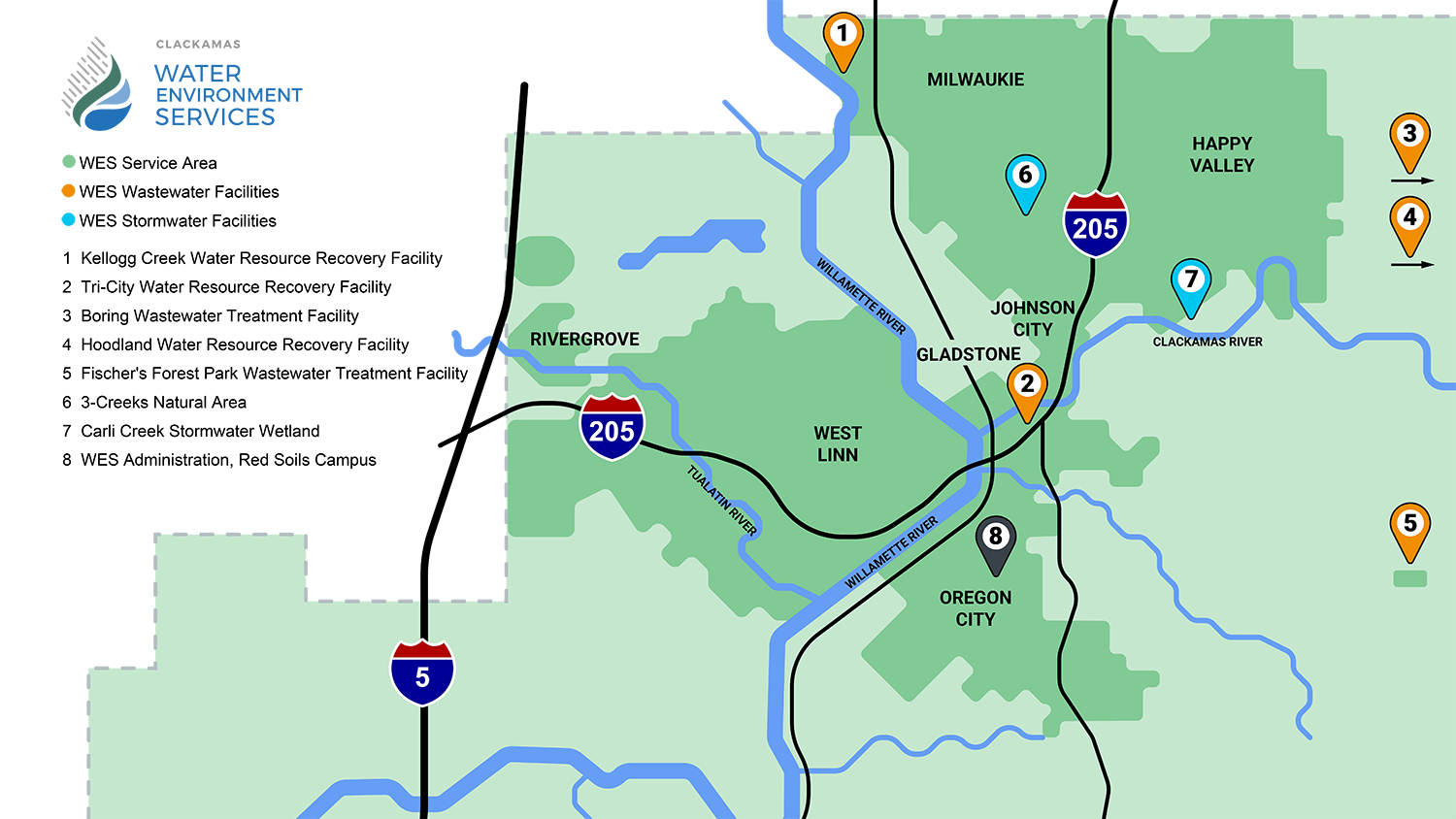
WES serves the cities of Gladstone, Happy Valley, Johnson City, Milwaukie, Oregon City, West Linn, Rivergrove and the communities of unincorporated Clackamas County.

Committee membership includes:

  • 6 ratepayers from cities in WES service area
    • Christopher Bowker, Gladstone
    • Greg DiLoreto, West Linn
    • Anthony Fields, Milwaukie
    • William Gifford, Oregon City
    • Brian Johnson (serving in dual capacities)
    • Michael Morrow, Happy Valley
  • 2 ratepayers from unincorporated Clackamas County
    • Kathryn Miller, Unincorporated representative
    • Rita Baker, Unincorporated representative
  • 2 environmental representatives
    • Neil Schulman, North Clackamas Watersheds Council
    • Colleen Rockwell, Retired
  • 6 elected officials
    • Carol Bryck, West Linn City Councilor
    • David Golobay, Happy Valley City Councilor
    • Brian Johnson, Johnson City Council representative
    • Denyse McGriff, Oregon City Mayor
    • Michael Milch, Gladstone City Mayor
    • Adam Khosroabadi, Milwaukie City Councilor
  • 2 members of development community
    • Preston Korst, Home Building Association of Greater Portland
    • Larry Linstrom, Beaudin Construction
  • 2 business owners or managers
    • Christina Brow, SLR Consulting
    • Richard Craven, Retired
  • County Board Liaisons
    • Martha Schrader, Commissioner

History

After the formalization of the Water Environment Services (WES) partnership between Clackamas County Service District No. 1 (CCSD#1), Tri-City Service District (TCSD) and the Surface Water Management Agency of Clackamas County (SWMACC) in 2016, the Board of County Commissioners of Clackamas County (BCC) acting as the governing body of WES, approved a standing advisory committee consisting of customers, stakeholders and city representatives referred to as the Water Environment Services Advisory Committee. The committee held its first meeting on Thursday, Jan. 11, 2018. 

Public meeting notice: To improve accessibility to public meetings, we have made changes to how they are displayed. Clicking on the meeting name will take you to a page with full meeting information, including agenda, minutes, ways to attend, and more.

If you would like information on previous meetings, please contact us at 503-742-4567 or wescustomerservice@clackamas.us 

Bylaws

Name of View
No results were found for your search. Please try again.

WES Technical Advisory Team

The Technical Advisory Team (TAT) is a group of technical experts from WES and its member communities, the cities of Gladstone, Happy Valley, Johnson City, Milwaukie, Oregon City, and West Linn. The TAT is comprised of WES engineers, city public works directors, and city engineers and technical staff who meet quarterly to share knowledge and collaborate on sanitary sewer infrastructure issues.

The purpose of the WES TAT is to: 

  • Provide a forum for technical staff to collaborate and share knowledge on sanitary sewer related issues.
  • Provide a forum for coordinating, learning, understanding and gathering input on wastewater plans and projects.
  • Review City proposals for funding under the Regional Inflow and Infiltration Reduction IGA.

The WES TAT is intended to strengthen WES’ relationships with city technical staff for the purpose of maintaining a strong and cohesive wastewater collection system.

Public meeting notice: To improve accessibility to public meetings, we have made changes to how they are displayed. Clicking on the meeting name will take you to a page with full meeting information, including agenda, minutes, ways to attend, and more.

If you would like information on previous Technical Advisory Committee meetings, please contact us at 503-742-4567 or wescustomerservice@clackamas.us

Name of View
No results were found for your search. Please try again.
New Format?
On

Watershed Protection

We all use the buildings, streets, parking lots and sidewalks that contribute to water pollution. Our Surface Water Management Program protects water quality with programs to prevent, minimize, and reduce pollution in our rivers, streams and wetlands caused by urban stormwater runoff.

Annual Private Property Stormwater System Inspection and Reporting
 MS4 Permits | TMDL Documents

Stormwater runoff is the most significant source of water pollution in our state. It washes pollutants into storm drains and drainage ditches, carrying silt, oil, chemicals, trash and pesticides to the nearest creek, stream or wetland. The polluted runoff can harm fish, aquatic life, and threaten our drinking water.

Through watershed protection and planning, WES is taking a long-term approach to protecting the health of our water resources.

What does the Surface Water Management Program do?

  • Maintains stormwater facilities, which capture and filter runoff
  • Inspects water quality facilities and investigates spills/illicit discharges
  • Provides erosion and sediment control requirements and inspections
  • Sets stormwater design rules and standards for development projects, reviews projects for adherence to requirements
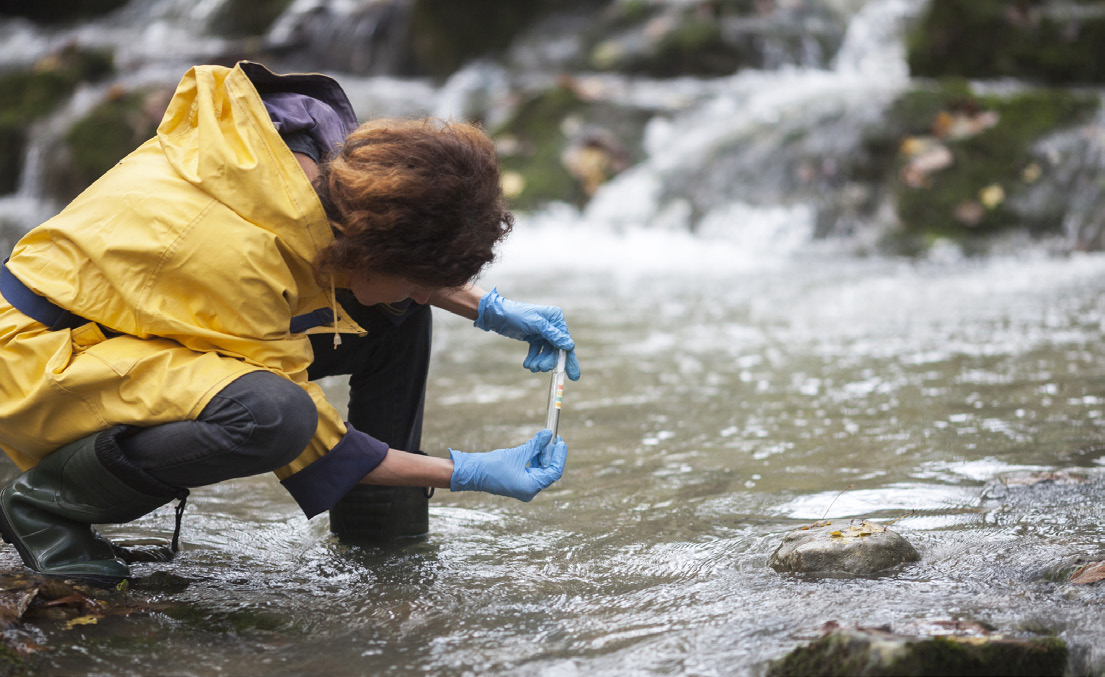
  • Monitors water quality and stream health
  • Ensures buffer zones between new development and wetlands/creeks
  • Plans and designs water quality, drainage improvement, and flood reduction projects
  • Restores degraded water resources and habitats
  • Works with partners on pollution prevention, watershed health education, and watershed restoration

Our focus is on improving overall watershed health, focused on four main components:

  • Hydrology
    Managing stormwater runoff in a manner that minimizes flooding and stream channel degradation
  • Water Quality
    Reducing in-stream contaminants
  • Habitat
    Promoting the function and restoration of healthy streams and riparian areas
  • Biology
    Maintaining and restoring conditions for diverse aquatic insect, fish and wildlife populations

Capital Improvement Planning: Storm System Master Plan

The Storm System Master Plan (SSMP) provides a flexible framework for storm system infrastructure operations, maintenance, and expansion to improve the quality of surface water. The Known Issues Atlas maps the locations of identified stormwater system issues, such as water quality, flooding, erosion, and maintenance problems.

Storm System Master Plan and current projects

Annual Private Property Stormwater System Inspection and Cleaning

Raking leaves away from a drainPrivate stormwater systems collect, treat and convey stormwater from private property to local waterways or groundwater. Most often these are connected to the public system in the street. These private structures may include storm drains, underground tanks, vaults, manholes, oil/water separators, detention/water quality ponds and swales, etc. The stormwater system in the public street is not the responsibility of the adjacent property owner.

Why clean your storm system?

Per Section 4.5.2 of the Rules and Regulations, properties with private stormwater collection and treatment devices must annually inspect, maintain, clean (as needed) and report on this activity to WES. As the property owner, you are responsible for maintaining and cleaning your storm drains to keep the dirt, debris and pollution from roofs, parking lots and vehicles from entering the public stormwater system.

Keeping your business's drains clean may also lower your risk of property damage caused by flooding. Standing water may also seep into asphalt cracks causing a premature failure of the pavement.

Before December 31st of each year, please send WES an annual report on inspection and any maintenance or cleaning performed on your system. Use the online reporting tool or mail your annual stormwater system report information to: Water Environment Services, 150 Beavercreek Road # 430, Oregon City, OR, 97045.

Use our online reporting tool

Storm Drain Cleaning Assistance Program (SCAP)

Keeping private property storm drains clean helps reduce flooding and protects the health of our rivers and streams. The Storm Drain Cleaning Assistance Program (SCAP) is offered by WES as part of a multi-agency effort to make it easier for property owners to easily and inexpensively maintain their system.

This service will provide a basic cleaning and does not include additional maintenance or repair work. The vendor is licensed, bonded and insured for providing the cleaning services. WES will not be liable for or provide any guarantee or warranty for the work performed by the vendor. While you are under no obligation to use this vendor, to receive the discount you must sign up to participate.

The vendor performing the storm drain cleaning may note deficiencies within your storm drain system and provide a quote for repair. You may elect to have the work done by the vendor, or obtain additional quotes for cost comparisons.

For questions about participating or assistance regarding the maintenance of private drainage systems, contact wes-stormdrains@clackamas.us

Sign up for SCAP online

Municipal Separate Storm Sewer System (MS4) Permit

The Oregon Department of Environmental Quality mandates actions intended to improve municipal stormwater quality through its MS4 permit program. 

MS4 Permits

MS4 Permit Annual Reports
DEQ requires WES to submit an annual report describing what activities were completed to comply with our MS4 permit. 

Total Maximum Daily Load (TMDL) Documents

A TMDL is the maximum amount of a pollutant allowed to enter a waterbody so that the waterbody will meet water quality standards for that particular pollutant. A TMDL specifies the amount of pollutant reduction needed from all sources of the pollutant so that the water body will achieve compliance with water quality standards.

The Non-Point Source TMDL Implementation Plan details the actions which will be taken to achieve the necessary pollutant reductions.

Monitoring

We conduct a long-term monitoring program to evaluate stream health in our surface water management district. The geomorphic monitoring program began in 2009, and the macroinvertebrate monitoring in 2002.

Geomorphic monitoring reveals the impacts from hydromodification, the change in stream habitat caused by urban runoff. Macroinvertebrate monitoring indicates the impacts on stream biology (aquatic insects). This information helps WES to prioritize its management efforts.

Macroinvertebrate/Geomorphic survey results

US Geological Survey monitoring
In 2013, the U.S. Geological Survey conducted a study of insecticides in streams within urban Clackamas County. You can read about the study by clicking below.

New Format?
On

Erosion Control Vendors

This list of vendors is for public information and it is not an endorsement by Water Environment Services.

Material Suppliers

SupplierAvailable Supplies
ACF WEST
8951 SE 76TH Dr.
Portland, OR 97206
503-771-5115
800-878-5115
Contact: Mark
  • Bio-filter Bags
  • Bone Bag
  • Catch Basin Inserts
  • Dirt Bags for Dewatering
  • Econo-Jute
  • Geo-Jute Plus
  • Plastic Sheeting
  • Sediment Fence
  • Straw Wattles
Bark Blowers
PO Box 512
Beaverton, OR 97075
503-248-2275
  • Bark for ground cover
Contech/Oregon Culvert
710 SW Armco Ave.
Hillsboro, OR 97123
503-640-2783
  • Bio-filter Bags
  • Dirt Bags for Dewatering
  • Econo-Jute
  • Geo-Jute Plus
  • Plastic Sheeting
Coral Sales Co.
10560 S. Mollalla Ave.
Clackamas, OR 97015
503-655-6351
  • Gabion Rock & Baskets
C.S.I.
3500 SE Columbia Bldg 44-100
Vancouver, WA
800-426-7976
Contact: Kevin
  • Bio-filter Bags
  • Bone Bag
  • Catch Basin Inserts
  • Dirt Bags for Dewatering
  • Econo-Jute
  • Geo-Jute Plus
  • Plastic Sheeting
  • Sediment Fence
  • Straw Wattles
Damascus Farm & Garden
20401 SE Hwy 212
Boring, OR
503-658-4429
  • Straw
Grand Rental Station 
2207 Baseline Street
Cornelius, OR 97113
503-992-7368
  • Bio-filter Bags
  • Bone Bag
  • Sediment Fence
  • Straw Wattles
Home Depot
1950 SE Minter Bridge
Hillsboro, OR 97123
503-693-9090
  • Plastic Sheeting


Lost Creek Farms
21950 SW Koehler Rd.
Hillsboro, OR 97007
503-628-1755
Contact: Denny
  • Straw
Lumberman's Building 
15877 SE 98th
Clackamas, OR 97015
503-657-8686
  • Bio-filter Bags
  • Plastic Sheeting
  • Sediment Fence
Morse Brothers Concrete
3150 SE TV Hwy
Hillsboro, OR 97123
503-648-3100
Contact: Andrea
  • Bio-filter Bags
  • Catch Basin Inserts
  • Sediment Fence
Parr Lumber
2351 SW Borland Rd.
West Lynn, OR 97068
503-638-7575
  • Bio-filter Bags
  • Plastic Sheeting
  • Sediment Fence
Rexius
17550 SW 63rd
Lake Oswego, OR 97035
503-635-5865
  • EcoBlanket
  • EcoBerm
  • Terraseeding
United Rentals
4705 SE Witch Hazel
Hillsboro, OR 97123
503-640-1235
  • Bone Bag
  • Straw Wattles
United Rentals 
14020 SW 72nd. Ave
Tigard, OR
503-620-1235
  • Bone Bag
  • Straw Wattles

Native Plant and Seed Sources

Aurora Nursery
22821 Boones Ferry Rd
Aurora, OR
Phone 503-678-7903
Tim 503-519-7875
sales@auroranursery.com

Balance Restoration Nursery
27995 Chambers Mill Road
Lorane, OR 97451
Phone/Fax 503-942-5530

Bosky Dell Native Plants 
23311 SW Bosky Dell Ln.
West Linn, OR
Phone 503-638-5945
Fax 503-638-8047

Emerald Seed & Supply 
9330 NE Halsey
Portland, OR
Arman 503-254-8414
*SEED ONLY

Hobbs & Hopkins 
3033 NE Alberta
Portland, OR
Phone 503-239-7518

Mahonia Vineyards & Nursery 
4985 Battlecreek Rd.
Salem, OR
Phone 503-585-8789
Fax 503-363-2358
wildwoodco@aol.com

Mt. Jefferson Farms 
Salem, OR
Phone 503-363-0467 Fax
503-362-5248
mjfarms@teleport.com

Northwest Native Plants 
23501 S Beatie Rd.
Oregon City, OR
Phone 503-632-7079
Fax 503-632-7087

Samuel J Rich Nursery 
9803 Yergen Road
Aurora, OR
Bob 503-678-2828

Scholls Valley Native Nursery 
Tigard, Oregon
Phone 503-624-1766
Len 503-327-4974
Sara 503-522-5733
Fax 503-624-2766
schollsvalley@aol.com

West Coast Natives
2214 SW Scholls Sherwood RD
Sherwood, OR
Phone 503-628-1667
Ryan 503-793-1886
Fax 503-628-3818

Willowell Nursery 
8160 Landau St
Tigard, OR
Roy 503-768-5976

New Format?
On